The 17 Sustainable Development Goals (CanopyLAB)

Offered by SDG LAB,
The 17 Sustainable Development Goals (CanopyLAB)

This is the first course in a series about all of the 17 Sustainable Development Goals. Through the course, you will get to know the different goals and their corresponding targets, how they come about, and what can be done by 2030 to achieve the goals. After taking this course, you will be equipped with the knowledge about the Sustainable Development Goals, and inspired to reflect on how you can take actions that contribute to the goals.

Without you we can't change the world. Without your help, we wont achieve the 17 Sustainable Development Goals.
This is the first course in a series about the 17 Sustainable Development Goals.
While all the goals are important, some of the goals may matter more to you personally than others. That's totally normal. After the intro course, you can dive into any goal you like, and you can focus on anything from climate action to universall access to education.

Unit 1 - What are the Sustainable Development Goals and the 2030 Agenda?
Unit 2 - How Did They Come about and Why So Many Goals?
Unit 3 - 169 Targets Related to 17 Sustainable Development Goals
Unit 4 - Who Works for the Sustainable Development Goals?
Unit 5 - Take Action for the Sustainable Development Goals

Go to Class
MOOC List is learner-supported. When you buy through links on our site, we may earn an affiliate commission.

Related Courses

Sustainable Development Goal 7: Affordable and Clean Energy (CanopyLAB) CanopyLAB
SDG LAB

Sustainable Development Goal 7: Affordable and Clean Energy (CanopyLAB)

This course aims at introducing you to and providing you with a deeper understanding of the Sustainable Development Goal 7: Affordable and Clean Energy. In Unit 1, we will be gaining a deeper understanding of the rationale as to why the United Nations (UN) views Clean and Affordable Energy as an important goal. In Unit 2, we will focus on the targets under this goal and look at real-world examples of how governments and businesses are doing their part to ensure the targets are met. In Unit 3, we will look at past and present agreements and conventions, as well as technological advancements and champions that are assisting with meeting these targets. Finally, in Unit 4 we will give you the opportunity to take the reigns and become the champions of Goal 7.

Self Paced
Self-Paced
Sustainable Development Goal 1: No Poverty (CanopyLAB) CanopyLAB
SDG LAB

Sustainable Development Goal 1: No Poverty (CanopyLAB)

Ending poverty is one of the cross-cutting issues of the 17 Sustainable Development Goals because it is related to many other goals on the list such as decent jobs, quality education, and improving infrastructure and access to health care. It is also a cross-cutting issue in the sense that it concerns every country and every person, no matter rich or poor, young or old and any other differences in conditions of life. This is because poverty is not an isolated phenomenon; rather it is a state that anyone could all fall into if there is not a system to protect them. In this course, you will learn about the various forms that poverty can take, and how it can be battled, by the United Nations, governments, companies, humanitarian organizations, and last but not least, you.

Self Paced
Self-Paced
Planning for Climate Change in African Cities (Coursera) Coursera
Erasmus University Rotterdam,United Cities and Local Governments of Africa,African Local Government Academy,Institute for Housing and Urban Development

Planning for Climate Change in African Cities (Coursera)

Climate change poses a threat to economic growth and long-term prosperity of many countries around the world. Africa is not an exception, considering the actual and potential impacts of climate change and climate variability that will threaten its vulnerable sectors and human populations. African countries are projected to experience changing rainfall patterns, rising sea levels, and higher temperatures that will affect food security, agricultural production, water availability, and public health, among others. These climate change impacts and climate variability can further produce social and political problems, such as rural-urban migration and water resource disputes.

Aug 17th 2026
5-12 Weeks
Algae Biotechnology (Coursera) Coursera
University of California, San Diego

Algae Biotechnology (Coursera)

For decades, researchers have been studying microalgae to understand their biological functions and how we can use technology to harness algae’s power to create a wide range of commercial products. In this course, we will cover how synthetic biology, genetic engineering, and metabolic engineering is used in algae biotechnology, and also examine the current state of algae biotechnology research and tools. We’ll also explore some of the common bio-products we can make from algae, and take a look at some real-world algae companies that are using algae biotechnology to create products consumers can buy today.

Aug 17th 2026
5-12 Weeks
Sustainable Development Goal 11: Sustainable Cities and Communities (CanopyLAB) CanopyLAB
SDG LAB

Sustainable Development Goal 11: Sustainable Cities and Communities (CanopyLAB)

This course aims at providing you with a deeper understanding of the reasons why the United Nations chose to focus on Sustainable Cities and Communities as an important goal for sustainable development. In Unit 1, we look at the issues cities around the world are facing. In Unit 2, we focus on the targets set under this goal and the progress made so far. In Unit 3, we go around the world to see what different countries, cities, and communities are doing to become more sustainable. Finally, in Unit 4 we give you the opportunity to take the reigns and become the champion of Goal 11.

Self Paced
Self-Paced
Sustainable Development Goal 2: Zero Hunger (CanopyLAB) CanopyLAB
SDG LAB

Sustainable Development Goal 2: Zero Hunger (CanopyLAB)

The course will walk you through the content and targets of the Sustainable Development Goals 2 titled “Zero Hunger”, and provide you with information on how different UN agencies, civil society, governments, the private sector, and education/research institutes work to achieve this goal. But it does not stop there. Through the course, you will gain not only important knowledge but also skills to help you champion this goal and take action to bring about the end of hunger by 2030.

Self Paced
Self-Paced
ROMA: A Discussion of Diversity and the Treatment of Minorities in Europe (CanopyLAB) CanopyLAB
Humanity in Action, Denmark

ROMA: A Discussion of Diversity and the Treatment of Minorities in Europe (CanopyLAB)

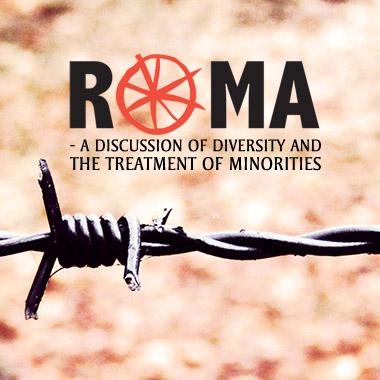
Learning about the Roma experience in Europe is not only about learning history. It is about understanding the presence, and it is also an insight into a common European future. Konstanty Gebert analyses the Roma people’s past and present and discusses issues of race, identity, integration and discrimination that are at the forefront of contemporary European politics.

Self Paced
Self-Paced
Business Sustainability in the Circular Economy (Coursera) Coursera
University of London

Business Sustainability in the Circular Economy (Coursera)

We are surrounded by so much discussion of sustainability that it can sometimes become overwhelming. Important questions include: What role can business have in ensuring the sustainability of the planet? How should business work with society to preserve the environment? These questions will be answered in this course as we explore the meaning of sustainability and its impact on modern organisations as they move to circular ideas to reduce waste, increase recycling and become fit for our modern society.

Aug 17th 2026
3 Weeks
Management of Urban Infrastructures – part 1 (Coursera) Coursera
École Polytechnique Fédérale de Lausanne

Management of Urban Infrastructures – part 1 (Coursera)

Sustainability, Resilience and Efficiency are fundamental considerations for city managers in managing urban infrastructures. Today, more than 3.9 billion people, making up more than 54% of the global population, live in cities. Urbanization is expected to continue in the coming years, raising the urban population to 6.0 billion by 2045. This dramatic increase in urban populations will inevitably increase the demand for energy, mobility (transportation), water, and other urban services in every city around the world. Without functional governance and management structures that ensure efficient, resilient and sustainable performance in cities, the current urbanization growth might become a catastrophic risk threatening the quality of life of the humanity.

Aug 17th 2026
5-12 Weeks
Global Health Security, Solidarity and Sustainability through the International Health Regulations (Coursera) Coursera
University of Geneva

Global Health Security, Solidarity and Sustainability through the International Health Regulations (Coursera)

Welcome to the MOOC "Global Health Security, Solidarity and Sustainability through the International Health Regulations". We are very excited to have you on board and hope you will enjoy the course! In the coming 6 weeks, you will learn about the International Health Regulations (IHR), history of its creation and evolution, its major principles and implementation procedures, as well as challenges and future opportunities.

Aug 17th 2026
5-12 Weeks
Sustainable Development Goal 15: Life On Land (CanopyLAB) CanopyLAB
SDG LAB

Sustainable Development Goal 15: Life On Land (CanopyLAB)

Humans rely heavily on agriculture, both as an economic resource and for social development. It is what brings food to the table and it is also an important source of income for many families and countries, especially in Africa and Latin America. At the same time, natural resources such as water, forests and animal life are being threatened by human activities, with consequences ranging from drought and deterioration of land to poaching and trafficking of wildlife. To combat these requires a concerted effort that restore land and wildlife to health and use these resources responsibly going forward for food production and economic development. In this course, you will learn about the challenges facing our land, what is being done around the world, and how you can help protect the Earth and promote Goal 15.

Self Paced
Self-Paced