Stalin and Stalinism in Russian History (Coursera)

Stalin and Stalinism in Russian History (Coursera)

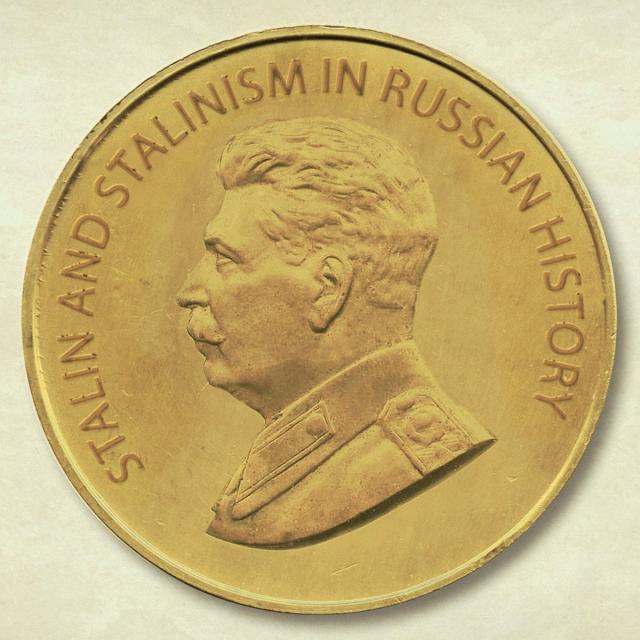
The course presents the life and deeds of Joseph Stalin, the leader of the Soviet Union from 1924 till 1953. It analyses the reasons for his actions and their results, as well as the causes of his popularity in Russia today. It offers an analysis of the phenomenon of Stalinism and of its significance for Russia and beyond. In the late 1920s – early 1930s Stalin directed the massive and rapid industrialisation of the country and the forced collectivisation of its agriculture. The industrialisation was based on forced labour, and collectivisation on repression, but both helped to create the material base for the Soviet defence industry.

Class Deals by MOOC List - Click here and see Coursera's Active Discounts, Deals, and Promo Codes.

In the late 1930s Stalin unleashed mass terror against the Soviet people, in which millions perished. In his view this helped to rid the country of any potential internal enemies on the eve of the coming war.
The USSR, together with its allies, won the Second World War, but at the cost of dozens of millions of lives. Stalin was instrumental in creating the post-war order. The system which he created in the 1930s shaped the USSR as it was during his lifetime and for decades after his death. It also influenced the lives of millions of people beyond the Soviet borders.
The course will enable those who take it to develop an informed understanding of the Stalin era and of the phenomenon of Stalinism.

Syllabus

WEEK 1
Stalin and Stalinism in Russian History. About this Course.
The first lecture introduces students to the course and to imperial Russia, the country in which Stalin was born. It describes social and economic condition and the political situation in the Russian Empire in the late 19th - early 20th century. The last part of the lecture describes Stalin’s childhood and discusses his personality and the reasons for his turn to radical revolution.

WEEK 2
Between the Two Revolutions
Lecture 2 describes Russian revolutions of 1905 and 1917 and the place and role of the Bolsheviks in them. It follows Stalin’s career in the Bolshevik party and describes his activities during both revolutions.

WEEK 3
The Leader
Lecture 3 describes the creation of the Soviet state by the Bolsheviks, the Civil War that followed, War Communism and Lenin’s turn to the New Economic Policy. It analyses Stalin’s role in the Soviet government and in the Civil War, his crushing of his political rivals and opponents and his route to power in the Bolshevik party and in the Soviet state.

WEEK 4
Stalin's Revolution from Above
Lecture 4 analyses Stalin’s ‘revolution from above’ and the new social and economic order created by Stalin. It outlines Stalin’s reasons for collectivisation and industrialisation and the way in which they were implemented. It analyses the human and economic costs of Stalin’s radical transformation to the country and its people.

WEEK 5
The Dictator
Lecture 5 describes the establishment of Stalin’s unchallenged and unchallengeable dictatorship. It gives an outline of Stalin’s terror campaigns and analyses their effect on Soviet society. It also looks in the creation of the new generation of Soviet elite, moulded by Stalin.

WEEK 6
Stalin's War
Lecture 6 is devoted to political developments before World War II and during its first years. It follows Stalin’s reasons for his Pact with Nazi Germany and its consequences. The second part of the lecture describes the retreat of the Red Army after the German invasion of the USSR (1941-1942) and Stalin’s policy during this period.

WEEK 7
Stalin's Victory
Lecture 7 covers the period from the 1943 offensives and victories to the Red Army’s final dash to Berlin. It analyses Stalin’s military tactics and assesses his role in the war and in the making of the post-war order.

WEEK 8
The Last Years of the Dictatorship
Lecture 8 is devoted to the post-war period, the last years of Stalin’s life. It describes the beginning of the Cold War, Stalin’s policy in Eastern Europe and Stalin’s relations with China. It analyses the Soviet post-war economy and Stalin’s attempt to return to the old order and to rule by terror.

WEEK 9
Stalin and Stalinism
Lecture 9 analyses Stalinism as a phenomenon, its roots and its character. It gives a survey of literature about the Stalin era, Stalin and Stalinism. It also contains an interview with Oleg Khlevniuk, the top Russian authority on Stalin and Stalinism, author of Stalin: New Biography of a Dictator.

WEEK 10
Stalinism after Stalin
The last lecture describes the long process of de-Stalinisation in Russia. It looks into the phenomenon of Stalinism abroad and analyses the reasons for the revival of the Stalin cult in today’s Russia.
Go to Class
MOOC List is learner-supported. When you buy through links on our site, we may earn an affiliate commission.

Related Courses

Paradoxes of War (Coursera) Coursera
Princeton University

Paradoxes of War (Coursera)

The Paradoxes of War teaches us to understand that war is not only a normal part of human existence, but is arguably one of the most important factors in making us who we are. Through this course, I hope that you will come to appreciate that war is both a natural expression of common human emotions and interactions and a constitutive part of how we cohere as groups. That is, war is paradoxically an expression of our basest animal nature and the exemplar of our most vaunted and valued civilized virtues.

Oct 19th 2026
13-24 Weeks
Film, Images & Historical Interpretation in the 20th Century: The Camera Never Lies (Coursera) Coursera
University of London,Royal Holloway, University of London

Film, Images & Historical Interpretation in the 20th Century: The Camera Never Lies (Coursera)

This course is a short taster on the topic of the use of Images, Film, and their use in historical interpretation in the 20th century. It is primarily provided for those who have a general interest in history that draws on photojournalism as primary evidence, and films based on historical events.

Nov 2nd 2026
5-12 Weeks
Egiptología (Egyptology) (Coursera) Coursera
Universitat Autònoma de Barcelona

Egiptología (Egyptology) (Coursera)

¿Sientes curiosidad por la civilización del antiguo Egipto? ¿Eres un apasionado de su cultura e historia? En este curso nos acercaremos a los templos de los antiguos faraones, a sus complejos funerarios, a sus ciudades, a su escritura jeroglífica, a su religión y a muchos otros aspectos de esta gran civilización.

Oct 26th 2026
5-12 Weeks
Reimagining Blackness and Architecture (Coursera) Coursera
The Museum of Modern Art

Reimagining Blackness and Architecture (Coursera)

Architecture structures our daily lives. It shapes our homes, streets, neighborhoods, cities and more. But who gets to create and occupy these spaces? In the United States, a long history of anti-Black racism has created spatial inequalities that are built into the physical environment and erased the stories of Black architects and communities. Reimagining Blackness and Architecture explores the relationship between architecture and Blackness as an identity and a lived experience.

Nov 2nd 2026
5-12 Weeks
Introduction to Korean Philosophy and Culture (Coursera) Coursera
Sungkyunkwan University - SKKU

Introduction to Korean Philosophy and Culture (Coursera)

This course will give you the cultural and historical background to begin your journey into Korean philosophy, and there is no prerequisite knowledge on philosophy required. Anybody who either has an interest in Korean culture, maybe through K-Dramas or K-pop, or an interest in philosophy from a cross-cultural perspective, are all welcome.

Oct 26th 2026
4 Weeks
Modern Art & Ideas (Coursera) Coursera
The Museum of Modern Art

Modern Art & Ideas (Coursera)

Welcome to Modern Art & Ideas! This course is designed for anyone interested in learning more about modern and contemporary art. Over the next five weeks, you will look at art through a variety of themes: Places & Spaces, Art & Identity, Transforming Everyday Objects, and Art & Society. Each week kicks off with a video that connects works of art from The Museum of Modern Art’s collection to the theme. You will hear audio interviews with artists, designers, and curators and learn more about selected works in the additional readings and resources.

Oct 19th 2026
5-12 Weeks
Iniciación a los Jeroglíficos Egipcios (Coursera) Coursera
Universitat Autònoma de Barcelona

Iniciación a los Jeroglíficos Egipcios (Coursera)

¿Te apasiona la historia y la cultura del antiguo Egipto? ¿Sientes fascinación por las lenguas y los sistemas de escritura de las civilizaciones de la Antigüedad? ¿Te atrae la idea de adentrarte en el secreto de los jeroglíficos egipcios y comprender las claves de su lectura e interpretación? ¡Si es así, este es tu curso!

Oct 26th 2026
5-12 Weeks
Recovering the Humankind's Past and Saving the Universal Heritage (Coursera) Coursera
Sapienza University of Rome

Recovering the Humankind's Past and Saving the Universal Heritage (Coursera)

Archaeology has as its objective the recovery and revival of humankind past, and as its aim the rescue and preservation of cultural heritage. Archaeology is, among human sciences, the discipline with the strongest importance for the rediscovery, but also for the preservation and protection of cultural heritage, as Humankind’s universal patrimony. You will be introduced to the way we ourselves reflect on and are engaged with the study of human past: from the practical and material recovery of ancient traces in the field to the study and interpretation. On the other hand, the discovery of human past implies the correct conservation and presentation for both experts and general public: the study and protection of the past we share every day prevent from any possible destruction, misuse, abuse and thus cancellation of human memory.

Oct 19th 2026
5-12 Weeks
Seeing Through Photographs (Coursera) Coursera
The Museum of Modern Art

Seeing Through Photographs (Coursera)

Although taking, sharing, and viewing photographs has become second nature for many of us, our regular engagement with images does not necessarily make us visually literate. This course aims to address the gap between seeing and truly understanding photographs by introducing a diversity of ideas, approaches, and technologies that inform their making. In this course you will look closely at 100 photographs from the collection of The Museum of Modern Art, going behind the scenes of the Museum and into artist studios through original films and audio interviews.

Oct 19th 2026
5-12 Weeks
Understanding China, 1700-2000: A Data Analytic Approach, Part 1 (Coursera) Coursera
The Hong Kong University of Science and Technology - HKUST

Understanding China, 1700-2000: A Data Analytic Approach, Part 1 (Coursera)

The purpose of this course is to summarize new directions in Chinese history and social science produced by the creation and analysis of big historical datasets based on newly opened Chinese archival holdings, and to organize this knowledge in a framework that encourages learning about China in comparative perspective. Our course demonstrates how a new scholarship of discovery is redefining what is singular about modern China and modern Chinese history.

Oct 26th 2026
5-12 Weeks
The Emergence of the Modern Middle East - Part II (Coursera) Coursera
Tel Aviv University

The Emergence of the Modern Middle East - Part II (Coursera)

This course will discuss the developments in the Middle East from the early 20th century to the present. It will discuss the rise and retreat of Arab nationalism, the problems of internal cohesion of the Arab states, issues of religion and state, and the evolution of Islamist politics. It will also focus on the evolution of the Arab-Israeli conflict and its impact on the region and will conclude with an in depth analysis of the “Arab Spring” by placing these contemporary revolutionary events in their historical context.

Nov 2nd 2026
5-12 Weeks
Words Spun Out of Images: Visual and Literary Culture in Nineteenth Century Japan (Coursera) Coursera
The University of Tokyo

Words Spun Out of Images: Visual and Literary Culture in Nineteenth Century Japan (Coursera)

In their ambition to capture “real life,” Japanese painters, poets, novelists and photographers of the nineteenth century collaborated in ways seldom explored by their European contemporaries. This course offers learners the chance to encounter and appreciate behavior, moral standards and some of the material conditions surrounding Japanese artists in the nineteenth century, in order to renew our assumptions about what artistic “realism” is and what it meant.

Nov 2nd 2026
4 Weeks