EdX

Smart Grids: Modeling (edX)

Smart Grids: Modeling (edX)

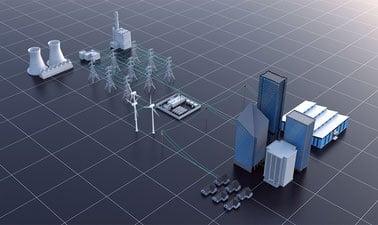
Learn to build a model of a smart power grid, and to diagnose the effects of disturbances from variable renewable energy resources and intelligent demand on the grid. The smart grid of the future is a complex electrical power system. Its study, design, and management requires the integration of knowledge from various disciplines including sustainability, technology and mathematics.

Class Deals by MOOC List - Click here and see EdX's Active Discounts, Deals, and Promo Codes.

Smart grids show a level of complexity and heterogeneity that often cannot be covered by analytical methods. Therefore, modeling and simulation are of great importance.
This course follows on from the first course where the key definitions, concepts and challenges in a smart grid are introduced. In this second course, you will apply modeling tools to study and analyze the performance of your self-designed intelligent electrical power grid. By modeling smart grids, you will explore the integration of renewable energy sources into a grid, its dynamics, control and cyber security.
This course is part of the Smart Grids Integration and Modeling Professional Certificate.

What you'll learn

  • Identify the impact of variable renewable energy sources (VRES) and smart energy demand on electrical power grids,
  • Identify different tools and approaches to design a smart grid,
  • Apply optimal power flow (OPF) solutions to evaluate the performance of an electrical power system with integrated renewable energy sources,
  • Analyze intelligent electrical power system dynamics (frequency stability) to achieve active power balance, and
  • Identify control-room technologies for system-wide remote monitoring, protection and risk management of smart grid cyber security.
  • Simulate a 9-bus grid, with and without variable renewable resources,
  • Analyze the impact of "intelligent" but common grid disturbances on an electrical power system, and
  • Mitigate the possible negative impacts of grid disturbances on power systems through the use of controllers.
Go to Class
MOOC List is learner-supported. When you buy through links on our site, we may earn an affiliate commission.

Related Courses

Business Implications of Intelligent and Integrated Energy Systems (edX) EdX
Delft University of Technology,DelftX

Business Implications of Intelligent and Integrated Energy Systems (edX)

Learn how digital technologies help with the energy transition and then how to use this to develop future potential business models in various energy and energy-dependent sectors. This course focuses on the emerging digitalization-based business models in the energy systems field. You will study how digital technologies can aid practitioners and business leaders to reach more sustainable systems and operations and create modern and more sustainable business frameworks.

Self Paced
Self-Paced
Smart Grids: The Basics (edX) EdX
Delft University of Technology,DelftX

Smart Grids: The Basics (edX)

Understand the basics of smart grids. Learn about their heterogeneity, dynamics, control, and about security and assessment strategies. The smart grid of the future is a complex electrical power system. Its study, design, and management requires the integration of knowledge from various disciplines including sustainability, technology and mathematics.

Self Paced
Self-Paced
Renewable Power and Electricity Systems (Coursera) Coursera
University of Colorado Boulder

Renewable Power and Electricity Systems (Coursera)

The energy revolution in underway. Renewable energy is growing at an astounding pace - notably in electricity. Wind turbines and solar photovoltaic (PV) systems account for most new power plants built worldwide, and are essential to building a low-carbon and sustainable energy future. As a result, there are countless new opportunities in renewable electricity.

Jun 8th 2026
5-12 Weeks
Global Energy and Climate Policy (Coursera) Coursera
University of London,SOAS University of London

Global Energy and Climate Policy (Coursera)

The Global Energy and Climate Policy course offers an introduction to the theoretical and practical understanding of how energy and climate change policies are designed, shaped, advocated and implemented. As energy markets go truly global, domestic energy policies are becoming more and more entangled with wider issues of international governance. Concurrently, the urgent need to mitigate and adapt to climate change and transition to a low-carbon future is adding a further layer of complexity.

Jun 1st 2026
5-12 Weeks
Creating a Pro-Renewables Environment (edX) EdX
Imperial College London,ImperialX

Creating a Pro-Renewables Environment (edX)

Understand the policy, regulatory and fiscal measures that can incentivise renewable power and drive cleaner investment along the entire electricity supply chain. This course provides the tools needed to build a low-carbon power sector around the world. By diving into the perspective of different players in the power sector - from investors through to utilities, regulators and project developers - you will be able to choose the right strategies, policies and other levers needed to incentivise a cleaner power mix in your own context.

Self Paced
Self-Paced
Powering Resilient Communities: A Holistic Approach to Food, Energy, and Water Security (edX) EdX
University of Alaska Fairbanks,AlaskaX

Powering Resilient Communities: A Holistic Approach to Food, Energy, and Water Security (edX)

A research-based course on resilient renewable energy solutions, with an emphasis on microgrids, and Food, Energy, and Water (FEW) security. This course provides research-based and on-the-ground tools for community planners, grid designers, and business leaders to improve and implement stronger and more resilient renewable energy systems in Arctic communities.

Self Paced
Self-Paced
Renewable Energy Futures (Coursera) Coursera
University of Colorado Boulder

Renewable Energy Futures (Coursera)

Renewable energy's future is bright, yet uncertain. Will it continue to grow rapidly? Is current growth sufficient to achieve climate stabilization? How do related technologies, like electric vehicles and heat pumps, fit in? This course will shed light on the many confusing and at-times inconsistent claims and predictions for renewable energy.

Jun 8th 2026
5-12 Weeks
The Resilient and Renewable Grid: How Microgrids are Revolutionizing Energy Systems (edX) EdX
University of Alaska Fairbanks,AlaskaX

The Resilient and Renewable Grid: How Microgrids are Revolutionizing Energy Systems (edX)

A foundational course on microgrid systems design with an emphasis on community-based projects and non-grid connected remote systems. The electric grid of the future will need to be more resilient, decentralized, and capable of integrating more distributed energy resources including on-site renewable energy technologies, energy storage and even electric vehicle (EV) charging. Microgrids are an important building block in designing this sustainable grid architecture of the future. This course covers fundamental concepts of microgrid design from a community-centric perspective and emphasizes a holistic approach to energy systems management.

Self Paced
Self-Paced
Sustainable Energy: Design a Renewable Future (edX) EdX
Delft University of Technology,DelftX

Sustainable Energy: Design a Renewable Future (edX)

Learn how to make the transition to 100% renewable energy from wind, solar and biomass for electricity, heat and fuels for a sustainable future. A transition to sustainable energy is needed for our climate and welfare. In this engineering course, you will learn how to assess the potential for energy reduction and the potential of renewable energy sources like wind, solar and biomass. You’ll learn how to integrate these sources in an energy system, like an electricity network and take an engineering approach to look for solutions and design a 100% sustainable energy system.

Self Paced
Self-Paced
Renewable Energy Projects (Coursera) Coursera
University of Colorado Boulder

Renewable Energy Projects (Coursera)

Understanding renewable energy technologies is important, but equally important is knowing how to effectively deploy these technologies to provide renewable energy to end-users – the topic of this course. Upon completion of the course, you will understand the development and management of renewable energy projects, large and small, from conception to launch and subsequent operation.

Jun 1st 2026
5-12 Weeks