Site Reliability Engineering: Measuring and Managing Reliability (Coursera)

Offered by Google Cloud,
Site Reliability Engineering: Measuring and Managing Reliability (Coursera)

This course teaches the theory of Service Level Objectives (SLOs), a principled way of describing and measuring the desired reliability of a service. Upon completion, learners should be able to apply these principles to develop the first SLOs for services they are familiar with in their own organizations.

Class Deals by MOOC List - Click here and see Coursera's Active Discounts, Deals, and Promo Codes.

Learners will also learn how to use Service Level Indicators (SLIs) to quantify reliability and Error Budgets to drive business decisions around engineering for greater reliability. The learner will understand the components of a meaningful SLI and walk through the process of developing SLIs and SLOs for an example service.
What You Will Learn

  • How to make systems reliable
  • Understanding SLIs, SLOs and SLAs
  • Quantifying risks to and consequences of SLOs

Syllabus

WEEK 1
Introduction to SRE
This module is intended to bring you up to speed on the concepts underpinning SRE, CRE, and SLOs. If you're already familiar with these concepts, you may still find new information and perspectives in this module, but it is not necessary to complete it.
Targeting Reliability
In this module we’re going to talk about how you measure the desired reliability of a service. We will address what to consider when setting SLOs for your application within your organization. We'll look at the three principles we use to measure the desired reliability of a service: figuring out what you want to promise and to whom, figuring out the metrics you care about that make your service reliability “good", and finally, deciding how much reliability is good enough.
Operating for Reliability
In this module, we’ll start by introducing a mechanism for quantifying unreliability using something called an error budget. We'll show how error budgets help you decide when to focus on making a service more reliable. And then we'll learn about some of the engineering and operational improvements that can help you do that.

WEEK 2
Choosing a Good SLI
In this module we will start off by taking a look at some characteristics of monitoring metrics that can make them useful as SLIs and contrast these against other metrics that are less useful. Because the choice of where to measure an SLI is a key variable, we'll cover the five main ways you can measure an SLI and compare their pros and cons.

WEEK 3
Developing SLOs and SLIs
In this module, we'll start off with an overview of our four step process for developing SLOs and SLIs for a user journey. We'll introduce the fictional company that created our example mobile game, the infrastructure that we'll be working with, and the simple user journey we'll be applying the four step process to.

WEEK 4
Quantifying Risks to SLOs
In this module we'll be taking a critical look at the availability risks for our example service. We want to answer the question: "are our SLO targets and error budgets realistic?"
Consequences of SLO Misses
In this module, we'll cover best practices for documenting your SLOs, the rationale behind a formal error budget policy and how best to create one and finally, we'll look at an example error budget policy in order to understand the trade-offs and incentives that play out during negotiations when trying to write an error budget policy.

Go to Class
MOOC List is learner-supported. When you buy through links on our site, we may earn an affiliate commission.

Related Courses

Introduction to Engineering Mechanics (Coursera) Coursera
Georgia Institute of Technology

Introduction to Engineering Mechanics (Coursera)

This course is an introduction to learning and applying the principles required to solve engineering mechanics problems. Concepts will be applied in this course from previous courses you have taken in basic math and physics. The course addresses the modeling and analysis of static equilibrium problems with an emphasis on real world engineering applications and problem solving.

Jun 1st 2026
5-12 Weeks
Ethics in Engineering (Coursera) Coursera
University of Michigan

Ethics in Engineering (Coursera)

e.g. This is primarily aimed at first- and second-year undergraduates interested in engineering or science, along with high school Explore unique case studies in engineering ethics. On this four-week course, you’ll examine different historical case studies and understand how they led to classic engineering failures. Though each case is unique and has a distinct context, they all share common themes; a backstory, a disastrous event, a post-event with ramifications, and outcomes.

Jun 1st 2026
4 Weeks
Ethics, Technology and Engineering (Coursera) Coursera
Eindhoven University of Technology

Ethics, Technology and Engineering (Coursera)

There is an increasing attention to ethics in engineering practice. Engineers are supposed not only to carry out their work competently and skilfully, but also to be aware of the broader ethical and social implications of engineering and to be able to reflect on these. According to the Engineering Criteria 2000 of the Accreditation Board for Engineering and Technology (ABET) in the US, engineers must have “an understanding of professional and ethical responsibility” and should "understand the impact of engineering solutions in a global and societal context.”

Jun 8th 2026
5-12 Weeks
Engineering of Structures: Compression (Coursera) Coursera
Dartmouth College

Engineering of Structures: Compression (Coursera)

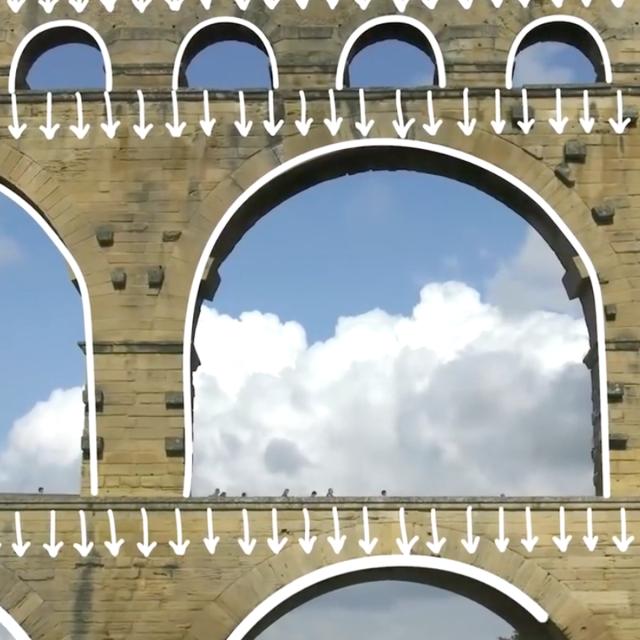
This course deals with compression. When we push an object, it compresses. Compression is what's going to hold up our building. Arches, vaults, domes, and anti-funicular forms help resist compression. In this course, you will learn about different columns and arches and their role in resisting compression. You'll also build anti-funicular forms.

Jun 8th 2026
3 Weeks
English for Science, Technology, Engineering, and Mathematics (Coursera) Coursera
University of Pennsylvania

English for Science, Technology, Engineering, and Mathematics (Coursera)

Welcome to English for Science, Technology, Engineering, and Mathematics, a course created by the University of Pennsylvania, and funded by the U.S. Department of State Bureau of Educational and Cultural Affairs, Office of English Language Programs. This course is designed for non-native English speakers who are interested in improving their English skills in the sciences. In this course, you will explore some of the most innovative areas of scientific study, while expanding your vocabulary and the language skills needed to share scientific information within your community.

Jun 1st 2026
5-12 Weeks
Engineering of Structures: Tension (Coursera) Coursera
Dartmouth College

Engineering of Structures: Tension (Coursera)

This course deals with tension. Tension is one of the easiest forces to understand. It is a pulling force. When we tend to pull an object, it is in tension. Different elements that resist tension in buildings are ropes, cables, and funicular forms. You will study different structures and identify what role tension plays in their designs. The first module explores tension and its importance in building structures.

Jun 8th 2026
3 Weeks
Controle de Sistemas no Plano-s (Coursera) Coursera
Instituto Tecnológico de Aeronáutica

Controle de Sistemas no Plano-s (Coursera)

Após esse curso você será capaz de esboçar o Lugar Geométrico das Raízes (LGR - Root Locus) do denominador da Função de Transferência em Malha Fechada a partir dos polos e zeros da Função de Transferência em Malha aberta. Você também será capaz de projetar controladores de avanço de fase para atender simultaneamente requisitos de desempenho de amortecimento e de velocidade da resposta.

Jun 8th 2026
5-12 Weeks
L'Art des Structures 2 : treillis, poutres, dalles et cadres (Coursera) Coursera
École Polytechnique Fédérale de Lausanne

L'Art des Structures 2 : treillis, poutres, dalles et cadres (Coursera)

Les structures en treillis, en poutre, en dalles et en cadre sont essentielles pour une grande partie des constructions modernes : immeubles pour l'habitation ou de bureaux, halles et usines, ponts, ou passerelles, voies de transport de l'énergie ou des télécommunications, stades et grandes toitures. Le cours L'Art des Structures 2 vous propose d'en découvrir le fonctionnement et les bases de leur dimensionnement.

Jun 8th 2026
5-12 Weeks
Engineering and Product Design Processes (Coursera) Coursera
Arizona State University

Engineering and Product Design Processes (Coursera)

Welcome to “Engineering and Product Design Processes!” In this short course, you will learn how engineering design processes and product design processes are carried out. After the course, you will be familiar with the steps in both design processes. You will also be familiar with the main goal of each design process, as well as their similarities and differences.

Jun 1st 2026
4 Weeks
Ferrous Technology I (Coursera) Coursera
Pohang University of Science and Technology - POSTECH

Ferrous Technology I (Coursera)

Steel, ever-evolving material, has been the most preeminent of all materials since it can provide wide range of properties that can meet ever-changing requirements. In this course, we explore both fundamental and technical issues related to steels, including iron and steelmaking, microstructure and phase transformation, and their properties and applications.

Jun 8th 2026
5-12 Weeks