Engineering and Product Design Processes (Coursera)

Engineering and Product Design Processes (Coursera)

Welcome to “Engineering and Product Design Processes!” In this short course, you will learn how engineering design processes and product design processes are carried out. After the course, you will be familiar with the steps in both design processes. You will also be familiar with the main goal of each design process, as well as their similarities and differences.

Class Deals by MOOC List - Click here and see Coursera's Active Discounts, Deals, and Promo Codes.

Course 1 of 3 in the Rapid Prototyping Using 3D Printing Specialization.

What You Will Learn
Students will analyze how engineering and product design processes are carried out as well as distinguish the steps in both design processes.

Syllabus

WEEK 1
Course Introduction
In this short course, you will learn how engineering design processes and product design processes are carried out. After the course, you will be familiar with the steps in both design processes. You will also be familiar with the main goal of each design process, as well as their similarities and differences.

WEEK 2
Introduction to Design Process
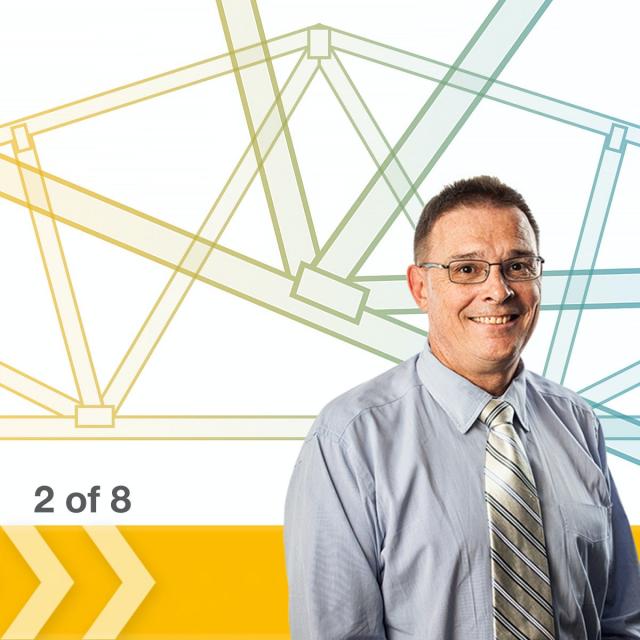
In this module, learners will first be introduced to the course and instructor. Next they will be introduced to the engineering design process and its overall concepts and steps. Finally, they will be guided through further discussions and readings on each step of the engineering design process.

WEEK 3
Design Process II
In this module learners will be introduced to the further details of the engineering design process and then will then be guided through further discussions and readings on additional steps of the engineering design process.

WEEK 4
Product Design Process
In this module learners will be introduced to the product design process and will learn about product design process steps and considerations. They also will learn the differences between the general engineering design process and the product design process.
Go to Class
MOOC List is learner-supported. When you buy through links on our site, we may earn an affiliate commission.

Related Courses

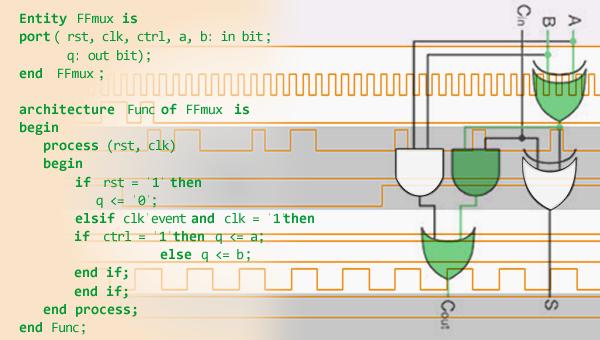
Sistemas Digitales: De las puertas lógicas al procesador (Coursera) Coursera
Universitat Autònoma de Barcelona

Sistemas Digitales: De las puertas lógicas al procesador (Coursera)

En este curso aprenderemos los fundamentos del diseño de los circuitos digitales actuales, siguiendo una orientación eminentemente práctica. A diferencia de otros cursos más "clásicos" de Circuitos Digitales, nuestro interés se centrará más en el Sistema que en la Electrónica que lo sustenta. Este enfoque nos permitirá sentar las bases del diseño de Sistemas Digitales complejos.

Oct 26th 2026
5-12 Weeks
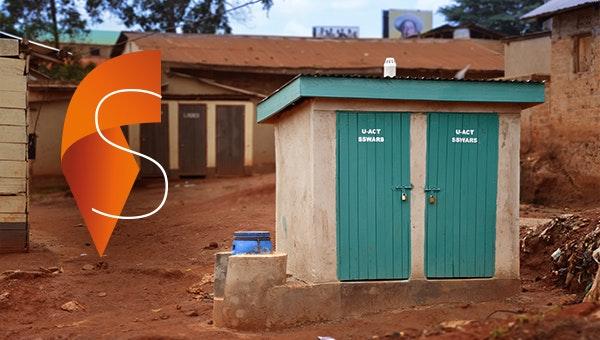
Planning & Design of Sanitation Systems and Technologies (Coursera) Coursera
École Polytechnique Fédérale de Lausanne

Planning & Design of Sanitation Systems and Technologies (Coursera)

Do you want to learn how to plan affordable and context-specific sanitation solutions? Do you want to be updated on the newest developments in urban sanitation planning and programming? Do you want to get insights about best practices examples of urban sanitation systems in low- and middle-income countries? If yes, this course is for you! This course provides you with an introduction to integrated sanitation planning, both on a citywide scale and for specific contexts such as informal settlements.

Nov 2nd 2026
5-12 Weeks
Controle de Sistemas no Plano-s (Coursera) Coursera
Instituto Tecnológico de Aeronáutica

Controle de Sistemas no Plano-s (Coursera)

Após esse curso você será capaz de esboçar o Lugar Geométrico das Raízes (LGR - Root Locus) do denominador da Função de Transferência em Malha Fechada a partir dos polos e zeros da Função de Transferência em Malha aberta. Você também será capaz de projetar controladores de avanço de fase para atender simultaneamente requisitos de desempenho de amortecimento e de velocidade da resposta.

Oct 26th 2026
5-12 Weeks
Ingeniería de Tráfico (Coursera) Coursera
Pontificia Universidad Católica de Chile

Ingeniería de Tráfico (Coursera)

El curso presenta en primer lugar las principales relaciones que caracterizan la circulación de vehículos y que dan pie a la teoría de circulación de vehículos sobre redes de transporte. Posteriormente se discutirán aspectos relativos al control de tráfico en intersecciones, sean estas de prioridad o semaforizadas. Finalmente, discutiremos sobre las características que presentan algunos modelos dinámicos de tráfico bastante utilizados en la actualidad.

Nov 2nd 2026
4 Weeks
Engineering Maintainable Android Apps (Coursera) Coursera
Vanderbilt University

Engineering Maintainable Android Apps (Coursera)

Engineering Maintainable Android Apps, which is a 4 week MOOC that shows by example various methods for engineering maintainable Android apps, including test-driven development methods and how to develop/run unit tests using JUnit and Robotium (or equivalent automated testing frameworks for Android), as well as how to successfully apply common Java/Android software patterns to improve the extensibility and clarity of Android apps.

Oct 26th 2026
4 Weeks
Self Awareness and the Effective Leader (Coursera) Coursera
Rice University

Self Awareness and the Effective Leader (Coursera)

Part of being an effective leader is learning how to play to your strengths and overcome characteristics that don't lend to good leadership practices. During the course, you will examine your own strengths and learn ways to use them in a leadership role. Learn to manage stress and solve problems creatively. Throughout the course, you will also build a tool kit of useful techniques that you can begin using right away in your engineering career.

Oct 26th 2026
5-12 Weeks
Interpersonal Communication for Engineering Leaders (Coursera) Coursera
Rice University

Interpersonal Communication for Engineering Leaders (Coursera)

This course covers communication skills that engineering leaders use every day to motivate, inspire, and support the people in their organizations. Speaking and writing are basic leadership communication skills. (We covered these topics in the Specialization course 1 and 3.) However, leaders also need to be skillful interpersonal communicators.

Nov 9th 2026
4 Weeks
Control of Nonlinear Spacecraft Attitude Motion (Coursera) Coursera
University of Colorado Boulder

Control of Nonlinear Spacecraft Attitude Motion (Coursera)

This course trains you in the skills needed to program specific orientation and achieve precise aiming goals for spacecraft moving through three dimensional space. First, we cover stability definitions of nonlinear dynamical systems, covering the difference between local and global stability. We then analyze and apply Lyapunov's Direct Method to prove these stability properties, and develop a nonlinear 3-axis attitude pointing control law using Lyapunov theory. Finally, we look at alternate feedback control laws and closed loop dynamics.

Oct 26th 2026
4 Weeks
Applications in Engineering Mechanics (Coursera) Coursera
Georgia Institute of Technology

Applications in Engineering Mechanics (Coursera)

This course applies principles learned in my course “Introduction to Engineering Mechanics” to analyze real world engineering structures. You will need to have mastered the engineering fundamentals from that class in order to be successful in this course offering. This course addresses the modeling and analysis of static equilibrium problems with an emphasis on real world engineering systems and problem solving.

Nov 2nd 2026
5-12 Weeks
Materials Science: 10 Things Every Engineer Should Know (Coursera) Coursera
University of California, Davis

Materials Science: 10 Things Every Engineer Should Know (Coursera)

We explore “10 things” that range from the menu of materials available to engineers in their profession to the many mechanical and electrical properties of materials important to their use in various engineering fields. We also discuss the principles behind the manufacturing of those materials. By the end of the course, you will be able to: recognize the important aspects of the materials used in modern engineering applications; explain the underlying principle of materials science: “structure leads to properties,”; identify the role of thermally activated processes in many of these important “things” – as illustrated by the Arrhenius relationship; relate each of these topics to issues that have arisen (or potentially could arise) in your life and work.

Oct 26th 2026
5-12 Weeks