EdX

Simulating a Quadcopter's Flight (edX)

Offered by MathWorks,
Simulating a Quadcopter's Flight (edX)

Gain the skills to model the mechanical subsystems, analyze flight dynamics, and refine a quadcopter simulation. Welcome to Modeling the Quadcopter Airframe, the second course in the Engineering Design and Simulation Program. In this course, you will gain the skills to model the mechanical subsystems, analyze flight dynamics, and refine your designs using simulations.

Class Deals by MOOC List - Click here and see EdX's Active Discounts, Deals, and Promo Codes.

Building upon the foundation established in the first course of the program, this course focuses on breaking down the complex quadcopter system into smaller, more manageable subsystems. You will learn the mechanical part of the quadcopter, known as the airframe subsystem, and simulate its flight behavior. You will model free-body diagrams and mathematical equations into block diagrams through a step-by-step approach, enabling a detailed analysis of the quadcopter’s flight dynamics. To accurately represent the physical system and model the mathematical equations involved in the quadcopter’s motion, you will utilize Simulink and Simscape, powerful tools used in industry for modeling physical systems.
To reinforce your learning, you will have the chance to practice your skills with an additional project. You will model the car's suspension system and analyze the effects of changing passenger loads on the ride quality under various road conditions. This practical application will further enhance your modeling and analysis skills.
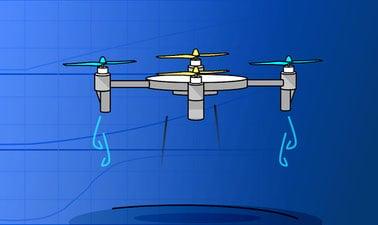
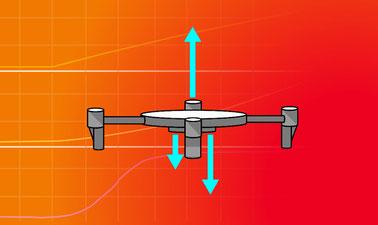
By the end of this course, you will balance the upward thrust of the propellers against the downward force of gravity to see your quadcopter take flight.
No prior modeling experience is required. Simulink and Simscape, industry-leading block diagram environments, are used throughout the courses to teach fundamental modeling workflows. You will be provided with a free license for the duration of the program.
This course is part of the Engineering Design and Simulation Professional Certificate.

What you'll learn

  • How to model the mechanical component
  • How to simulate and test the mechanical subsystem
  • How to analyze flight dynamics
  • How to refine a quadcopter simulation

Go to Class
MOOC List is learner-supported. When you buy through links on our site, we may earn an affiliate commission.

Related Courses

Fundamentals of Robotics & Industrial Automation (Coursera) Coursera
L&T EduTech

Fundamentals of Robotics & Industrial Automation (Coursera)

The "Fundamentals of Robotics & Industrial Automation" course is tailored to provide a comprehensive understanding of essential concepts and practical skills necessary for excelling in the field of collaborative robotics. Through three dynamic modules, participants will explore the intricacies of sensors & transducers in machine tools & robots, servo systems, and interfacing and simulation techniques.

Aug 31st 2026
3 Weeks
Assembling and Testing a Quadcopter (edX) EdX
MathWorks

Assembling and Testing a Quadcopter (edX)

Learn the crucial skills of system-level integration, comprehensive testing, and collaboration to design and evaluate quadcopter systems effectively. Welcome to Integration and Testing of Quadcopter Systems, the final course in the Engineering Design and Simulation Program. This course is focused on integrating all the quadcopter subsystems into a cohesive system-level model and conducting thorough testing to ensure optimal performance.

Self Paced
Self-Paced
Simulation Skills: This is Your Brain on the Future (Coursera) Coursera
Institute for the Future

Simulation Skills: This is Your Brain on the Future (Coursera)

Do you want to learn how to simulate the future more creatively and more effectively? This course is for you. Humans are the only living creatures with the ability to think about and make plans for the long- term future. Even so, our brains don’t always make it easy. Over the past decade, scientists have discovered a number of neurological “road blocks” to effective futures thinking. These glitches in the brain make it harder for us to accurately predict how we’ll feel and what we’re likely to do, when a particular future arrives.

Aug 24th 2026
4 Weeks
Conversion Thermodynamique de la Chaleur : Modéliser et Simuler (FUN) FUN
Institut Mines-Telecom

Conversion Thermodynamique de la Chaleur : Modéliser et Simuler (FUN)

La Conversion Thermodynamique de la Chaleur joue un rôle essentiel dans nos sociétés car elle permet de répondre à des besoins fondamentaux comme le chauffage, la production de froid, l’éclairage, la mobilité, la fourniture d’énergie mécanique, etc. Les systèmes énergétiques qui seront étudiés dans ce MOOC ont donc un impact direct sur notre vie quotidienne à tous. Ce MOOC propose une méthode originale qui permet de dépasser les limites que rencontre l'enseignement de la discipline par les approches classiques.

No sessions available
5-12 Weeks
Simulation en Santé, des principes aux applications (FUN) FUN
Université Sorbonne Paris Cité

Simulation en Santé, des principes aux applications (FUN)

Le Mooc « Simulation en Santé » a pour ambition de donner à des non spécialistes un ensemble de connaissances permettant d'appréhender la simulation appliquée aux métiers de la santé, ses principes, ses outils, ses bonnes pratiques, et pour les plus motivés les premières données essentielles pour aborder un cours d’instructeur en simulation (Train the trainer program) et devenir demain formateur en simulation en santé.

No sessions available
5-12 Weeks
Avoid SAP S/4HANA Project Delays with Third-Party Systems Service Virtualization (openSAP) OpenSAP
SAP

Avoid SAP S/4HANA Project Delays with Third-Party Systems Service Virtualization (openSAP)

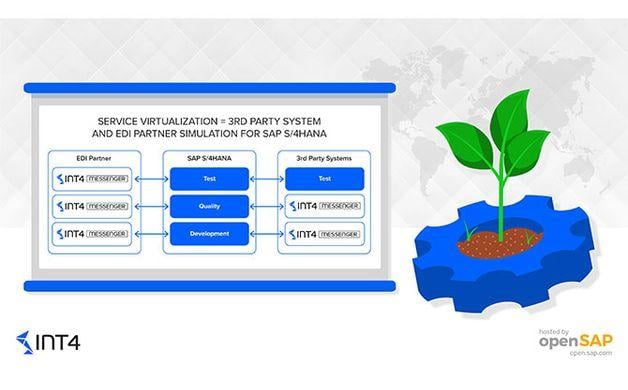
Join this free online course to learn how SAP-tailored service virtualization helps you optimize your SAP S/4HANA projects by avoiding delays and making them more sustainable. Dependencies caused by 3rd party systems, B2B, and EDI partners often result in delays in SAP S/4HANA transformation projects. SAP-tailored service virtualization enables you to avoid delays by virtualizing electronic messages from external applications and break dependencies in all stages of the project.

Nov 9th 2022
3 Weeks
Modelling and Simulation using Simulink (iversity) Iversity
Hochschule RheinMain - Wiesbaden Rüsselsheim

Modelling and Simulation using Simulink (iversity)

Do you want to use Simulink® to simulate technical systems? Do you want to control real systems using an Arduino® microcontroller? Then this MOOC's for you. Enrol today! The main objective of this MOOC is to teach you how to use of Simulink® as a simulation tool suitable for a broad variety of application domains. We will specifically focus on topics of interaction of the simulation models with the real world using Arduino Microcontrollers and Simulink®'s corresponding Arduino Support Package.

No sessions available
5-12 Weeks
Controle de Sistemas no Plano-s (Coursera) Coursera
Instituto Tecnológico de Aeronáutica

Controle de Sistemas no Plano-s (Coursera)

Após esse curso você será capaz de esboçar o Lugar Geométrico das Raízes (LGR - Root Locus) do denominador da Função de Transferência em Malha Fechada a partir dos polos e zeros da Função de Transferência em Malha aberta. Você também será capaz de projetar controladores de avanço de fase para atender simultaneamente requisitos de desempenho de amortecimento e de velocidade da resposta.

Aug 31st 2026
5-12 Weeks
Probability Theory (edX) EdX
Delft University of Technology,DelftX

Probability Theory (edX)

This course provides an introduction to probability theory. You will encounter discrete and continuous random variables and learn in which situations they appear, what their properties are and how they interact. A strong foundation in mathematics is critical for success in all science and engineering disciplines. Whether you want to make a strong start to a master’s degree, prepare for more advanced courses, solidify your knowledge in a professional context or simply brush up on fundamentals, this course will get you up to speed.

Self Paced
Self-Paced