Shaping Future Healthcare: The Promise of Genes (OpenLearning)

Offered by Sunway University,
Shaping Future Healthcare: The Promise of Genes (OpenLearning)

In this course, you will be guided towards a better understanding of genes and their functions as well as how the environment and your lifestyle choices can affect your genes and in turn impact your health.

Throughout the course, you will be exposed to precise information that will help dispel common misunderstanding of genes and its role in our health. Join us!

Course Outcomes

  • Describe genes and their function
  • Explain how the environment and our lifestyle choices impact gene function
  • Analyse how specific diseases are influenced by abnormal gene function
  • Assess how genetic knowledge generated from research is being translated into innovations and strategies to manage diseases and improve health
  • Discuss barrier in promoting greater health ownership
  • Build a strategy to communicate effectively to a specific target audience on how our greater knowledge of genes is improving our understanding of disease and the management of the disease
Go to Class
MOOC List is learner-supported. When you buy through links on our site, we may earn an affiliate commission.

Related Courses

Population Health: Study Design (Coursera) Coursera
Leiden University

Population Health: Study Design (Coursera)

Health care professionals increasingly have to make clinical decisions in aging and diverse populations. Also, they have to deal with rising health care costs, fragmented health care supply and advancing medical technologies and IT systems. These developments go beyond every day practice and will require new skills. In this course we will walk you through key steps in designing a research study, from formulating the research question to common pitfalls you might encounter when interpreting your results.

Oct 26th 2026
4 Weeks
Service Transformed: Lessons in U.S. Veteran Centered Care (Coursera) Coursera
University of Michigan

Service Transformed: Lessons in U.S. Veteran Centered Care (Coursera)

Improving health care for veterans has become a matter of national attention and has gained increasing attention from the medical community. With the current surge of veterans reintegrating into civilian society it is critical to improve the training of the next cadre of providers who will provide care for our veterans. It is widely known that veterans receive care in all aspects of the health system, thus providers in veteran focused care facilities, military health serves and civilian locals must be aware of the unique needs of veterans. It is perhaps even more important to educate civilian providers who may be unfamiliar with the unique physical, mental and emotional needs related to military service.

Oct 26th 2026
5-12 Weeks
CareSearch My Learning Modules (OpenLearning) OpenLearning
Flinders University,CareSearch

CareSearch My Learning Modules (OpenLearning)

Have you ever been in a situation with a patient where you did not know what to say next? Do you feel that you have missed an opportunity to make a positive difference to a patient and their family? CareSearch can help you find the right answers. My Learning introduces you to resources in CareSearch and shows you how you can use them in your clinical practice.

Self-Paced
Self-Paced
Severe to Profound Intellectual Disability: Circles of Care and Education (Coursera) Coursera
University of Cape Town

Severe to Profound Intellectual Disability: Circles of Care and Education (Coursera)

This course is about caring for and educating children (and youth) with severe to profound intellectual disability. We use the idea of 'circles' to position the child at the center of the many levels of support needed. Around the child are circles of care and education - such as the parents, family, friends, caregivers, educators, health care workers and others such as neighbors, business owners and community members.

Oct 26th 2026
4 Weeks
Health Across the Gender Spectrum (Coursera) Coursera
Stanford University

Health Across the Gender Spectrum (Coursera)

This course offers an intimate, story-based introduction to the experiences of six transgender children and their families. Through illustrated stories and short teaching videos, learners will gain a better understanding of gender identity and the gender spectrum. Stanford physicians, K-12 educators, and transgender faculty members offer practical tips for parents, teachers, healthcare providers and anyone who wants to help create a more gender-expansive environment - one in which all people can live authentically. As a global community of unique individuals, we can begin to build a world that is ready to nurture and love each and every child.

Oct 26th 2026
3 Weeks
The exposome: cracking the science about what makes us sick (Coursera) Coursera
Universiteit Utrecht

The exposome: cracking the science about what makes us sick (Coursera)

What are the causes of disease? We know that most diseases result from a combination of genes and environment (nature and nurture). Our genes alone do not determine our fate. For most complex diseases, externalities - environmental factors in the broad sense - are more important. This includes our living and working environments, diet, social support and stress, pollution, and exposure to infectious agents. Exposome research is about discovering the non-genetic drivers of health and disease.

Nov 1st 2026
5-12 Weeks
Water Supply and Sanitation Policy in Developing Countries Part 1: Understanding Complex Problems (Coursera) Coursera
University of Manchester

Water Supply and Sanitation Policy in Developing Countries Part 1: Understanding Complex Problems (Coursera)

Our course explores what can be done to solve the complex problem that half a billion people worldwide do not have improved water supplies and two billion do not have improved sanitation. We look forward to you joining us. We want to help you develop the skills you need to address this major global challenge of the 21st century.

Oct 26th 2026
5-12 Weeks
HI-FIVE: Health Informatics For Innovation, Value & Enrichment (Social/Peer Perspective) (Coursera) Coursera
Columbia University

HI-FIVE: Health Informatics For Innovation, Value & Enrichment (Social/Peer Perspective) (Coursera)

HI-FIVE (Health Informatics For Innovation, Value & Enrichment) Training is an approximately 10-hour online course designed by Columbia University in 2016, with sponsorship from the Office of the National Coordinator for Health Information Technology (ONC). The training is role-based and uses case scenarios. Our nation’s healthcare system is changing at a rapid pace. Transformative health care delivery programs depend heavily on health information technology to improve and coordinate care, maintain patient registries, support patient engagement, develop and sustain data infrastructure necessary for multi-payer value-based payment, and enable analytical capacities to inform decision making and streamline reporting.

Oct 26th 2026
4 Weeks
Leading Healthcare Quality and Safety (Coursera) Coursera
George Washington University

Leading Healthcare Quality and Safety (Coursera)

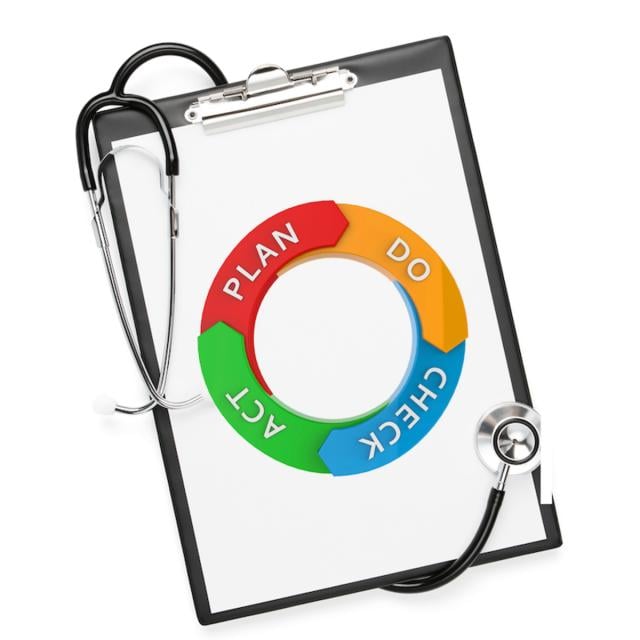
Ensuring patient safety and healthcare quality is critical and should be a key focus of everyone in healthcare practice. This course provides healthcare practitioners and others with an introduction to the knowledge and skills needed to lead patient safety and quality improvement initiatives at the micro and macro levels. Participants will explore the foundations of health care quality and the science underlying patient safety and quality improvement, design and select effective health care measures, analyze patient safety problems and processes using tools such as human factors analysis, apply systematic approaches including the Plan-Do-Study-Act (PDSA) model to address quality improvement challenges, and learn strategies to lead a culture of change

Oct 26th 2026
5-12 Weeks
Diagnosing Health Behaviors for Global Health Programs (Coursera) Coursera
Johns Hopkins University

Diagnosing Health Behaviors for Global Health Programs (Coursera)

Health behavior lies at the core of any successful public health intervention. While we will examine the behavior of individual in depth in this course, we also recognize by way of the Ecological Model that individual behavior is encouraged or constrained by the behavior of families, social groups, communities, organizations and policy makers. We recognize that behavior change is not a simplistic process but requires an understanding of dimensions like frequency, complexity and cultural congruity. Such behavioral analysis is strengthened through the use of a toolkit of theoretical models and practical frameworks.

Oct 26th 2026
4 Weeks