Shakespeare's Language: Revealing Meanings and Exploring Myths (FutureLearn)

Offered by Lancaster University,
Shakespeare's Language: Revealing Meanings and Exploring Myths (FutureLearn)

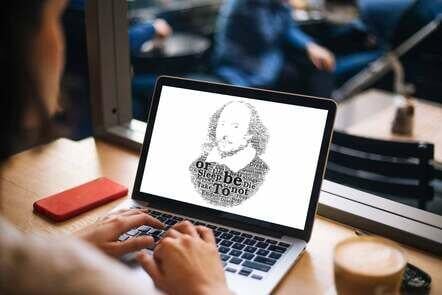
Demystify renowned Shakespeare myths and get introduced to corpus-based methods for analysing his use of language in context. Debunk and discover common myths surrounding the language of William Shakespeare. William Shakespeare is a global phenomenon, yet there is actually relatively little work specifically devoted to his language, and even less deploying the latest techniques from linguistics.

Class Deals by MOOC List - Click here and see FutureLearn's Active Discounts, Deals, and Promo Codes.

On this course, you will explore Shakespeare’s language and, more generally, the language of his time.
Over four weeks, you will be introduced to “big data” corpus methods (methods that use computers to explore large volumes of language data) which you can use for your own investigations, and will explore how words and meanings pattern across plays, characters, and more.
Along the way, you will find out why various beliefs about Shakespeare’s life and language–like that he coined an extraordinary number of new words–are actually myths.

What topics will you cover?

  • The general features of the English of Shakespeare’s time, from spellings through words to grammar;
  • The nature of Shakespearean texts, including how their production affected their language;
  • How huge collections of texts can be explored by computer to highlight meanings (and in a more subtle and yet empirical way than current Shakespearean dictionaries);
  • The myths about Shakespeare’s language (e.g. that he coined an extraordinary number of new words); and
  • How fresh light can be shed on the linguistic styles of plays and characters through corpus methods.

What will you achieve?
By the end of the course, you‘ll be able to...

  • Demonstrate an understanding of Shakespeare’s language and empirical methods for its analysis
  • Evaluate common myths surrounding Shakespeare’s language;
  • Compare the language of Shakespeare with that of his contemporaries
  • Investigate the linguistic traits of characters and plays
  • Apply corpus linguistic concepts and methods

Go to Class
MOOC List is learner-supported. When you buy through links on our site, we may earn an affiliate commission.

Related Courses

Humphry Davy: Laughing Gas, Literature, and the Lamp (FutureLearn) FutureLearn
Lancaster University,Royal Institution - RI

Humphry Davy: Laughing Gas, Literature, and the Lamp (FutureLearn)

Discover Humphry Davy and his contribution to science and the arts. Before culture was divided into the sciences and the arts there was a chemist who was also a poet. Sir Humphry Davy (1778-1829) is one of the best known men of science of the nineteenth century: he was the first person to inhale nitrous oxide; he isolated nine chemical elements; and he invented the miners’ safety lamp known as the Davy lamp. This course will consider Davy’s life and career using manuscript sources held at the Royal Institution of Great Britain.

Oct 9th 2023
4 Weeks
Shakespeare: Print and Performance (FutureLearn) FutureLearn
King's College London

Shakespeare: Print and Performance (FutureLearn)

As part of Shakespeare400, learn about Shakespeare in print and performance around the world, from early modern times to today. Why do we continue to read and perform Shakespeare’s works around the world today? How were his plays performed and printed 400 years ago, and how has our conception of Shakespeare changed over the centuries?

May 4th 2020
4 Weeks
Reading Macondo: the Works of Gabriel García Márquez (FutureLearn) FutureLearn
Universidad de los Andes

Reading Macondo: the Works of Gabriel García Márquez (FutureLearn)

Explore why the author of One Hundred Years of Solitude is one of the 20th century’s leading writers in this free online course. Gabriel García Márquez is a Colombian writer, who won the Literature Nobel Prize in 1982. He has been recognised as one of the world’s leading writers in the second half of the 20th century. His works have been translated into many languages, been adapted for TV and film, and inspired many subsequent works of art.

No sessions available
5-12 Weeks
Gabriel García Márquez: Power, History and Love (FutureLearn) FutureLearn
Universidad de los Andes

Gabriel García Márquez: Power, History and Love (FutureLearn)

Identify the author’s contributions to world literature through the study of three of his obsessions: power, history and love. In this course you will be able to identify Colombian writer Gabriel García Márquez’s narrative contributions to world literature through the study of three of the author’s obsessions: power, history and love.

No sessions available
5-12 Weeks
Introduction to Linguistics (FutureLearn) FutureLearn
University of Birmingham

Introduction to Linguistics (FutureLearn)

Get an introduction to linguistics and discover how research is transforming our understanding of language. Find out how language works through linguistics. Language is fundamental to our everyday social interactions, our politics and culture, and our thoughts. We all have ideas about how language works, but what separates our own intuitions from linguistic knowledge?

No sessions Available
3 Weeks
Studying in Italian - Language and Literature: a MOVE-ME Project Course (FutureLearn) FutureLearn
The Open University,Università per Stranieri di Siena - UniStraSi,NUI Galway

Studying in Italian - Language and Literature: a MOVE-ME Project Course (FutureLearn)

Study Language and Literature in Italian and develop the skills you need to take part in a European student mobility program. Each year thousands of students travel across Europe to study in a foreign language like Italian. This can be daunting, even for those who are fluent. This online course, developed within the MOVE-ME project by UniStraSi, NUI Galway and The Open University, will help, guiding you through the peculiarities of academic discourse in Italian, and enabling you to understand and produce written and aural academic texts.

No sessions available
5-12 Weeks
What Is Poetry? An Introduction to Literary Analysis (FutureLearn) FutureLearn
The University of Newcastle, Australia

What Is Poetry? An Introduction to Literary Analysis (FutureLearn)

Understand the basics of poetry analysis and learn key skills for studying English literature by exploring a variety of texts. Explore, understand and critique poetry. What are the different ways you can understand a poem? How do different elements of a poem work together? What difference does context make to literature?

Jul 19th 2021
3 Weeks
Cultural Studies and Modern Languages: an Introduction (FutureLearn) FutureLearn
University of Bristol

Cultural Studies and Modern Languages: an Introduction (FutureLearn)

Explore the culture, language and national identity of eight countries through their books, images, slogans and monuments. Are you interested in other countries? Do you want to study and understand other cultures? This free online course will take you on a journey through a number of periods from the medieval to the modern day, from Russia to Europe and all the way to Latin America.

No sessions available
4 Weeks
Shakespeare and his World (FutureLearn) FutureLearn
The University of Warwick

Shakespeare and his World (FutureLearn)

Together with the Shakespeare Birthplace Trust, Professor Jonathan Bate explores Shakespeare, his works and the world he lived in. William Shakespeare is one of the most famous authors of all time. 2014 marks the 450th anniversary of his birth. His words have inspired and moved people from around the globe for centuries.

No sessions available
5-12 Weeks