Scandinavian Film and Television (Coursera)

Scandinavian Film and Television (Coursera)

IIn many ways Scandinavian film and television is a global cultural brand, connected with and exporting some of the cultural and social values connected to a liberal and progressive welfare society. This course deals with the social, institutional and cultural background of film and television in Scandinavia and in a broader European and global context.

Class Deals by MOOC List - Click here and see Coursera's Active Discounts, Deals, and Promo Codes.

Syllabus

WEEK 1
Contemporary Scandinavian Film and TV Culture and Dreyer's Classical Cinema
This module consists of two lessons. The first lesson offers an introduction to main trends in the contemporary Scandinavian film and television culture, focusing – among other things – on how the national film and television cultures relate to ideas of the welfare state. The module also addresses the international impact of film and television from Scandinavia. The second lesson deals with the early years of cinema in Scandinavia and the work of the Danish director Carl Th. Dreyer, from a silent film classic such as 'The Passion of Joan of Arc' to the sound film era.

WEEK 2
Ingmar Bergman and Lars von Trier
'The Seventh Seal', 'Persona' and 'Cries and Whispers' are just some of the famous films by the acclaimed Swedish director Ingmar Bergman. The third lesson focuses on issues of influences, themes and style in his films as well as on Bergman's importance for the modern art cinema. The fourth lesson deals with the internationally renowned ideas and films by the Danish director Lars von Trier: 'The Europa-trilogy'; The TV series 'Riget'/'The Kingdom'; 'Breaking the Waves'; 'Dancer in the Dark' and 'Dogville'; The Dogma 95 Manifesto; 'Antichrist', 'Melancholia' and 'Nymphomaniac' ...

WEEK 3
New Wave, Art Cinema and Social Drama
Many people have heard of the French new wave cinema, 'la nouvelle vague'. The fifth lesson deals with the main tendencies of the Scandinavian new wave cinema and some of its 'auteurs'. The sixth lesson focuses on different tendencies in the Scandinavian art film and social drama after 1990, ranging from award-winning heritage films to harsh stories from the contemporary Scandinavian welfare societies.

WEEK 4
Documentary and Early TV Drama
Scandinavian cinema has a long history of strong documentary film making. The seventh lesson moves from the early documentary filmmakers to the contemporary – global and digital – scene for Scandinavian documentaries. Television drama is important for the Scandinavian public service broadcasters, but the notions of good television drama have changed remarkably from the early days of television up until today. In the eighth lesson we focus on the main tendencies in these developments from 1960 to 2000.

WEEK 5
Modern TV Drama and the Digital Revolution
With 'Nordic Noir' such as 'Wallander' and 'Forbrydelsen/The Killing' becoming a 'brand' in the 2010s, some 'Scandi crime' series were suddenly of interest to international as well as national audiences. The ninth lesson focuses on Scandinavian television drama after the millennium and addresses some of the changes in the production framework that helped the series move from the national to the international realm. The tenth and final lesson discusses how to understand the contemporary Scandinavian film and television culture in a global and digital era. What might the transnational future bring?

Go to Class
MOOC List is learner-supported. When you buy through links on our site, we may earn an affiliate commission.

Related Courses

Introduction to Imagemaking (Coursera) Coursera
California Institute of the Arts

Introduction to Imagemaking (Coursera)

This course for serious makers, and for students new to imagemaking. Imagemaking is a fluid and exciting area of graphic design that comes out of practice and process: experimenting fearlessly, showing and sharing ideas, and giving and receiving knowledgeable and constructive input.

Aug 31st 2026
4 Weeks
The Cycle: Management of Successful Arts and Cultural Organizations (Coursera) Coursera
University of Maryland, College Park

The Cycle: Management of Successful Arts and Cultural Organizations (Coursera)

What makes a successful arts and cultural organization? Led by DeVos Institute Chairman Michael M. Kaiser and President Brett Egan, this course will introduce you to a management theory called the Cycle which supports thriving arts and cultural organizations. Learning from our work with managers from over 80 countries around the world, the DeVos Institute developed the Cycle as a simple, but powerful tool to assist managers in their effort to respond to an increasingly complex environment and propel their institutions to excellence.

Sep 7th 2026
5-12 Weeks
Music and Social Action (Coursera) Coursera
Yale University

Music and Social Action (Coursera)

What is a musician’s response to the condition of the world? Do musicians have an obligation and an opportunity to serve the needs of the world with their musicianship? At a time of crisis for the classical music profession, with a changing commercial landscape, a shrinking audience base, and a contraction in the number of professional orchestras, how does a young musician construct a career today? Are we looking at a dying art form or a moment of reinvigoration?

Sep 7th 2026
5-12 Weeks
The Beauty of Kunqu Opera (Coursera) Coursera
The Chinese University of Hong Kong

The Beauty of Kunqu Opera (Coursera)

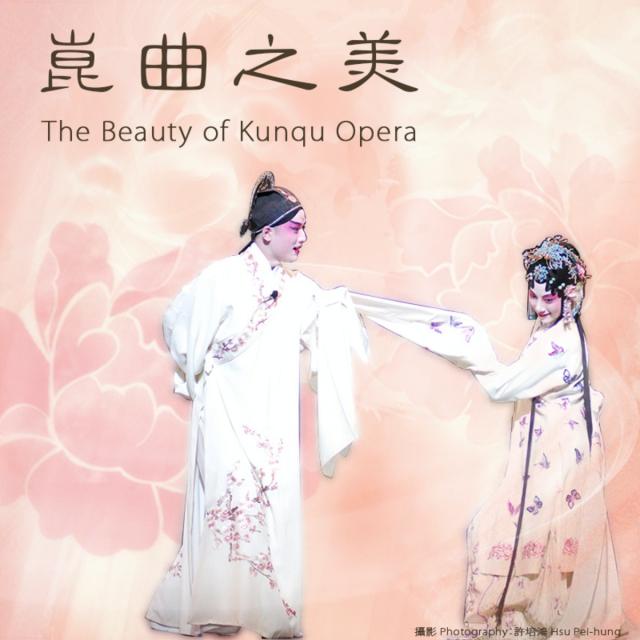
This course will focus on the historical and cultural background, literary aesthetics, music, and performance of Kunqu, China’s classical opera. After viewing the lecture videos presented by scholars and renowned maestros in the field of Kunqu, students’ understanding and appreciation of Chinese performing arts, classical literature and traditional culture will be enhanced.

Aug 31st 2026
5-12 Weeks
Global Diplomacy – Diplomacy in the Modern World (Coursera) Coursera
University of London,SOAS University of London

Global Diplomacy – Diplomacy in the Modern World (Coursera)

The Global Diplomacy course is a unique offering to the MOOC environment. Bringing together cutting edge research in the broad fields of Diplomatic and International Studies, award winning distance learning delivery and the instructors previous experience of delivering a successful MOOC. Please see the volume Global Diplomacy: Theories, Types and Models authored with Dr Alison Holmes, (Westview, 2016), and the Understanding Research Methods MOOC from Coursera.

Sep 7th 2026
5-12 Weeks
The Worldview of Thomas Berry: The Flourishing of the Earth Community (Coursera) Coursera
Yale University

The Worldview of Thomas Berry: The Flourishing of the Earth Community (Coursera)

Thomas Berry (1914-2009) was a historian of world religions and an early voice awakening moral sensibilities to the environmental crisis. He is known for articulating a “new story” of the universe that explores the implications of the evolutionary sciences and cultural traditions for creating a flourishing future. This course investigates Berry’s life and thought in relation to the Journey of the Universe project.

Sep 14th 2026
5-12 Weeks
Computational Social Science Methods (Coursera) Coursera
University of California, Davis

Computational Social Science Methods (Coursera)

This course gives you an overview of the current opportunities and the omnipresent reach of computational social science. The results are all around us, every day, reaching from the services provided by the world’s most valuable companies, over the hidden influence of governmental agencies, to the power of social and political movements. All of them study human behavior in order to shape it. In short, all of them do social science by computational means.

Sep 14th 2026
4 Weeks
Art and the Digital Transformation (Coursera) Coursera
Copenhagen Business School

Art and the Digital Transformation (Coursera)

More than two decades into the new millennium, it is difficult to envision a future in which digital technologies do not play a significant role. Digital technologies frequently make a lot of promises. However, in recent years, we have seen an increasing number of artists address fundamental issues of the Digital Transformation, such as surveillance, lack of representation, and digital illiteracy. Artists have demonstrated that, while digital technologies have the potential to support processes leading to greater equality, they are frequently viewed as perpetuating and even exacerbating inequalities.

Sep 7th 2026
5-12 Weeks
The Modern and the Postmodern (Part 2) (Coursera) Coursera
Wesleyan University

The Modern and the Postmodern (Part 2) (Coursera)

This course examines how the idea of "the modern" develops at the end of the 18th century in European philosophy and literature, and how being modern (or progressive, or hip) became one of the crucial criteria for understanding and evaluating cultural change. Are we still in modernity, or have we moved beyond the modern to the postmodern?

Sep 7th 2026
5-12 Weeks
ART of the MOOC: Public Art and Pedagogy (Coursera) Coursera
Duke University,Creative Time

ART of the MOOC: Public Art and Pedagogy (Coursera)

Students of this course may try their hand at their own public art interventions, or simply focus on learning from the theory of public practice and its recent history. Designed by artist and Duke professor, Pedro Lasch, and co-taught by Creative Time artistic director, Nato Thompson, this course presents public culture and art in their radically reinenvented contemporary forms. The lectures link major developments of recent decades to wider topics like spatial politics, everyday social structures, and experimental education.

Sep 14th 2026
5-12 Weeks
ART of the MOOC: Activismo y Movimientos Sociales (Coursera) Coursera
Duke University,Creative Time

ART of the MOOC: Activismo y Movimientos Sociales (Coursera)

Este curso es para activistas, artistas y pensadores que deseen entender mejor el cambio social y participar en él. El contenido del curso enfoca en la coincidencia prolífica y emocionante entre el arte socialmente comprometido y prácticas culturales generadas por recientes movimientos sociales en todo el mundo. Más que evaluar la eficacia política de actividades como el luto, la escucha, la organización, el baile, o la fiesta, las conferencias examinan tales actividades culturales al lado y dentro de la práctica artística contemporánea.

Sep 14th 2026
5-12 Weeks
Usos didácticos del cine: Introducción al análisis (Coursera) Coursera
Universidad Nacional Autónoma de México

Usos didácticos del cine: Introducción al análisis (Coursera)

¡Hola! Bienvenido al MOOC "Usos Didácticos del Cine: Introducción al Análisis", ofrecido por la UNAM. A lo largo de este curso, te presentaremos varias formas de usar películas en tus clases para mejorar el rendimiento de tus estudiantes. Además, podrás acceder a una variedad de herramientas y marcos conceptuales referentes a la teoría del cine válidos para poder usar con más conocimientos cualquier obra cinematográfica en el aula.

Sep 7th 2026
5-12 Weeks