Scaling operations: Linking strategy and execution (Coursera)

Scaling operations: Linking strategy and execution (Coursera)

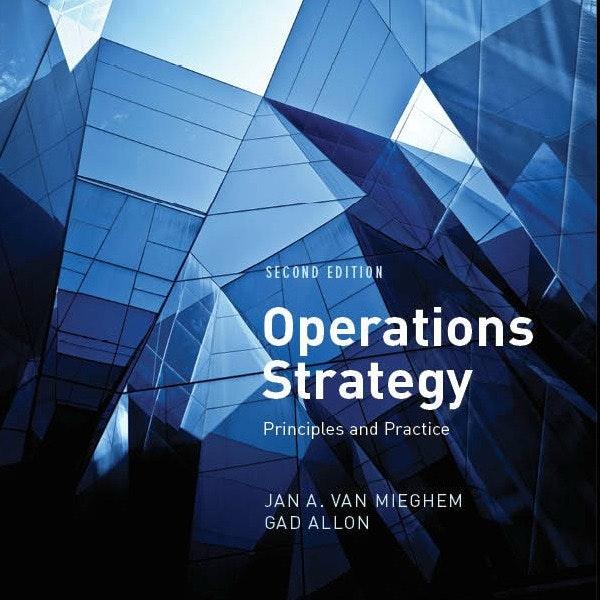
Over the past several decades, operations strategy has played an increasingly important role in business’ success. In this course, we will equip you with concepts and tools to build operations in a way that not only supports your competitive strategy, but also allows you to create new opportunities in the market place.

Class Deals by MOOC List - Click here and see Coursera's Active Discounts, Deals, and Promo Codes.

Scaling operations: Linking strategy and execution is a five-week course dedicated to making strategic decisions that are grounded in operational reality. Together, we will study how to build and evaluate the “operating system” of the firm to maximize value. This involves tailoring the firm’s operational competencies, assets, and processes to a specific business strategy.
Each week, we’ll explore case studies, engage in discussions and examine realistic data. Thanks to our data-driven approach, you’ll be able to implement your learning directly into practice. At the end of this course, you’ll be ready to build an effective, actionable plan to scale your department or organization.

Syllabus

WEEK 1
The VCAP Framework
We start by explaining the concepts of operating systems and operations strategy. Then we introduce the main "VCAP" framework, which connects the key components of operations strategy and identifies three main views to analyze it. The module also describes the key decisions related to operations strategy. Several examples illustrate the impact of operations strategy and the importance of tailoring to increase value and alignment.

WEEK 2
Value Creation and Operations: The Investor View
We start by reviewing the main idea of using operations to create value (and the VCAP framework). We briefly discuss the key questions and introduce the main firm we are going to use (the Mafia restaurant chain). We discuss the key idea of measuring financial return (EVA and ROIC). Then we introduce the main tool, the ROIC tree. We apply the ROIC tree to the firm and discuss the steps: constructing the tree, identifying metrics, assessing impact (sensitivity analysis), building a growth plan and communicating the narrative.

WEEK 3
Capabilities and Competition: Defensibility and Trade-offs
Module 1 introduced the capability view of operations as the natural link between competitive strategy and operations. In this module we will investigate this link in greater depth and use the capability view to assess the competitive risk the firm faces. A good operations strategy clearly stipulates which capabilities are critical and which are of secondary importance. One can't have it all: operational capabilities exhibit trade-offs and superior performance requires making choices. But where do these trade-offs come from and how can operations shape them to our competitive advantage? That is the subject of this module. We will outline the main challenge; develop the framework, and the use a simple case to illustrate it.

WEEK 4
Process Strategy: Strategic Sourcing
In the previous modules, we introduced the VCAP framework for operations strategy and studied value and capabilities. We learned how to invest assets in the face of uncertain demand. Now we turn our attention to structuring operational processes. In this module, we will analyze two essential components of operations strategy: the questions of who should perform an activity or process in the value chain, and how we should manage the supply relationship.

WEEK 5
Asset Strategy: Capacity Sizing
Modules 1 through 3 of the course introduced the VCAP framework for operations strategy and outlined the main diagnostic tools. We discussed how operations create value V and the role of capabilities in a competitive environment. In this module, we adopt the resource view and turn our attention to the assets that comprise the operating system of the firm. We start with the capacity sizing and investment decision in this chapter. After discussing the key trade-offs and challenges in a capacity strategy, we study how uncertainty impacts capacity valuation. Maximizing this value suggests guidelines on how we can tailor an operation's capacity sizing decision.


Go to Class
MOOC List is learner-supported. When you buy through links on our site, we may earn an affiliate commission.

Related Courses

Creating a Social Business (Coursera) Coursera
Yunus Social Business Fund Bengaluru

Creating a Social Business (Coursera)

This course is primarily aimed at learners interested in knowing about and running a social business. An ideal learner could be a student, social entrepreneur, social intrapreneur, or a corporate professional interested in social business. In the Module 1 of the course students will learn how different social business leaders - such as Professor Muhammad Yunus, Rajni Bakshi, Corinne Bazina, Lamiya Morshed, Suresh Krishna, and Daniel Nowack - are reimagining capitalism. The subsequent modules of this course crystallize varied learnings of practitioners and theorists at YSB to a set of tools and readings, which a learner may use as building blocks of a social business.

Jun 24th 2026
5-12 Weeks
Decision-Making and Scenarios (Coursera) Coursera
University of Pennsylvania

Decision-Making and Scenarios (Coursera)

This course is designed to show you how use quantitative models to transform data into better business decisions. You’ll learn both how to use models to facilitate decision-making and also how to structure decision-making for optimum results. Two of Wharton’s most acclaimed professors will show you the step-by-step processes of modeling common business and financial scenarios, so you can significantly improve your ability to structure complex problems and derive useful insights about alternatives. Once you’ve created models of existing realities, possible risks, and alternative scenarios, you can determine the best solution for your business or enterprise, using the decision-making tools and techniques you’ve learned in this course.

Jun 22nd 2026
4 Weeks
El plan de marketing (Coursera) Coursera
IE Business School

El plan de marketing (Coursera)

¿De qué sirve una estrategia de marketing perfecta sin saber cómo actuar e implementarla en el mercado? Definiremos la estrategia y el marketing mix que tu producto / servicio o marca deben seguir. El plan de marketing incluye la estrategia de marketing y el plan para implementarla. En el desarrollo del plan de marketing, tendrás que responder a preguntas tales como: ¿Qué mix de marketing se ofrecerá y para quién? ¿Qué recursos de la empresa se necesitarán? ¿Qué resultados se esperan?

Jun 22nd 2026
4 Weeks
Strategy and Sustainability (Coursera) Coursera
IESE Business School

Strategy and Sustainability (Coursera)

Business and environmental sustainability are not natural bedfellows. Business is about making money. Sustainability is about protecting the planet. Business is measured in months and quarters. Sustainability often requires significant short term costs to secure a sometimes uncertain long-term benefit. To some activists, all executives are exploitative, selfish one percenters. To some executives, all activists are irresponsible, unyielding extremists.

Jun 22nd 2026
5-12 Weeks
Framework for Data Collection and Analysis (Coursera) Coursera
University of Maryland, College Park

Framework for Data Collection and Analysis (Coursera)

This course will provide you with an overview over existing data products and a good understanding of the data collection landscape. With the help of various examples you will learn how to identify which data sources likely matches your research question, how to turn your research question into measurable pieces, and how to think about an analysis plan.

Jun 22nd 2026
4 Weeks
Supply Chain Sourcing (Coursera) Coursera
Rutgers University

Supply Chain Sourcing (Coursera)

Have you ever wondered how companies manage relationships with their thousands of suppliers? Sourcing is an important part of managing a successful supply chain. This course introduces you to the exciting area of supply chain sourcing. Part of a broader specialization on Supply Chain Management, you will master the supplier selection process and supplier segmentation. At the completion of this course you will have the tools and techniques to find the right vendors and maintain the right relationship with any one of your existing suppliers.

Jun 22nd 2026
4 Weeks
The Business of Social (Coursera) Coursera
Northwestern University

The Business of Social (Coursera)

In a 2014 study of CEOs and CMOs, IBM found 63% wanted social strategies which generate business metrics while only 20% of businesses worldwide actually have them. This means strategies which not only grow your company’s social footprint but link to your sales and marketing systems. With this critical linkage, your social and mobile strategies will provide you with the ability to engage consumers at a 1-to-1 level and measure your social investments in terms of costs, revenues, profits and ROI. In this fifth MOOC of the Social Marketing Specialization - "The Business of Social" - you will learn how to transform your organization's social marketing from an untracked investment to an integral part of your company’s marketing strategy.

Jun 22nd 2026
4 Weeks
Fundamentos del Emprendimiento: Pensamiento y Acción (Coursera) Coursera
University of California, Irvine

Fundamentos del Emprendimiento: Pensamiento y Acción (Coursera)

El éxito en los negocios puede aumentar enormemente cuando se comprenden las características de emprendimiento claves y las soluciones basadas en las competencias. En este curso interactivo se brinda el conocimiento que los emprendedores potenciales necesitan para tener éxito en una oportunidad empresarial.

Jun 22nd 2026
4 Weeks
Managing the Organization (Coursera) Coursera
University of Illinois at Urbana-Champaign

Managing the Organization (Coursera)

This course is intended to help you become a better manager by helping you to more fully understand and deal with some of the complexities and challenges associated with managerial life in organizations. In this course, you will learn theories, principles, and frameworks that will help you to more effectively manage and lead the organizations that you belong to. We will view organizations from different perspectives that we will use as lenses to help us highlight common managerial challenges and point us toward solutions to those challenges. Some of these common challenges that we will explore in this course include using power effectively, implementing organizational change, understanding and managing organizational culture, decision-making including decision-making pitfalls and ethical traps, and leadership. As you learn and apply the principles from this course, you will be better prepared to navigate some of the complex challenges that you face as a manager.

Jun 24th 2026
4 Weeks
Customer Analytics (Coursera) Coursera
University of Pennsylvania

Customer Analytics (Coursera)

Data about our browsing and buying patterns are everywhere. From credit card transactions and online shopping carts, to customer loyalty programs and user-generated ratings/reviews, there is a staggering amount of data that can be used to describe our past buying behaviors, predict future ones, and prescribe new ways to influence future purchasing decisions. In this brand new course, four of Wharton’s top marketing professors will dive deeper into the key areas of customer analytics: descriptive analytics, predictive analytics, prescriptive analytics, and their application to real-world business practices including Amazon, Google, and Starbucks to name a few.

Jun 22nd 2026
5-12 Weeks