Cadeia de Suprimentos na Nuvem (Coursera)

Offered by FIA Business School,
Cadeia de Suprimentos na Nuvem (Coursera)

Nossas boas-vindas ao Curso Cadeia de Suprimentos na Nuvem. Neste curso, você aprenderá como o supply chain pode ampliar o valor da empresa explorando as diversas ferramentas disponíveis em cloud para potencializar a visibilidade e a responsividade da cadeia, melhorando o nível de serviço prestado aos clientes.

Class Deals by MOOC List - Click here and see Coursera's Active Discounts, Deals, and Promo Codes.

Ao final deste curso, você será capaz de compreender os conceitos envolvidos na cadeia de suprimentos, incluindo o planejamento estratégico das cadeias, os novos modelos de negócio e as principais tecnologias envolvidas nessa gestão, com foco em automação e uso da rede em nuvem.
Este curso é composto por cinco módulos, disponibilizados em semanas de aprendizagem. Cada módulo é composto por vídeos, leituras e testes de verificação de aprendizagem. Ao final de cada módulo, temos uma avaliação de verificação dos conhecimentos.
Estamos muito felizes com sua presença neste curso e esperamos que você tire o máximo de proveito dos conceitos aqui apresentados.
Bons estudos!

Syllabus

WEEK 1
Estratégia da Cadeia
Neste primeiro módulo será realizada uma introdução ao planejamento estratégico e como ocorre sua interação com os demais processos de planejamento. Após essa introdução, será apresentado o conceito de escopo estratégico e os diferentes tipos de cadeia existentes. Além disso, será ressaltada a importância na definição da proposta de valor da empresa com as ferramentas disponíveis no mercado, estudos de casos a respeito e algumas ferramentas para definir a orientação estratégica da empresa (triângulo e pentágono).

WEEK 2
Transformação em Negócios
Este módulo será dedicado para entender como as empresas devem se readaptar às novas exigências tanto do mercado quanto do ambiente em que estão inseridas (social-econômico-ambiental). Após o entendimento dessa necessidade de adaptação, iremos abordar novos modelos de negócio emergentes que existem tanto em empresas pequenas quanto grandes. Como a tecnologia pode ajudar a realizar as transformações de forma mais concisa e eficaz para aumentar a capacidade de resposta e esse ambiente em constante movimento.

WEEK 3
Cloud Application
Neste módulo, iremos abordar desde o básico do que é o cloud até suas aplicações e tendências. Serão exploradas as soluções tecnológicas existentes, as funcionalidades de um sistema em nuvem, como a visibilidade em tempo real, a responsividade, a velocidade, dentre outros. Para usufruir dos benefícios das aplicações cloud, mostraremos a importância da integração dos sistemas internos, fundamentais / interfaces / barramento de informações.

WEEK 4
Big Data, IoT, Blockchain e Machine Learning
Neste módulo, teremos uma introdução rápida a algoritmos e machine learning. Também abordaremos como aplicar o machine learning com modelos prescritivos e descritivos para ajudar a criar e avaliar cenários. Essa ferramenta também permitirá aprimorar as análises preditivas e buscar padrões para a melhor tomada de decisão, assim como evitar que falhas aconteçam. Outros usos incluem analisar possibilidades de acompanhamento dinâmico das mudanças de oferta e demanda. Estudos de caso serão apresentados e discutidos para exemplificar a aplicação do conceito.

WEEK 5
Planejamento e Sequenciamento Automáticos
Neste módulo, iremos introduzir conceitos sobre o futuro que já está chegando do supply chain management. Entraremos em como o big data irá afetar e impulsionar as decisões de planejamento e sequenciamento da produção que gerará insights para realizar “Demand Shaping” e “Demand Sensing”.
Extrapolaremos ainda como a automação poderá facilitar o uso da internet das coisas na cadeia de suprimentos.

Go to Class
MOOC List is learner-supported. When you buy through links on our site, we may earn an affiliate commission.

Related Courses

Internet of Things: Communication Technologies (Coursera) Coursera
University of California, San Diego

Internet of Things: Communication Technologies (Coursera)

Have you wondered how “Things” talk to each other and the cloud? Do you understand the alternatives for conveying latency-sensitive real time data versus reliable signaling data? Building on the skills from the Sensing and Actuation course, we will explore protocols to exchange information between processors.

Nov 2nd 2026
4 Weeks
AI Materials (Coursera) Coursera
Korea Advanced Institute of Science and Technology - KAIST

AI Materials (Coursera)

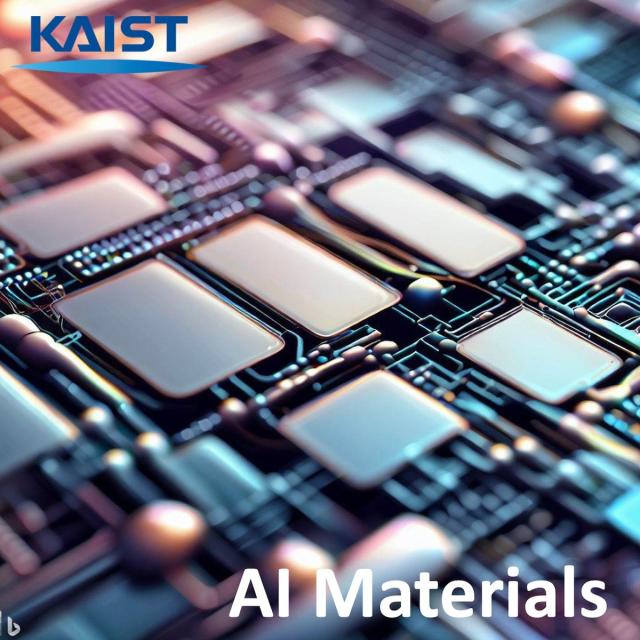
Learn about the materials that have advanced the performance of artificial intelligence, and the machine learning models that could help accelerate the design and development of novel materials. This course defines artificial intelligence (AI) as a machine to which some or all of the functions of the human brain have been delegated. It highlights the need, and explains in an easy-to-understand way how machine learning from artificial intelligence can dramatically accelerate the development of new materials.

Nov 2nd 2026
5-12 Weeks
Data Science in Stratified Healthcare and Precision Medicine (Coursera) Coursera
University of Edinburgh

Data Science in Stratified Healthcare and Precision Medicine (Coursera)

An increasing volume of data is becoming available in biomedicine and healthcare, from genomic data, to electronic patient records and data collected by wearable devices. Recent advances in data science are transforming the life sciences, leading to precision medicine and stratified healthcare. In this course, you will learn about some of the different types of data and computational methods involved in stratified healthcare and precision medicine.

Nov 2nd 2026
5-12 Weeks
Probabilistic Graphical Models 1: Representation (Coursera) Coursera
Stanford University

Probabilistic Graphical Models 1: Representation (Coursera)

Probabilistic graphical models (PGMs) are a rich framework for encoding probability distributions over complex domains: joint (multivariate) distributions over large numbers of random variables that interact with each other. These representations sit at the intersection of statistics and computer science, relying on concepts from probability theory, graph algorithms, machine learning, and more. They are the basis for the state-of-the-art methods in a wide variety of applications, such as medical diagnosis, image understanding, speech recognition, natural language processing, and many, many more. They are also a foundational tool in formulating many machine learning problems.

Oct 26th 2026
5-12 Weeks
Software Architecture for the Internet of Things (Coursera) Coursera
EIT Digital

Software Architecture for the Internet of Things (Coursera)

This course will teach you how to design futureproof systems that meet the requirements of IoT systems: systems that are secure, interoperable, modifiable and scalable. Moreover, you'll learn to apply best-in-class software architecture methods to help you design complex IoT and other applications. Lastly, you'll come to understand the business impact of the technical decisions that you make as an IoT system architect.

Oct 26th 2026
5-12 Weeks
MBA Essentials (Coursera) Coursera
University of Glasgow

MBA Essentials (Coursera)

Embark on a transformative journey through the world of business with our comprehensive course, MBA Essentials. Delivered by a team of dynamic instructors, each with their own unique teaching style, this course offers a diverse perspective on the multifaceted realm of business administration. In the 21st century, businesses demand individuals who can decipher data and information to craft strategic foresight. This course serves as a foundational cornerstone for those aspiring to elevate their careers.

Nov 2nd 2026
4 Weeks
Colaboración dinámica (Coursera) Coursera
Universidad Nacional Autónoma de México

Colaboración dinámica (Coursera)

¿Quieres desarrollar habilidades para el trabajo colaborativo? ¿Tienes un proyecto o emprendimiento y deseas gestionar un equipo? ¿Deseas organizar las labores de tu grupo de trabajo? Este curso te permitirá desarrollar habilidades para la planeación del trabajo colaborativo, el desarrollo de planes de comunicación en tu organización o proyecto, asumir un enfoque de liderazgo para la colaboración y la adaptación al cambio, y establecer una estrategia de trabajo basada en soluciones.

Nov 2nd 2026
4 Weeks
Global Marketing: Building Iconic Brands (Coursera) Coursera
University of Illinois at Urbana-Champaign

Global Marketing: Building Iconic Brands (Coursera)

Global Marketing: Iconic Brands uses the cultural frameworks introduced in Global marketing: Cultural Frameworks to guide the process of crafting a culturally focused marketing plan for a global expansion. The course introduces the key steps for developing a global marketing plan, starting with an environmental analysis of the new markets to be developed, which provides insights into the cultural preferences of target consumers in these new markets.

Nov 2nd 2026
4 Weeks
Supply Chain Analytics Essentials (Coursera) Coursera
Rutgers University

Supply Chain Analytics Essentials (Coursera)

In this introductory course to Supply Chain Analytics, I will take you on a journey to this fascinating area where supply chain management meets data analytics. You will learn real life examples on how analytics can be applied to various domains of a supply chain, from selling, to logistics, production and sourcing, to generate a significant social / economic impact.

Nov 2nd 2026
4 Weeks
Probabilistic Graphical Models 3: Learning (Coursera) Coursera
Stanford University

Probabilistic Graphical Models 3: Learning (Coursera)

Probabilistic graphical models (PGMs) are a rich framework for encoding probability distributions over complex domains: joint (multivariate) distributions over large numbers of random variables that interact with each other. These representations sit at the intersection of statistics and computer science, relying on concepts from probability theory, graph algorithms, machine learning, and more. They are the basis for the state-of-the-art methods in a wide variety of applications, such as medical diagnosis, image understanding, speech recognition, natural language processing, and many, many more. They are also a foundational tool in formulating many machine learning problems.

Oct 26th 2026
5-12 Weeks