Revolutionary Ideas: Borders, Elections, Constitutions, Prisons (Coursera)

Offered by Rutgers University,
Revolutionary Ideas: Borders, Elections, Constitutions, Prisons (Coursera)

What is the purpose of government? Why should we have a State? What kind of State should we have? Even within a political community, there may be sharp disagreements about the role and purpose of government. Some want an active, involved government, seeing legal and political institutions as the means to solve our most pressing problems, and to help bring about peace, equality, justice, happiness, and to protect individual liberty.

Class Deals by MOOC List - Click here and see Coursera's Active Discounts, Deals, and Promo Codes.

Others want a more minimal government, motivated, perhaps, by some of the disastrous political experiments of the 20th Century, and the thought that political power is often just a step away from tyranny. In many cases, these disagreements arise out of deep philosophical disagreements.
All political and legal institutions are built on foundational ideas. In this course, we will explore those ideas, taking the political institutions and political systems around us not as fixed and unquestionable, but as things to evaluate and, if necessary, to change. We will consider the ideas and arguments of some of the world’s most celebrated philosophers, including historical thinkers such as Plato, Hugo Grotius, David Hume, Thomas Jefferson, and James Madison, and more contemporary theorists such as Michelle Alexander, Kwame Anthony Appiah, Bryan Caplan, Angela Davis, Ronald Dworkin, Jon Elster, John Hart Ely, H.L.A. Hart, Michael Huemer, Andrew Rehfeld, and Jeremy Waldron.
The aim of the course is not to convince you of the correctness of any particular view or political position, but to provide you with a deeper and more philosophically-informed basis for your own views, and, perhaps, to help you better understand the views of those with whom you disagree.

Syllabus

Week 1
Introduction to Part II of the Course
An introduction to the course and to some of the fundamental problems in legal and political philosophy.

Week 2
Political Community and Borders
This unit explores the issues of how our political communities are and should be defined. What is the basis of political community? Should we be allowed to change what political community we are a part of? If so, how easily?

Week 3
Representatives, Elections, and Lotteries
This unit examines how our political community, once defined, should make law and policy. Who should get to have a say?

Week 4
Constitutions
This unit examines the role and importance of constitutions. Should we have a constitution? Why might we want one? What should be in it?

Week 5
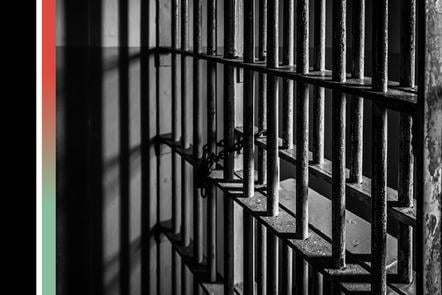
Prisons and Punishment & Conclusions
This unit considers the role of crime and punishment within a political community. What should be illegal? What should happen if people break the law?

Go to Class
MOOC List is learner-supported. When you buy through links on our site, we may earn an affiliate commission.

Related Courses

International migrations: a global issue (Coursera) Coursera
Sciences Po

International migrations: a global issue (Coursera)

The world is moving, but not all opinions and governments are willing to accept this poorly understood reality. The issue affects both states and the planet, in a process of globalization and of regionalization of migrations, and raises new questions for international relations, now including the South. This course aims at improving knowledge of the subject, addressing the key issues raised by international migration, and assessing the trends of tomorrow.

Aug 24th 2026
5-12 Weeks
Political Governance and Public Policy in Russia (Coursera) Coursera
Saint Petersburg State University

Political Governance and Public Policy in Russia (Coursera)

The course is designed to study the features of the political structure of modern Russia. It contains both general information on the institutional, procedural and value components of the political system and public policy in Russia, as well as a description of the problems, contradictions and prospects for the political development of the country. The course contains three main modules: (1) the political system and regime in Russia: state institutions, political parties, civil society; (2) the public policy process in Russia: the mechanisms for elaborating, adopting and implementing policies and decisions; (3) directions and problems of economic and social policy in Russia: development based on stabilization.

May 16th 2022
5-12 Weeks
Scotland and Wales Vote 2016: Understanding the Devolved Elections (FutureLearn) FutureLearn
University of Edinburgh

Scotland and Wales Vote 2016: Understanding the Devolved Elections (FutureLearn)

This course will examine the issues, ideas and institutions involved in the Scottish Parliament and Welsh Assembly elections. 2016 is an exciting year for elections in the United Kingdom. Towards the end of the year we might have a referendum on the UK’s EU membership, but we definitely know that there will be elections to the Scottish Parliament and Welsh Assembly in May. Both of these institutions have a significant impact on people’s lives in Scotland and Wales: they control big public policy issues like health, education and transport.

No sessions available
4 Weeks
Citizen Politics in America: Public Opinion, Elections, Interest Groups, and the Media (edX) EdX
HarvardX,Harvard University

Citizen Politics in America: Public Opinion, Elections, Interest Groups, and the Media (edX)

Learn about the forces in American politics that seek to influence the electorate and shift the political landscape. Public opinion has a powerful yet inexact influence on elected officials. Politicians risk their careers if they ignore it, yet its power is not easy to capture nor quantify. This course will look at how political parties, campaigns, social movements, special interests, and the news media all play a role in influencing public opinion.

Self Paced
Self-Paced
Philosophy, Science and Religion: Philosophy and Religion (Coursera) Coursera
University of Edinburgh

Philosophy, Science and Religion: Philosophy and Religion (Coursera)

Philosophy, Science and Religion mark three of the most fundamental modes of thinking about the world and our place in it. Are these modes incompatible? Put another way: is the intellectually responsible thing to do to ‘pick sides’ and identify with one of these approaches at the exclusion of others? Or, are they complementary or mutually supportive? As is typical of questions of such magnitude, the devil is in the details. For example, it is important to work out what is really distinctive about each of these ways of inquiring about the world. In order to gain some clarity here, we’ll be investigating what some of the current leading thinkers in philosophy, science and religion are actually doing.

Sep 14th 2026
5-12 Weeks
An Introduction to American Law (Coursera) Coursera
University of Pennsylvania

An Introduction to American Law (Coursera)

This course will give you a glimpse into six different areas of American law: Tort Law, Contract Law, Property, Constitutional Law, Criminal Law, and Civil Procedure. You will gain insight into the complexities and dilemmas that arise from the application of law in different settings, and what is distinctive about American approaches.

Aug 31st 2026
5-12 Weeks
Intellectual Humility: Science (Coursera) Coursera
University of Edinburgh

Intellectual Humility: Science (Coursera)

It’s clear that the world needs more intellectual humility. But how do we develop this virtue? And why do so many people still end up so arrogant? Do our own biases hold us back from becoming as intellectually humble as we could be—and are there some biases that actually make us more likely to be humble? Which cognitive dispositions and personality traits give people an edge at being more intellectually humble - and are they stable from birth, learned habits, or something in between? And what can contemporary research on the emotions tell us about encouraging intellectual humility in ourselves and others?

Sep 14th 2026
4 Weeks
Migrations internationales : un enjeu mondial (Coursera) Coursera
Sciences Po

Migrations internationales : un enjeu mondial (Coursera)

Le monde bouge, mais les opinions et les gouvernements ne sont pas tous prêts à accepter cette réalité mal connue. La question affecte à la fois les Etats, mais aussi la planète, dans un processus de mondialisation et de régionalisation des migrations, et pose de nouvelles questions aux relations internationales, en y incluant le sud. Ce cours cherche à la fois à parfaire la connaissance sur le sujet, à traiter les thèmes essentiels induits par les migrations internationales et à dresser les tendances de demain.

Aug 24th 2026
5-12 Weeks