Introduction to Key Constitutional Concepts and Supreme Court Cases (Coursera)

Introduction to Key Constitutional Concepts and Supreme Court Cases (Coursera)

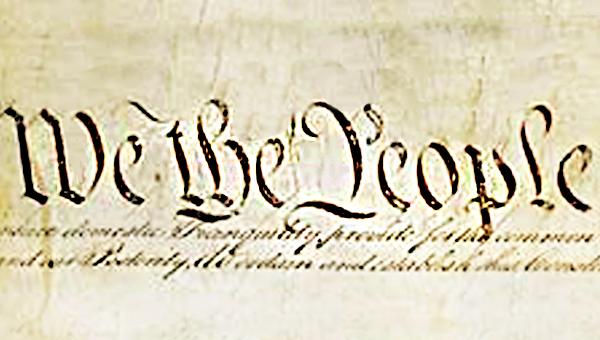
This course offers an introduction to the U.S. Constitution and landmark Supreme Court cases interpreting it. It explores the Constitution’s origins, its amendment over the years, and methods of constitutional interpretation. Topics include the nature and structure of the federal government, the powers of the federal government, and individual rights.

Class Deals by MOOC List - Click here and see Coursera's Active Discounts, Deals, and Promo Codes.

Syllabus

WEEK 1
The Constitution and Three Branches of Government
Classes 1, 2, and 3 discuss why we need a Constitution and the history that preceded its drafting. You will learn about the two conflicting lessons the founders learned from the Revolution and the failure of the Articles of Confederation: the national government can become a tyrant if it is too strong, but the nation will fall apart if it is too weak. These lectures explore how the drafters sought to balance these concerns in the original Constitution and the many compromises it contains. You will also learn about two approaches to interpreting the Constitution: Originalism and Living Constitutionalism. Classes 4, 5, and 6 explore the powers of the legislative, executive, and judicial branches of government and the separation of powers between those branches. The Framers gave the federal government limited powers, and divided those powers among the three branches in order to protect individual liberty and state authority.

WEEK 2
Amendments and the First Amendment
This segment first explores constitutional amendments, including the Bill of Rights, and the Reconstruction and Progressive-era Amendments. Then, we will take a detailed look at one of the most important amendments: the First. We will learn about the constitutional protections for speech and religion, how they have changed over time, and how they apply to various circumstances. Finally, we will learn about the Establishment Clause and what it means in today's society.

WEEK 3
Criminal Procedure and Federalism and Nationalism
We begin here by looking at another group of very important constitutional provisions: the Fourth, Fifth, and Sixth Amendments, which guarantee rights to individuals accused of committing crimes. These amendments protect us against unreasonable searches, ensure our right to remain silent in the face of police questioning, and allow us to demand the assistance of counsel and trial by jury. These rights are fundamental to our system of criminal justice. Then we will shift our focus to examining the Second Amendment, the right to bear arms, and incorporation. We will also discuss the Ninth and Tenth Amendments, unenumerated rights, and states' rights, and finish by considering the implications of the Civil War and Reconstruction for the balance of power between the federal government and the states.

WEEK 4
The Fourteenth Amendment and Modern Controversies
The first three lessons consider the equal protection and due process clauses of the 14th Amendment. We will begin by discussing race discrimination and the anti-classification and anti-subordination perspectives on equal protection. Next, we will discuss sex discrimination and the right to an abortion derived from the due process clause. Finally, we will examine discrimination based on sexual orientation, and the social progression of major civil rights movements in the United States. The final three lessons in this module consider some modern constitutional controversies. First, we will learn about presidential war powers. Next, we will analyze free speech in the context of campaign finance reform. Finally, we will discuss federal legislative power with a focus on health care reform.


Go to Class
MOOC List is learner-supported. When you buy through links on our site, we may earn an affiliate commission.

Related Courses

International Law In Action: Investigating and Prosecuting International Crimes (Coursera) Coursera
Leiden University

International Law In Action: Investigating and Prosecuting International Crimes (Coursera)

Investigating and Prosecuting International Crimes’ is the second course in Leiden University’s new series on International Law in Action. The first course covered international courts and tribunals in The Hague in general. This second course provides an insider perspective into the work of international criminal courts and tribunals. You will learn about the investigation and prosecution of international crimes in The Hague.

Sep 7th 2026
4 Weeks
Introduction to English Common Law (Coursera) Coursera
University of London

Introduction to English Common Law (Coursera)

The common law of England and Wales is one of the major global legal traditions. This MOOC will give you an introduction to this influential legal system including its history, constitutional background, sources and institutions. You’ll learn about the different ways in which laws are made and interpreted, the English court system and the increasing importance of European Union and human rights law. Now is an especially exciting time to be learning about English common law, given the potential changes that lie ahead in today’s political, economic and social environment – all these pose challenges to and opportunities for the law.

Sep 7th 2026
5-12 Weeks
Taiwan Law in Focus: Economy, Society and Democracy (Coursera) Coursera
National Taiwan University

Taiwan Law in Focus: Economy, Society and Democracy (Coursera)

“Taiwan Law in Focus” is the first online course provided by the College of Law, National Taiwan University. This course will give you an introduction to the legal system in Taiwan, which includes the topics of Constitution, administration law, criminal law, civil law, corporative law, and some related issues. You will learn about the brief history of Taiwan’s legal system and its transition in recent decades.

Sep 7th 2026
5-12 Weeks
Healthcare Data Security, Privacy, and Compliance (Coursera) Coursera
Johns Hopkins University

Healthcare Data Security, Privacy, and Compliance (Coursera)

In the final course of the Healthcare IT Support program, we will focus on the types of healthcare data that you need to be aware, complexities of security and privacy within healthcare, and issues related to compliance and reporting. As a health IT support specialist, you’ll be exposed to different types of data sources and data elements that are utilized in healthcare. It’s important for you to understand the basic language of healthcare data and for you to recognize the sensitive nature of protected health information (PHI). Maintaining data privacy and security is everyone’s responsibility, including IT support staff!

Aug 31st 2026
4 Weeks
Legal Tech and the Digital Transformation of Law (Coursera) Coursera
Universidad Austral

Legal Tech and the Digital Transformation of Law (Coursera)

The digital revolution changed the way we communicate and trade. Now, it is coming into the world of law. This program will give you a broad overview of the main trends that are affecting the legal industry: the birth of the legal tech market and the application of technology in law; the role of artificial intelligence in the automation of the work of lawyers; blockchain technology and its impact on the way we sign and execute contracts; initiatives to ensure access to justice through virtual courts and robot judges.

Sep 7th 2026
5-12 Weeks
International Humanitarian Law in Theory and Practice (Coursera) Coursera
Leiden University,Kalshoven-Gieskes Forum

International Humanitarian Law in Theory and Practice (Coursera)

“International Humanitarian Law in Theory and Practice” is the first MOOC of the Kalshoven-Gieskes Forum on International Humanitarian Law, which is the platform within the Grotius Centre for International Legal Studies of Leiden University for the research, teaching and dissemination of international humanitarian law (IHL).

Sep 7th 2026
5-12 Weeks
Risk in Modern Society (Coursera) Coursera
Leiden University,LDE Centre for Safety and Security

Risk in Modern Society (Coursera)

Risk has become one of the defining features of modern society. Almost daily, we are preoccupied with assessing, discussing, or preventing a wide variety of risks. It is a cornerstone notion for businesses and organizations, but also for nation states and their many levels of government. And even for individuals, risk and the avoidance or embracing thereof, is a key theme. The course Risk in Modern Society sheds light on the broad concept of risk.

Sep 14th 2026
5-12 Weeks
Artificial Intelligence and legal issues (Coursera) Coursera
Politecnico di Milano

Artificial Intelligence and legal issues (Coursera)

The purpose of the course is to help students understand the legal implications related to the design and use of artificial intelligence systems, providing an overview of the risks and legal protections that can be envisaged and giving an overview of the legislation and legal principles currently applicable on the subject.

Sep 7th 2026
4 Weeks
Human Rights for Open Societies (Coursera) Coursera
Universiteit Utrecht

Human Rights for Open Societies (Coursera)

Law

Human rights are under pressure in many places across the globe. Peaceful protests are violently quashed. Voting is tampered with. And minorities are often excluded from decision-making. All of this threatens the ideal of an open society in which each of us can be free and participate equally. A solid protection of human rights is needed for an open society to exist and to flourish. But it is often an uphill battle to work towards that ideal. Equip yourself and learn more about what human rights are and how they work.

Sep 6th 2026
5-12 Weeks
Introduction to Environmental Law and Policy (Coursera) Coursera
University of North Carolina

Introduction to Environmental Law and Policy (Coursera)

Environmental law may be the one institution standing between us and planetary exhaustion. It is also an institution that needs to be reconciled with human liberty and economic aspirations. This course considers these issues and provides a tour though existing legal regimes governing pollution, water law, endangered species, toxic substances, environmental impact analyses, and environmental risk.

Sep 4th 2026
5-12 Weeks