Modellazione digitale 3D: strumenti operativi per iniziare (POK)

Offered by Politecnico di Milano,
Modellazione digitale 3D: strumenti operativi per iniziare (POK)

Valutare e gestire i principali dispositivi per la modellazione e la grafica digitale in architettura. Il corso si propone di fornire indicazioni utili per la valutazione e la gestione dei principali dispositivi impiegati nell’ambito della modellazione e della grafica digitale in architettura. Ci si soffermerà in particolare sulla configurazione del PC e sull’installazione di software in ambiente Windows e MacOS.

Questo MOOC è composto da due week:
Week 1 – Preparare l’ambiente di lavoro
Week 2 – Il computer e il software
La prima week si articola a sua volta in due lezioni.

Nella prima lezione, “Strumenti e risorse”, si parla del rapporto fra modellazione digitale e relativo corredo strumentale di supporto, nella professione e nei corsi di studio in architettura, incluse le principali risorse software messe gratuitamente a disposizione dal Politecnico di Milano agli allievi e ai docenti, e le strutture laboratoriali presenti nei nostri Campus.
Nella seconda lezione, “Hardware e dispositivi” , richiameremo i concetti di hardware e software, con una breve panoramica sui principali dispositivi di input e output impiegati in architettura, sulle interfacce uomo-macchina, e sul ruolo centrale del computer in quanto fulcro operativo di questo sistema.
La seconda week, si compone invece di tre lezioni. Iniziamo con “Uno sguardo alla configurazione del Computer”, in cui vengono descritte le principali caratteristiche tecniche consigliate per la configurazione di un computer dedicato alla modellazione digitale in architettura, con riferimento a CPU, scheda grafica e memoria di lavoro, schermo e interfacce di controllo, e continuiamo con alcuni cenni ai sistemi di archiviazione fisica e online, alle app e ai driver, al collegamento fra dispositivi e fra postazioni di lavoro.
La seconda lezione, “Installare software in ambiente Windows” , verte sulle procedure di installazione di software in ambiente Windows, con alcuni consigli sulla gestione degli account amministratore e ospite, e dei programmi antivirus, durante l’installazione di software, driver, firewall, e aggiornamenti del sistema operativo, e su come evitare le principali problematiche riscontrabili in questa fase.
Nella terza e ultima lezione, “Installare software Windows in ambiente MacOS”, vengono descritte la procedura di installazione di software nativo o compatibile in ambiente MacOS su computer Apple, e alcune strategie per l’installazione di software non nativo su macchine Apple con processori di tipo Intel (e non di tipo M), mediante partizione Windows dell’hard-disk o per emulazione tramite virtual machine.

Go to Class
MOOC List is learner-supported. When you buy through links on our site, we may earn an affiliate commission.

Related Courses

Graphic Elements of Design: Color Theory and Image Formats (Coursera) Coursera
University of Colorado Boulder

Graphic Elements of Design: Color Theory and Image Formats (Coursera)

Examining and exploring the various types of images and graphic elements will be the focus of this course. We will start with color theory to distinguish between CMYK, Pantone and RGB color options and their usages. Then we will review the various types of images used in both print and digital design projects. Finally we will look at logo designs to determine what makes for the best images and graphic elements for corporate branding and imaging.

Jun 15th 2026
3 Weeks
Graphic Design (Coursera) Coursera
University of Colorado Boulder

Graphic Design (Coursera)

Welcome to Graphic Design, the second course in the Effective Communications Specialization. Over 70 different companies have provided this specialization to their employees as a resource for internal professional development. Why? Because employers know that effective visual communication is the key to attracting an audience, building a relationship, and closing the sale. "This course is fantastic. It teaches a great amount of starter graphic design information but it is broken down into easily understood videos and quizzes. The quality was top notch and the interaction was as good as you would get in a brick and mortar school. I did not feel like I was missing anything by taking it online." - a recent Graphic Design student.

Jun 22nd 2026
4 Weeks
Modellazione digitale 3D: dal file al modello fisico (POK) Polimi OPEN KNOWLEDGE
Politecnico di Milano

Modellazione digitale 3D: dal file al modello fisico (POK)

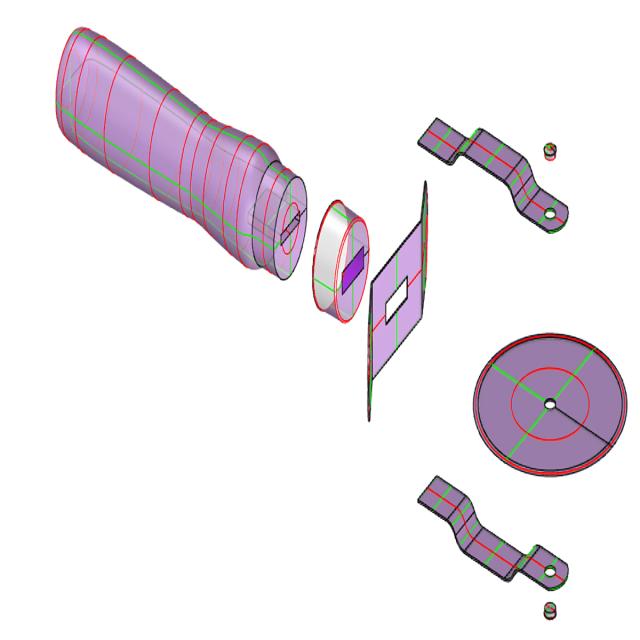
Costruire modelli architettonici con l’aiuto di tecnologie CNC, per il taglio di materiali in lastra attraverso: laser, lama o filo a caldo e per la realizzazione di elementi tridimensionali tramite stampa 3D. Il corso presenta diverse tecnologie CNC utilizzabili nella realizzazione di modelli architettonici. In particolare per il taglio di materiali in lastra attraverso: plotter laser, plotter a lama o plotter a filo a caldo e per la realizzazione di elementi tridimensionali tramite stampa 3D a filamento e a resina liquida. Il corso si propone di fornire le conoscenze necessarie ad una scelta consapevole delle diverse tecnologie in base ai materiali scelti per la realizzazione del modello e fornisce le informazioni base per la produzione di idonei disegni CAD.

Available
2 Weeks
Customising your models with TensorFlow 2 (Coursera) Coursera
Imperial College London

Customising your models with TensorFlow 2 (Coursera)

Welcome to this course on Customising your models with TensorFlow 2! In this course you will deepen your knowledge and skills with TensorFlow, in order to develop fully customised deep learning models and workflows for any application. You will use lower level APIs in TensorFlow to develop complex model architectures, fully customised layers, and a flexible data workflow. You will also expand your knowledge of the TensorFlow APIs to include sequence models.

Jun 22nd 2026
5-12 Weeks
Basic Modeling for Discrete Optimization (Coursera) Coursera
University of Melbourne,The Chinese University of Hong Kong

Basic Modeling for Discrete Optimization (Coursera)

Optimization is a common form of decision making, and is ubiquitous in our society. Its applications range from solving Sudoku puzzles to arranging seating in a wedding banquet. The same technology can schedule planes and their crews, coordinate the production of steel, and organize the transportation of iron ore from the mines to the ports. Good decisions in manpower and material resources management also allow corporations to improve profit by millions of dollars.

Jun 22nd 2026
4 Weeks
Techniques of Design-Oriented Analysis (Coursera) Coursera
University of Colorado Boulder

Techniques of Design-Oriented Analysis (Coursera)

This is Course #2 in the Modeling and Control of Power Electronics course sequence. The course is focused on techniques of design-oriented analysis that allow you to quickly gain insights into models of switching power converters and to translate these insights into practical converter designs. The design-oriented techniques covered are the Extra Element Theorem and the N-Extra Element Theorem (N-EET). Through practical examples, it is shown how the EET can be used to simplify circuit analysis, to examine the effects of initially unmodeled components, and to design damping of converters such as SEPIC and Cuk to achieve high-performance closed-loop controls.

Jun 22nd 2026
3 Weeks
Bring Your Story to Life – Video Post-Production (Coursera) Coursera
University of Colorado Boulder

Bring Your Story to Life – Video Post-Production (Coursera)

In this course, we will explore the power and artistry of picture and sound editing. Although you’re welcome to use the editing software of your choice, we’ll be demonstrating non-linear editing using Adobe Premiere. We’ll share with you our editing workflow for completing a visual story, from scripting and writing conversationally to the visuals, to recording voice overs, to building the rough cut, and polishing with the final cut.

Jun 22nd 2026
5-12 Weeks
Modelling, Analysis and Design of Steel Buildings (Coursera) Coursera
L&T EduTech

Modelling, Analysis and Design of Steel Buildings (Coursera)

"Modelling, Analysis & Design of Steel Buildings" is an intensive course that covers a wide range of topics essential for understanding and designing steel structures. The course begins with establishing the building information and initial model settings, followed by a detailed exploration of building geometry and member properties. Participants learn to create member groups, utilize section libraries, and assign materials.

Jun 22nd 2026
4 Weeks
Autonomous Aerospace Systems (Coursera) Coursera
University of Naples Federico II

Autonomous Aerospace Systems (Coursera)

The course aims to provide the knowledge needed to design and develop efficient driving and navigation solutions for autonomous vehicles. Driving can be strategic or tactical while navigation is the function that provides information about the position, speed and orientation of the vehicle. It is made by integrating measurement from different sources, such as sensors and receivers.

Jun 22nd 2026
5-12 Weeks
Fundamentals of Graphic Design (Coursera) Coursera
California Institute of the Arts

Fundamentals of Graphic Design (Coursera)

Graphic Design is all around us! Words and pictures—the building blocks of graphic design—are the elements that carry the majority of the content in both the digital world and the printed world. As graphic design becomes more visible and prevalent in our lives, graphic design as a practice becomes more important in our culture. Through visual examples, this course will teach you the fundamental principles of graphic design: imagemaking, typography, composition, working with color and shape... foundational skills that are common in all areas of graphic design practice.

Jun 15th 2026
4 Weeks
Introduction to Typography (Coursera) Coursera
California Institute of the Arts

Introduction to Typography (Coursera)

Typography is the art of manipulating the visual form of language to enrich and control its meaning. It’s an essential area of skill and knowledge for graphic designers. Typography predates modern graphic design by around 500 years; it is rich in rules, conventions, and esoteric terminology—but it remains an exciting space for invention and expression.

Jun 15th 2026
4 Weeks