Rastreamento de contato da COVID-19 (Coursera)

Rastreamento de contato da COVID-19 (Coursera)

A crise da COVID-19 criou uma necessidade sem precedentes de rastreamento de contato em todo o país, exigindo que milhares de pessoas aprendessem rapidamente as principais habilidades. As qualificações para os cargos de rastreamento de contato diferem em todo o país e no mundo, com alguns novos cargos abertos a indivíduos com diploma de ensino médio ou equivalente.

Class Deals by MOOC List - Click here and see Coursera's Active Discounts, Deals, and Promo Codes.

Neste curso introdutório, os alunos aprenderão a ciência do SARS-CoV-2, incluindo o período infeccioso, a apresentação clínica da COVID-19, as evidências de como o SARS-CoV-2 é transmitido entre as pessoas e por que o rastreamento de contatos pode ser uma intervenção de saúde pública tão efetiva. Os alunos aprenderão como é feito o rastreamento de contatos, incluindo como criar afinidade com os casos, identificar seus contatos e apoiar tanto os casos quanto seus contatos para interromper a transmissão nas respectivas comunidades. O curso também abordará várias considerações éticas importantes sobre rastreamento de contatos, isolamento e quarentena. Por fim, o curso identificará algumas das barreiras mais comuns aos esforços de rastreamento de contato, assim como estratégias para superá-las.

What You Will Learn

  • Descreva o histórico natural do SARS-CoV-2, incluindo o período infeccioso, a apresentação da COVID-19 e as evidências de como ela é transmitida.
  • Defina um contato infeccioso e uma linha do tempo para uma intervenção de saúde pública por meio de rastreamento de contatos.
  • Demonstre a utilidade da investigação de caso e do rastreamento de contatos, identifique os obstáculos comuns e as estratégias para superá-los.
  • Apresente algumas considerações éticas sobre o rastreamento de contatos, o isolamento e a quarentena.

Syllabus

WEEK 1
Conceitos básicos da COVID-19
Neste primeiro módulo, mergulharemos na ciência da COVID-19, incluindo o que sabemos sobre suas origens, sinais e sintomas clínicos, fatores de risco, diagnóstico, transmissão e período infeccioso.
Conceitos básicos do rastreamento de contato para COVID-19
Agora que você aprendeu os conceitos básicos da COVID-19, voltaremos nossa atenção para algumas das ferramentas usadas para impedir a propagação: rastreamento de contato, isolamento e quarentena. Também mostraremos como o que você já aprendeu sobre infecção e transmissão informa sobre o uso dessas ferramentas críticas de saúde pública.
Passos para investigar os casos e rastrear seus contatos
Neste módulo, analisaremos os passos do processo de rastreamento de contatos e forneceremos exemplos. Você também poderá assistir a demonstrações de interações básicas com um caso e um contato.
Ética do rastreamento de contato e ferramentas tecnológicas
Neste módulo, você aprenderá as importantes dimensões éticas do rastreamento de contato, incluindo como equilibramos a proteção da saúde pública com os limites de privacidade pessoal e autonomia. Analisaremos alguns exemplos específicos para prepará-lo para alguns dos problemas que os rastreadores de contato encontram no decorrer de seu trabalho.
Habilidades para uma comunicação efetiva
A comunicação efetiva é a base de uma interação bem-sucedida no rastreamento de contato. Isso inclui criar afinidade com os casos e contatos, ouvir ativamente e fazer os tipos certos de perguntas. Neste módulo, você assistirá e lerá vários exemplos de interações que demonstram os comportamentos que você, como rastreador de contatos, deve e não deve ter.
Avaliação final (valendo nota)

Go to Class
MOOC List is learner-supported. When you buy through links on our site, we may earn an affiliate commission.

Related Courses

Strategies for Senior Housing Communities during COVID-19 (Coursera) Coursera
Johns Hopkins University

Strategies for Senior Housing Communities during COVID-19 (Coursera)

SARS-CoV-2, the virus that causes COVID-19, poses a high risk for senior housing communities and the people who live and work there. The COVID-19 response has largely focused on nursing homes, leaving independent living communities serving older adults in the United States with fragmented guidance on how to respond to COVID-19 challenges. This course provides comprehensive instruction and resources for property owners and managers, senior housing staff, service coordinators and providers, community housing leaders, and other senior housing stakeholders to build upon their emergency preparedness and response strategies related to COVID-19. The course lectures, interviews, and assignments are largely geared toward federally-subsidized, multifamily senior housing providers, but the material is relevant for all senior housing providers. **Free enrollment available until December 31, 2021. Valid for one enrollment per person.**

Aug 17th 2026
1 Week
Tobacco Control: Agile Policy, Research and Practice (Coursera) Coursera
Imperial College London

Tobacco Control: Agile Policy, Research and Practice (Coursera)

This course teaches you about the global health harms caused by tobacco and the efforts underway to combat these. You'll analyse the strategies and tactics used by the tobacco industry, and their allies, to keep people buying their products, and you'll reflect on the role played by public health research in pushing back against this pressure with the ultimate aim of improving health.

Aug 17th 2026
3 Weeks
Value-Based Care: Reimbursement Models (Coursera) Coursera
University of Houston

Value-Based Care: Reimbursement Models (Coursera)

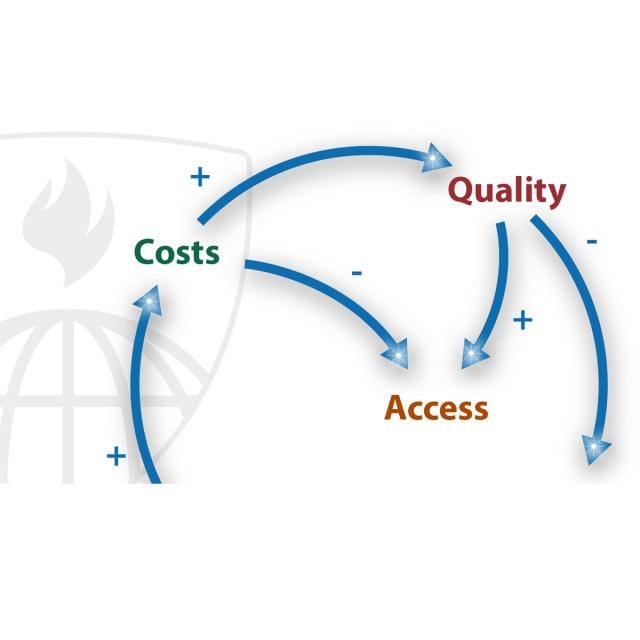
This course is designed to help you build high-level knowledge of the current medical coding and payment mechanisms of most U.S. healthcare services, referred to as fee-for-service. You will explore why the fee-for-service model has contributed to higher costs in the U.S. healthcare system without clearly improving health outcomes. You will examine the importance of coding to reflect chronic conditions and other diagnoses accurately and how value-based care and payments utilize these measures and data. As you learn about a model to replace fee-for-service, you’ll encounter a range of payment options considered to be value-based that utilize a framework from the Health Care Payment Learning and Action Network (HCP-LAN). To build on those options, you will learn how risk-adjustment, quality scores, and patient satisfaction measures are critical parts of value-based care and payment contracts. In the summative assignment, you will demonstrate your knowledge by comparing fee-for-service and value-based contracts, using specific examples to explain and justify the importance of documentation and coding, and identifying ways that risk-adjustment and patient satisfaction are incorporated into value-based care contracts.

Aug 17th 2026
3 Weeks
Infectious Disease Modeling in Practice (Coursera) Coursera
Johns Hopkins University

Infectious Disease Modeling in Practice (Coursera)

Mathematical modeling is an increasingly widespread tool for understanding infectious disease transmission and informing public health decision making. This course provides an in depth overview of the practical uses of mathematical modeling for a range of diseases and scenarios. We cover the basic principles of infectious disease models, how models are adapted to be specific to the disease and question of interest, and important assumptions of different models.

Aug 17th 2026
3 Weeks
Point of Care Testing for Sexually Transmitted Infections (Coursera) Coursera
Johns Hopkins University

Point of Care Testing for Sexually Transmitted Infections (Coursera)

What are sexually transmitted infections (STIs), and why do we care? What is point of care testing (POCT)? What do clinicians and patients want and need from the POCT for STIs? Point of care testing, or medical diagnostic testing done at the time of patient care, is an important tool for the treatment of sexually transmitted infections. This course looks at point of care testing for sexually transmitted infections from the perspective of the clinician, the patient, and the regulatory environment.

Aug 17th 2026
4 Weeks
Emerging Approaches for Measuring Population Health (Coursera) Coursera
Johns Hopkins University

Emerging Approaches for Measuring Population Health (Coursera)

In this course, you will learn about traditional and emerging techniques in population-level data collection that can be used to strengthen public health programs and policies. Experts from around the world will define and explain key concepts in the design and implementation of population-based surveys, focusing on the use of emerging survey techniques such as mobile phone and web-based surveys, health services data and health information systems, and population-based health registries.

Aug 17th 2026
4 Weeks
Building Alliances in Global Health: From Global to Local (Coursera) Coursera
Johns Hopkins University

Building Alliances in Global Health: From Global to Local (Coursera)

This hands-on course will prepare you to overcome the challenges associated with alliance building within the global health sector. Using The Global Polio Eradication Initiative as a case study, you’ll address the themes of political advocacy, policymaking, health communications, and community engagement, and explore the politics and interpersonal relations required to build a global health program. The Global Polio Eradication Initiative is an exemplar of global partnerships between UN agencies, the private sector, non-governmental actors, civil society organizations, and local communities.

Aug 17th 2026
5-12 Weeks
Essentials of Global Health (Coursera) Coursera
Yale University

Essentials of Global Health (Coursera)

Essentials of Global Health is a comprehensive introduction to global health. It is meant to introduce you to this topic in well-structured, clear and easy to understand ways. Much of the course will focus on five questions: What do people get sick, disabled and die from; Why do they suffer from these conditions? Which people are most affected? Why should we care about such concerns? What can be done to address key health issues, hopefully at least cost, as fast as possible, and in sustainable ways?

Aug 10th 2026
5-12 Weeks
Mind Control: Managing Your Mental Health During COVID-19 (Coursera) Coursera
University of Toronto

Mind Control: Managing Your Mental Health During COVID-19 (Coursera)

Never in the history of humanity have so many people been feeling intense anxiety related to COVID-19 and the world it will leave in its wake. The intent of this course is to give you a deeper understanding of the anxiety reaction as it relates to various aspects of our current life, ranging from our consumption of news to the way we talk to our children about this. I will also give you clear strategies for managing and, in fact, turning off the anxiety response at least for short periods.

Aug 10th 2026
4 Weeks
Data to Advance Population Health: Global Perspectives (Coursera) Coursera
Johns Hopkins University

Data to Advance Population Health: Global Perspectives (Coursera)

In this course, you will learn about methodologies that support the successful data use to strengthen public health programs and policies. Experts from around the world will define and explain what population-level data is, introduce the data-generation-to-use cycle, and explain other considerations for successful data use for population health. You will also learn about how health services data can be used to inform population-level decision-making, and the application of a gender and equity lens towards these data systems to ensure they are responsive to the needs of populations. Our overarching goal for this course is to support and improve the use of data to inform policy.

Aug 17th 2026
4 Weeks
Strategies for Assisted Living Communities during COVID-19 (Coursera) Coursera
Johns Hopkins University

Strategies for Assisted Living Communities during COVID-19 (Coursera)

SARS-CoV-2, the virus that causes COVID-19, poses a high risk for assisted living communities due to residents’ age, health status, and communal living environment. The COVID-19 response has largely focused on nursing homes, leaving assisted living communities in the United States with fragmented guidance on how to respond to COVID-19 challenges. This course provides comprehensive instruction and resources for administrators and direct-care staff of assisted living communities.

Aug 17th 2026
1 Week
The People, Power, and Pride of Public Health (Coursera) Coursera
Johns Hopkins University

The People, Power, and Pride of Public Health (Coursera)

The People, Power, and Pride of Public Health provides an engaging overview of the incredible accomplishments and promise of the public health field. The first module includes interviews with legendary public health figures whose work led to millions of lives saved with vaccines, air bags and car seats, and the federal Women Infants and Children (WIC) nutrition program.

Aug 10th 2026
3 Weeks