Islam, The Middle East, and The West (saylor.org)

Offered by Saylor.org,
Islam, The Middle East, and The West (saylor.org)

This course will introduce you to the history of the Middle East from the rise of Islam to the twenty-first century. The course will emphasize the encounters and exchanges between the Islamic world and the West.

This course will introduce you to the history of the Middle East from the rise of Islam to the twenty-first century. The course will emphasize the encounters and exchanges between the Islamic world and the West. It will be structured chronologically—each unit will focus on the emergence of a particular Middle Eastern society or empire during a specific time period. Each unit will include representative primary-source documents that illustrate important overarching political, economic, and social themes, such as the emergence of Islam in the seventh century, conflicts between Islamic and Christian peoples during the Crusades, European domination of Muslim territories in the nineteenth century, independence movements and the rise of nationalism in the 1900s, and the formation of Islamic fundamentalist groups and anti-Western sentiment in the latter twentieth century. By the end of the course, you will understand how Islam became a sophisticated and far-reaching civilization and how conflicts with the West shaped the development of the Middle East from the medieval period to the present day.

Upon successful completion of this course, students will be able to:

  • Identify and describe the nature of pre-Islamic society, culture, and religion. They will also be able to describe the subsequent rise of the prophet Muhammad and his monotheistic religion, Islam.
  • Identify and describe the elements of Islamic law, religious texts and practices, and belief systems.
  • Identify and describe the rise of the Umayyad and Abbasid dynasties in the Middle East. Students will also be able to compare and contrast the two empires.
  • Identify and describe the emergence of the Umayyad dynasty in Spain. Students will also be able to analyze the conflicts between Muslims and Christians on the Iberian Peninsula.
  • Identify and describe the Crusades. They will be able to describe both Muslim and Christian perceptions of the holy wars.
  • Identify and describe the impact of the Mongol invasions on the Middle East.
  • Compare and contrast the Ottoman and Safavid empires.
  • Analyze the decline of the Ottoman Empire and the beginning of European imperialism/domination of the Middle East in the 1800s.
  • Identify and describe how and why European powers garnered increased spheres of influence after the collapse of the Ottoman Empire and the end of World War I.
  • Analyze and describe the rise of resistance and independence movements in the Middle East.
  • Identify and describe the rise of Islamic nationalism and the emergence of violent anti-Western sentiment.
  • Analyze (and synthesize) the relationship between the Middle East and the West between the 600s and the present day.
  • Analyze and interpret primary source documents that elucidate the exchanges and conflicts between the Islamic world and the West over time.
Go to Class
MOOC List is learner-supported. When you buy through links on our site, we may earn an affiliate commission.

Related Courses

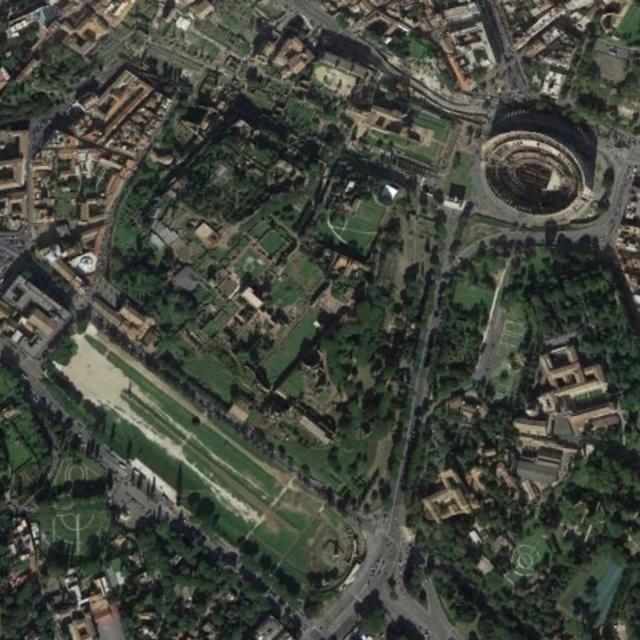
The Changing Landscape of Ancient Rome. Archaeology and History of the Palatine Hill (Coursera) Coursera
Sapienza University of Rome

The Changing Landscape of Ancient Rome. Archaeology and History of the Palatine Hill (Coursera)

Studying ancient - as well as medieval or modern - cities basically means telling local urban stories based on the reconstruction of changing landscapes through the centuries. Given the fragmentary nature of archaeological evidence, it is necessary to create new images that would give back the physical aspect of the urban landscape and that would bring it to life again. We are not just content with analyzing the many elements still visible of the ancient city.

Oct 12th 2026
5-12 Weeks
Modern Africa (saylor.org) Saylor Academy
Saylor.org

Modern Africa (saylor.org)

This course will introduce you to the major events and dynamics of three distinct periods in African history, namely (1) the colonial period, (2) the era of decolonization, and (3) the post-colonial period.

Legacy Course
Self-Paced
Arctic Economy (Coursera) Coursera
University of Alberta,UiT The Arctic University of Norway

Arctic Economy (Coursera)

Arctic communities have diverse histories and roles in local, regional and global economies. However, the scope and scale of globalization has increased so quickly that vulnerable Arctic communities are facing new kinds of challenges to their survival. In this 3-week MOOC, a unique collaboration between the University of Alberta and UiT The Arctic University of Norway, you will investigate the challenges faced by Indigenous, North American, Russian and Nordic Arctic communities in a modern world. So join us as we venture above the 60th parallel North, and explore how these fascinating communities adjust to change while maintaining their ways of life, socio-economic histories, and cultural traditions.

Oct 12th 2026
4 Weeks
Magic in the Middle Ages (Coursera) Coursera
University of Barcelona

Magic in the Middle Ages (Coursera)

Magical thought has always attracted human imagination. In this course we will introduce you to the Middle Ages through a wide conception of magic. Students will have an approach to medieval culture, beliefs and practices from the perspective of History and History of Science. Popular magic, as well as learned magic (alchemy, geomancy and necromancy) will be addressed. Moreover, we will also deal with how eastern practices and texts influenced western culture. In July 2016, the course will contain a brand-new module devoted to astrology. Magic in the Middle Ages offers a captivating overview of medieval society and promotes reflection about certain stereotypes associated with this period.

Oct 12th 2026
5-12 Weeks
The Final Solution to the Jewish Question (Coursera) Coursera
Yad Vashem

The Final Solution to the Jewish Question (Coursera)

The "Final Solution to the Jewish Question" was the official code name used by Nazi German authorities for the planned annihilation of Jews during World War II. This course focuses on the origins, evolution, and implementation of this deadly operation which led to the murder of six million Jews by the Nazis and their collaborators.

Oct 12th 2026
5-12 Weeks
William Shakespeare's Twelfth Night: Comedy, Conflict, and Community (Coursera) Coursera
University of Colorado Boulder

William Shakespeare's Twelfth Night: Comedy, Conflict, and Community (Coursera)

This course introduces and explores William Shakespeare’s classic comedy, Twelfth Night. Interviews with actors who appeared in the Colorado Shakespeare Festival’s 2019 production of Twelfth Night, as well as lectures by scholars and theater professionals who work and teach at the University of Colorado Boulder, offer students insight into Shakespeare’s artistic vision and its applications.

Oct 12th 2026
5-12 Weeks