FUN

ProtéiNNOV : Protéines végétales et Innovation (FUN)

Offered by AgroSup Dijon,
ProtéiNNOV : Protéines végétales et Innovation (FUN)

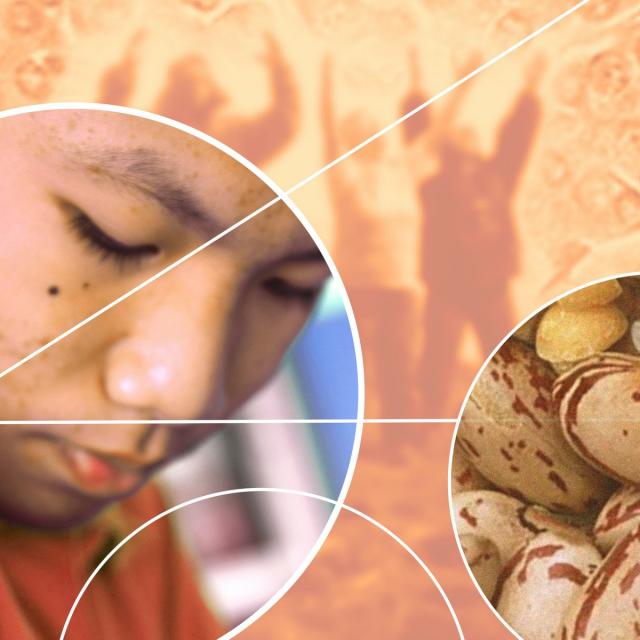
La prise de conscience d'une raréfaction des ressources en protéines animales dans les décennies à venir et la nécessité de produire plus durablement ces ressources alimentaires nous conduit à repenser aux autres sources de protéines, notamment les protéines d'origine végétale. Parmi les sources de protéines végétales, la plus employée comme substitut des protéines animales est le soja, mais le soja n'est pas la seule source de protéines végétales. Il est donc opportun de faire le point sur les autres sources de protéines végétales et sur leur utilisation. Le développement de nouveaux produits alimentaires riches en protéines végétales passe par la connaissance des atouts tant technologiques que nutritionnels de ces ingrédients, mais aussi des freins à leur introduction dans le régime alimentaire des européens.

Le MOOC que nous proposons est donc ciblé sur les protéines végétales et sur leur utilisation dans l'alimentation humaine. Le cours a pour but d'apporter des connaissances dans quatre domaines ciblés sur l'utilisation des protéines végétales pour l'innovation de produits alimentaires : Agronomie, Nutrition, Technologie alimentaire et Innovation produits.

Le cours se déroulera sur cinq semaines. Les quatre premières semaines sont consacrées à l'un des quatre domaines développés dans ce cours, sous forme de trois à quatre séquences vidéo d'une quinzaine de minutes. La dernière semaine sera consacrée à la constitution d'un dossier sur le soja, évalué par les pairs, permettant de croiser les connaissances acquises pendant les semaines précédentes. Il complétera les brefs questionnaires de chaque fin de semaine afin d’obtenir une attestation de suivi avec succès.
Un forum vous permettra d’échanger avec la communauté d'apprenants et des ressources pédagogiques d'approfondissement seront mises à votre disposition.

Plan du cours

Semaine 1 : Agronomie - Protéines pour tous les hommes

  • Sources principales de protéines végétales
  • Sélection variétale des légumineuses
  • Organisation de la filière des protéagineux en France

Semaine 2 : Nutrition - Protéines essentielles

  • Rappels de nutrition générale
  • Apports en acides aminés des principales sources de protéines végétales
  • Notions de quantité et de qualité en acides aminés

Semaine 3 : Technologie - Propriétés et fonctionnalités

  • De la graine aux protéines végétales
  • Propriétés fonctionnelles des protéines
  • Modifier pour accroître les fonctionnalités

Semaine 4 : Innovation - Nouveaux produits déjà dans vos assiettes

  • Consommation de produits à base de légumineuses
  • Présence de protéines végétales dans notre alimentation actuelle
  • Innovations pour aider à leur consommation

Semaines 5 : Dossier Soja

  • Finalisation et dépôt du dossier sur le Soja et évaluation par les pairs

Go to Class
MOOC List is learner-supported. When you buy through links on our site, we may earn an affiliate commission.

Related Courses

Life 101: Mental and Physical Self-Care (Coursera) Coursera
University of California, Irvine

Life 101: Mental and Physical Self-Care (Coursera)

This course will cover various topics that would teach students healthy lifestyle choices, the importance of mental and physical health and self-care. For each topic, an evidence-based lecture that would include scientific evidence will be presented and then students will be provided practical methods to practice what they have learned from the lectures. One of the main goals of this course is to inspire students to adopt a healthy lifestyle.

Oct 12th 2026
5-12 Weeks
Agroressources et agro-industries durables (FUN) FUN
Université Fédérale Toulouse Midi-Pyrénées

Agroressources et agro-industries durables (FUN)

Coproduit par l'INP Toulouse et l'INSA Toulouse, ce cours est ouvert sur 6 semaines et vous propose de découvrir ce que sont les agroressources. Pourquoi en parler ? Quelle utilité ? Comment les transformer et les valoriser ? Les agroressources sont des matières premières issues de l'agriculture. Vous découvrirez au cours de ce MOOC le potentiel de valorisation de ces matières issues du carbone renouvelable au travers de leurs utilisations, leurs impacts économiques, environnementaux et sociétaux.

No sessions available
5-12 Weeks
Strong sustainability and Europe (FUN) FUN
Université Clermont Auvergne

Strong sustainability and Europe (FUN)

Sustainable development, popularized by the Brundtland Report, was defined at the end of the 1980s in three spheres (economic, environmental and social). It is this representation that continues today to be disseminated to the public and to large companies. The objective of this MOOC is to question the major challenges of development for Europe in a perspective of strong sustainability (energy, climate, biodiversity, food, mobility, agriculture, natural resources, education...) and to propose alternatives.

Sep 12th 2022
5-12 Weeks
Introduction to Sustainability (Coursera) Coursera
University of Illinois at Urbana-Champaign

Introduction to Sustainability (Coursera)

This course introduces the academic approach of Sustainability and explores how today’s human societies can endure in the face of global change, ecosystem degradation and resource limitations. The course focuses on key knowledge areas of sustainability theory and practice, including population, ecosystems, global change, energy, agriculture, water, environmental economics and policy, ethics, and cultural history.

Sep 28th 2026
5-12 Weeks
Discover Best Practice Farming for a Sustainable 2050 (Coursera) Coursera
University of Western Australia

Discover Best Practice Farming for a Sustainable 2050 (Coursera)

The Discover Best Practice Farming for a Sustainable 2050 Course is based on a clear vision: imagine best practice farming for 2050, start to implement these strategies now, all the while making sure it will still be profitable. At UWA we're doing just that with the Future Farm 2050 Project, set on a mixed-enterprise farm in Western Australia and we want you to learn how it can be done in your part of the world.

Oct 5th 2026
5-12 Weeks
NECTAR : Nématodes Cultures Taxonomie Arthropodes (FUN) FUN
Montpellier SupAgro

NECTAR : Nématodes Cultures Taxonomie Arthropodes (FUN)

La taxonomie est une Science biologique élémentaire et fondamentale. Les arthropodes et nématodes constituent la grande majorité des espèces de la planète. Leurs connaissances et identifications présentent donc des enjeux majeurs pour la préservation et la gestion de la biodiversité. / Taxonomy is a fundamental and elementary science. Arthropods and nematodes constitute the majority of species on earth. Being able identify them is thus critical for biodiversity conservation and management.

Oct 15th 2021
5-12 Weeks
Diabetes - the Essential Facts (Coursera) Coursera
University of Copenhagen

Diabetes - the Essential Facts (Coursera)

Across the world more than 420 million people are living with diabetes. Two thirds of these have not yet been diagnosed. When discovered late or managed incorrectly, diabetes can damage your heart, blood vessels, eyes, kidneys, and nerves, leading to disability and premature death. In fact, more people are dying of diabetes related diseases than of diseases as HIV/AIDS, malaria and tuberculosis combined. This course will provide you with an introduction to the most recent research in the field of prevention and treatment of diabetes as well as a broader understanding of the situation in different communities, rich and poor, across the world, where diabetes threatens public health.

Oct 11th 2026
3 Weeks
Risks to Crop Production in Agriculture (Coursera) Coursera
University of Illinois at Urbana-Champaign

Risks to Crop Production in Agriculture (Coursera)

Learners will be able to describe the crop production cycles of agriculture for annual and permanent crops, explain the financial characteristics and risks of food production, discuss the various types of land ownership and rental agreements for the use of agricultural land, and describe personal, external, and food production risks that influence decision-making in agriculture.

Oct 12th 2026
5-12 Weeks
Public Health Perspectives on Sustainable Diets (Coursera) Coursera
Johns Hopkins University

Public Health Perspectives on Sustainable Diets (Coursera)

What we eat and how we produce that food have significant effects on human health and the sustainability of our planet. But what is a ‘sustainable’ diet? A sustainable diet, as defined by the FAO, promotes health and well-being and provides food security for the present population while sustaining human and natural resources for future generations. This short course looks at the urgent need to address the sustainability of our food systems, including better understanding the complex relationship between diet and climate change. We’ll explore current research on dietary shifts needed in high, middle, and low-income countries to achieve both sustainability and food security goals and discuss evidence-based strategies to promote sustainable diets.

Oct 5th 2026
3 Weeks
Alimentación y dietética para una vuelta al mundo a vela (Coursera) Coursera
University of Barcelona

Alimentación y dietética para una vuelta al mundo a vela (Coursera)

Comer bien en una vuelta al mundo no es tarea fácil . Aprenda cómo equilibrar alta nutrición con practicidad mientras navega alrededor del mundo. Este curso pretende introducirte en el mundo de la preparación de los deportistas que participan en regatas de navegación transoceánica, como la Barcelona World Race.

Oct 5th 2026
5-12 Weeks
Climate Change and Water in Mountains: A Global Concern (Coursera) Coursera
University of Geneva

Climate Change and Water in Mountains: A Global Concern (Coursera)

What is climate change? How are mountain regions affected by the evolution of water resources and their uses? What kind of risks need to be considered? Mountains are recognized as particularly sensitive physical environments where intense and rapid changes have in the past, and may increasingly in the future, place pressure on their resource base.

Oct 5th 2026
5-12 Weeks