C++ For C Programmers, Part B (Coursera)

C++ For C Programmers, Part B (Coursera)

This course is for experienced C programmers who want to program in C++. The examples and exercises require a basic understanding of algorithms and object-oriented software.

Class Deals by MOOC List - Click here and see Coursera's Active Discounts, Deals, and Promo Codes.

Course 4 of 4 in the Coding for Everyone: C and C++ Specialization

Syllabus

WEEK 1
STL and the game of Hex
This module looks at the architecture of the Standard Template Library. It is especially important to understand how iterators are used to access container to produce highly efficient generic algorithms. The module also includes the important new style of function object—the lambda expression.

WEEK 2
Hex as a graph and Inheritance
This module shows how Hex can be played as a game on a graph. This involves its representation as an undirected graph in C++. The module explores the inheritance logic and syntax of C++. A principal example is the base class student and a derived class grad_student.

WEEK 3
Hex and the use of AI and C++ Move semantics
This module explains Min-Max and the Alpha-Beta algorithm for game playing. Its programming topics include C++ 11 Move semantics and a detailed example of referential garbage collection.

WEEK 4
Monte Carlo Hex Program, Further advanced C++ Topics and Patterns
This module shows how to use Monte Carlo evaluation in complex games such as Hex and Go. This had led top championship level play in both these games. The module discusses C++ assertions and exceptions for error handling and the new C++ 11 feature static asserts. Finally, the last part of the module introduces the idea of “Design Pattern”, a feature of modern OO programming.

WEEK 5
Final Exam
This module contains three practice exams (which you can take as many times as you'd like) and the final exam, which is worth X% of your grade in this course.

Go to Class
MOOC List is learner-supported. When you buy through links on our site, we may earn an affiliate commission.

Related Courses

The Unix Workbench (Coursera) Coursera
Johns Hopkins University

The Unix Workbench (Coursera)

Unix forms a foundation that is often very helpful for accomplishing other goals you might have for you and your computer, whether that goal is running a business, writing a book, curing disease, or creating the next great app. The means to these goals are sometimes carried out by writing software. Software can’t be mined out of the ground, nor can software seeds be planted in spring to harvest by autumn. Software isn’t produced in factories on an assembly line. Software is a hand-made, often bespoke good. If a software developer is an artisan, then Unix is their workbench.

Oct 26th 2026
4 Weeks
Effective Programming in Scala (Coursera) Coursera
École Polytechnique Fédérale de Lausanne

Effective Programming in Scala (Coursera)

Scala is an expressive, versatile, and safe programming language. In this course, you will learn how to get the most out of Scala to solve common programming tasks such as modeling business domains, breaking down complex problems into simpler problems, manipulating data, or running parallel tasks. Along the journey, you will also learn the best practices for writing high-quality code that scales to large applications, how to handle errors, how to write tests, and how to leverage a productive development environment.

Oct 26th 2026
5-12 Weeks
Games, Sensors and Media (Coursera) Coursera
University of California, Irvine

Games, Sensors and Media (Coursera)

You will learn to make fluid digital interactive experiences that are suitable for gaming and use the advanced sensor hardware built into the iPhone and iPad. This includes drawing 2D graphics, playing sounds and music, integrating with Game Center, the iOS physics engine and detecting device orientation and location.

Oct 26th 2026
4 Weeks
Learn TypeScript (Coursera) Coursera
Scrimba

Learn TypeScript (Coursera)

Are you a proficient developer in HTML, CSS, and JavaScript, looking to elevate your technical skillset? Have you observed an increasing demand for TypeScript in the professional job market and are keen to explore its significance? Are you in search of a programming language that offers ease in readability and debugging? If the answer to any of these questions is affirmative, then you have arrived at the optimal course to advance your career.

Oct 26th 2026
4 Weeks
Open Source Programming - Master's (Coursera) Coursera
Illinois Tech

Open Source Programming - Master's (Coursera)

Contemporary open-source programming languages and frameworks are presented in this course. Students will consider design and development topics in system, graphical user interface, network, and web programming. Dynamic scripting languages are covered using object-oriented, concurrent, and functional programming paradigms. Concepts gained throughout the course are reinforced with numerous exercises which will culminate in an open-source programming project.

Oct 26th 2026
5-12 Weeks
Approximation Algorithms Part II (Coursera) Coursera
École normale supérieure

Approximation Algorithms Part II (Coursera)

This is the continuation of Approximation algorithms, Part 1. Here you will learn linear programming duality applied to the design of some approximation algorithms, and semidefinite programming applied to Maxcut. By taking the two parts of this course, you will be exposed to a range of problems at the foundations of theoretical computer science, and to powerful design and analysis techniques.

Oct 26th 2026
4 Weeks
Agile Planning for Software Products (Coursera) Coursera
University of Alberta

Agile Planning for Software Products (Coursera)

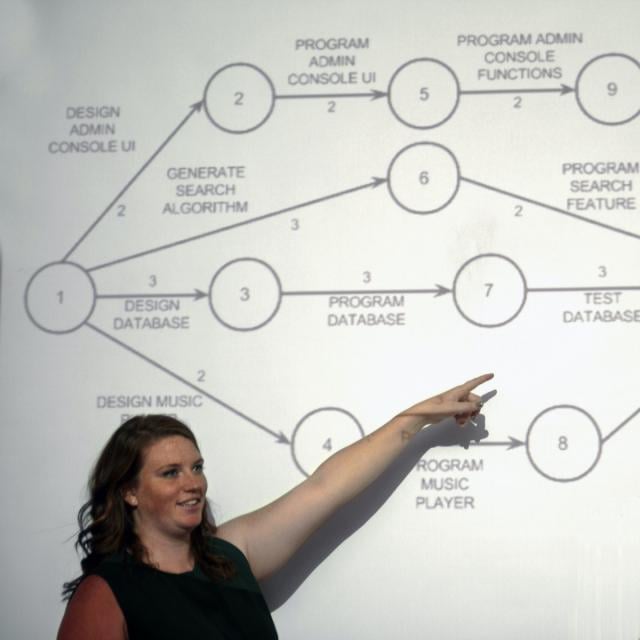
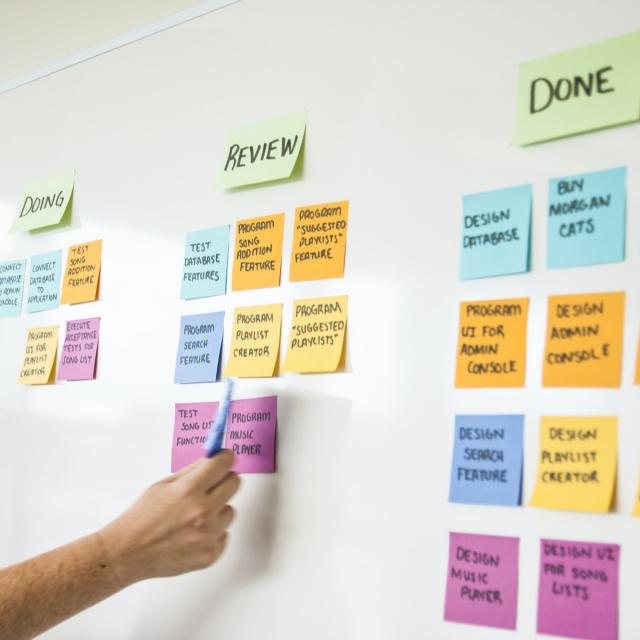
This course covers the techniques required to break down and map requirements into plans that will ultimately drive software production. Upon successful completion of this course, you will be able to: create effective plans for software development; map user requirements to developer tasks; assess and plan for project risks; apply velocity-driven planning techniques; generate work estimates for software products.

Oct 26th 2026
4 Weeks
Software Processes and Agile Practices (Coursera) Coursera
University of Alberta

Software Processes and Agile Practices (Coursera)

This course delves into a variety of processes to structure software development. It also covers the foundations of core Agile practices, such as Extreme Programming and Scrum. Upon successful completion of this course, you will be able to: distinguish between different process models for organizing software production; gauge the applicability of process models for a software development project; apply the fundamentals of Agile software development and management practices.

Oct 26th 2026
4 Weeks
Probabilistic Graphical Models 3: Learning (Coursera) Coursera
Stanford University

Probabilistic Graphical Models 3: Learning (Coursera)

Probabilistic graphical models (PGMs) are a rich framework for encoding probability distributions over complex domains: joint (multivariate) distributions over large numbers of random variables that interact with each other. These representations sit at the intersection of statistics and computer science, relying on concepts from probability theory, graph algorithms, machine learning, and more. They are the basis for the state-of-the-art methods in a wide variety of applications, such as medical diagnosis, image understanding, speech recognition, natural language processing, and many, many more. They are also a foundational tool in formulating many machine learning problems.

Oct 26th 2026
5-12 Weeks
Learn CSS Flexbox (Coursera) Coursera
Scrimba

Learn CSS Flexbox (Coursera)

Mastering CSS Flexbox: Unlock the Power of Flexible Web Layouts. Discover the indispensable art of CSS Flexbox and elevate your web development prowess to new heights. In this comprehensive course, you'll gain proficiency in harnessing the unparalleled capabilities of Flexbox, revolutionizing the way you construct websites.

Oct 26th 2026
1 Week
Programming with Scratch (Coursera) Coursera
The Hong Kong University of Science and Technology - HKUST

Programming with Scratch (Coursera)

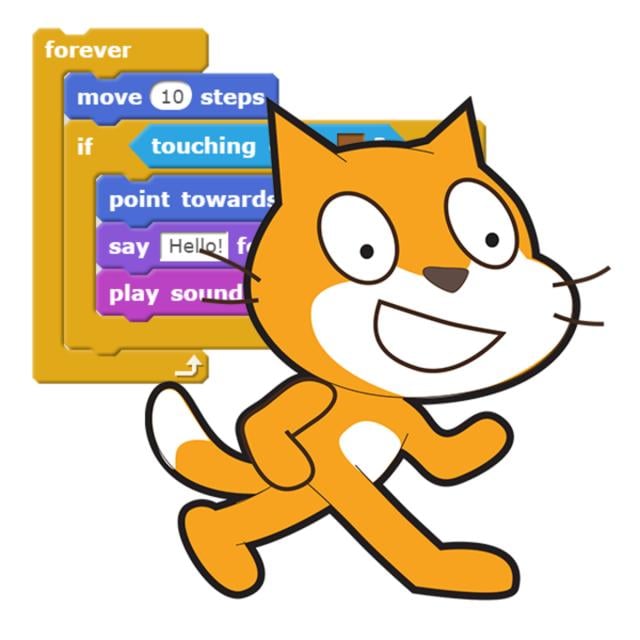
Learning coding is not only about understanding the programming language being used, but also developing important computational thinking skills, which are useful for problem solving across many disciplinary areas. In this course, students will learn basic programming skills by creating interactive storybooks, animations, and games with Scratch, which is a block-based visual programming language for anyone new to coding.

Oct 26th 2026
5-12 Weeks