The Philosophy of Death (saylor.org)

Offered by Saylor.org,
The Philosophy of Death (saylor.org)

This class provides an in-depth introduction to the philosophical problems surrounding death. It takes its starting point in the fact that everyone, eventually, will die. This is one of the few facts that human beings can be absolutely sure about.

Please note: this legacy course does not offer a certificate and may contain broken links and outdated information. Although archived, it is open for learning without registration or enrollment.
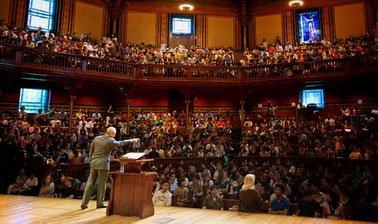
This class provides an in-depth introduction to the philosophical problems surrounding death. It takes its starting point in the fact that everyone, eventually, will die. This is one of the few facts that human beings can be absolutely sure about. Given this certainty, however, death still presents us with many difficult and pressing questions. What does it mean to die in the first place? Who or what is the “person” that dies? Is it merely a physical body, or is it also something like a soul, and, if so, does the existence of a soul indicate that there is some hope of immortality? Moreover, what should our attitude toward death be? Should we think of it as a good thing or a bad thing? And what effect should it have on the way we live our lives? At some point in our lives, we all grapple with these questions. This course uses the doctrines and arguments of a number of prominent philosophers concerning death as a means to investigate these and other questions. The course is organized around the lectures of Shelly Kagan, Professor of Philosophy at Yale University, who develops his own philosophy of death over the length of the course. Its major purpose, aside from familiarizing you with the writings of major philosophers on the subject of death, is to teach you how to think about death philosophically—to decide for yourself what you believe about death and to provide careful and convincing arguments for those beliefs.
This course is divided into three long units. The first unit covers metaphysical questions about death, i.e., questions about what death is, what persons are, and the existence of the soul. This unit includes material about the positions of dualism and physicalism, various arguments for the existence of the soul, as well as a close reading of Plato’s Phaedo, one of the most influential arguments for immortality. The second unit deals with questions about how we ought to value death. We will address the views that personal identity is rooted in the soul, in the body, and in the “personality” (understood as a cluster of psychological properties). We will also consider the possibility that death has little or nothing to do with the death of the “person,” but can be accounted for in purely physical terms. We will conclude the unit with a look at Leo Tolstoy’s novella The Death of Ivan Ilyich. In the third unit, we cover topics such as the (alleged) badness of death, how the fact that we will die should influence the way we live, and whether it is ever appropriate to bring about our own death prematurely. We will consult with several important contemporary philosophers, as well as with the great Renaissance essayist Michel de Montaigne, the Enlightenment philosopher David Hume, and the late existentialist Walter Kaufmann.
Upon successful completion of this course, the student will be able to:

  • Discuss the philosophical issues connected with death: what it is, whether it is good or bad, and its significance in terms of the way we choose to live.
  • Explain the inter-relatedness of questions about death and questions about personal identity and the “self.”
  • Differentiate between dualist and physicalist conceptions of death and specify the particular consequences of each approach.
  • Describe the multiplicity of cultural, religious, and philosophical views about death and the soul.
  • Discuss major philosophical arguments for and against the immortality of the soul.
  • Articulate major theories of personal identity, and provide reasoned criticisms of these major theories of personal identity.
  • Explain and evaluate the view of death presented in literary works such as Leo Tolstoy’s The Death of Ivan Ilyich.
  • Discuss in a philosophical way certain value-theoretic questions about death: whether it is inherently good or bad, whether it presents us with obligations to live our lives in a certain way, and whether it is permissible to end life prematurely.
  • Describe the existentialist view of death and the notion that it gives life meaning by restricting its shape and scope; explain the various ways in which this limiting feature of death has been interpreted.

Go to Class
MOOC List is learner-supported. When you buy through links on our site, we may earn an affiliate commission.

Related Courses

The Einstein Revolution (edX) EdX
HarvardX,Harvard University

The Einstein Revolution (edX)

Traces Albert Einstein’s engagement with relativity, quantum mechanics, Nazism, nuclear weapons, philosophy, the arts, and technology. Albert Einstein has become the icon of modern science. Following his scientific, cultural, philosophical, and political trajectory, this course aims to track the changing role of physics in the 20th and 21st centuries.

Self Paced
Self-Paced
Foundations of Teaching for Learning: Being a Professional (Coursera) Coursera
Commonwealth Education Trust

Foundations of Teaching for Learning: Being a Professional (Coursera)

The Foundations of Teaching for Learning programme is for anyone who is teaching, or who would like to teach, in any subject and any context - be it at school, at home or in the workplace. With dynamic lessons taught by established and respected professionals from across the Commonwealth, this eight course programme will see you develop and strengthen your skills in teaching, professionalism, assessment, and more. As you carry on through the programme, you will find yourself strengthening not only your skills, but your connection with colleagues across the globe. A professional development opportunity not to be missed.

Aug 24th 2026
5-12 Weeks
Serious Gaming (Coursera) Coursera
Erasmus University Rotterdam

Serious Gaming (Coursera)

Have you ever wondered how playing games can help us to train people, deal with societal challenges or raise awareness of contemporary social issues? In this MOOC you will learn the ins and outs of games that are designed with exactly those purposes in mind: serious games. We will define serious games and discuss the different types that have been developed. We will explain why people like to play them and what impact they may have.

Aug 31st 2026
5-12 Weeks
Justice (edX) EdX
HarvardX,Harvard University

Justice (edX)

Justice, one of the most famous courses taught at Harvard College, is an introduction to moral and political philosophy, offering an opportunity to discuss contemporary dilemmas and controversies. Taught by lauded Harvard professor Michael Sandel, Justice explores critical analysis of classical and contemporary theories of justice, including discussion of present-day applications.

Self Paced
Self-Paced
Philosophy of Science (saylor.org) Saylor Academy
Saylor.org

Philosophy of Science (saylor.org)

This course is a survey of philosophical issues surrounding the concepts and practices of modern science. The course covers the major areas of contemporary philosophy of science, including scientific reasoning, scientific progress, interpretations of scientific knowledge, and the social organization of scientific practice.

Legacy Course
Self-Paced
Introduction to Philosophy (saylor.org) Saylor Academy
Saylor.org

Introduction to Philosophy (saylor.org)

This course will introduce you to the major topics, problems, and methods of philosophy and surveys the writings of a number of major historical figures in the field. Philosophy can be – and has been – defined in many different ways by many different thinkers.

Legacy Course
Self-Paced
Introduction to Philosophy (Coursera) Coursera
University of Edinburgh

Introduction to Philosophy (Coursera)

This course will introduce you to some of the main areas of research in contemporary philosophy. Each module a different philosopher will talk you through some of the most important questions and issues in their area of expertise. We’ll begin by trying to understand what philosophy is – what are its characteristic aims and methods, and how does it differ from other subjects? Then we’ll spend the rest of the course gaining an introductory overview of several different areas of philosophy.

Sep 7th 2026
5-12 Weeks
Søren Kierkegaard - Subjectivity, Irony and the Crisis of Modernity (Coursera) Coursera
University of Copenhagen

Søren Kierkegaard - Subjectivity, Irony and the Crisis of Modernity (Coursera)

In this course created by former associate professor at the Søren Kierkegaard Research Centre, Jon Stewart, we will explore how Kierkegaard deals with the problems associated with relativism, the lack of meaning and the undermining of religious faith that are typical of modern life. His penetrating analyses are still highly relevant today and have been seen as insightful for the leading figures of Existentialism, Post-Structuralism and Post-Modernism.

Sep 14th 2026
5-12 Weeks
Introduction to Korean Philosophy and Culture (Coursera) Coursera
Sungkyunkwan University - SKKU

Introduction to Korean Philosophy and Culture (Coursera)

This course will give you the cultural and historical background to begin your journey into Korean philosophy, and there is no prerequisite knowledge on philosophy required. Anybody who either has an interest in Korean culture, maybe through K-Dramas or K-pop, or an interest in philosophy from a cross-cultural perspective, are all welcome.

Aug 31st 2026
4 Weeks
The History of Medicine: Philosophy, Science, and Psychology (Coursera) Coursera
University of California, Santa Cruz

The History of Medicine: Philosophy, Science, and Psychology (Coursera)

"History of Medicine" provides an accessible historical and interdisciplinary perspective on medicine, focused primarily upon therapy and practice, to achieve better understanding of the scope, practice, and limits of medicine. Medicine is defined as the treatment of disease. Human attempts to understand and treat disease will be seen as evolving from the spiritual and mystical practices of the distant past, to the rational approach of the Classical World, and finally to the scientific thinking of the Renaissance and beyond.

Aug 31st 2026
5-12 Weeks
Setting Expectations & Assessing Performance Issues (Coursera) Coursera
University of California, Davis

Setting Expectations & Assessing Performance Issues (Coursera)

If you don’t know where you are going, any road will take you there. One of the most important roles of a manager is to ensure everyone knows the destination. The most effective managers set expectations and assess their employees’ performance against those expectations, and take a coaching approach to helping them get to the destination. That’s exactly what you’ll learn to do in this course! You will explore how to collaboratively develop expectations with those you lead. When you encounter expectations that are not being met, you’ll learn how to use "Coaching Algebra" to determine the underlying issues that are impeding performance, and how to respond as a manger-coach.

Aug 24th 2026
4 Weeks
Soul Beliefs: Causes and Consequences - Unit 3: How Does It All End? (Coursera) Coursera
Rutgers University

Soul Beliefs: Causes and Consequences - Unit 3: How Does It All End? (Coursera)

Throughout history, the vast majority of people around the globe have believed they have, however defined, a “soul.” While the question of whether the soul exists cannot be answered by science, what we can study are the causes and consequences of various beliefs about the soul and its prospects of surviving the death of the body. Why are soul and afterlife beliefs so common in human history? Are there adaptive advantages to assuming souls exist?

Aug 31st 2026
5-12 Weeks