Out of core nuclear fuel management: back end (Coursera)

Out of core nuclear fuel management: back end (Coursera)

After completing this MOOC, the student will be able to recognize and describe the basic principles of the different steps of the back end of the fuel cycle, will be capable to find updated information and knowledge about the subject of study and will have the skills to perform basic calculations of the back end of the nuclear fuel cycle.

Class Deals by MOOC List - Click here and see Coursera's Active Discounts, Deals, and Promo Codes.

This course is part of the Nuclear fuel management: a practical approach Specialization.

Syllabus

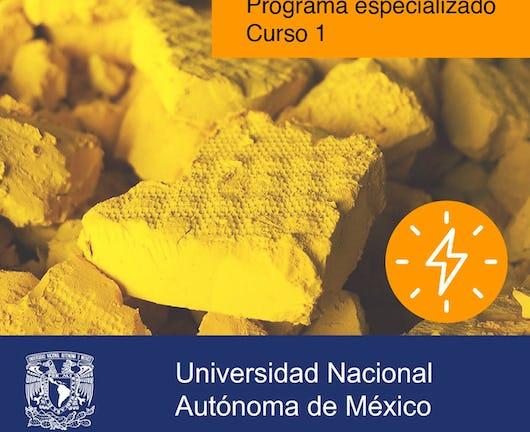
Spent nuclear fuel
Spent Fuel Reprocessing and Recycling Facilities
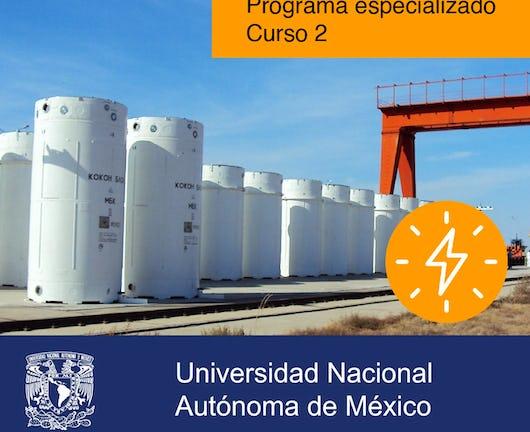
Final disposal of spent fuel and high-level radioactive wastes

Go to Class
MOOC List is learner-supported. When you buy through links on our site, we may earn an affiliate commission.
Related Courses

Transformation of the Global Food System (Coursera) Coursera
University of Copenhagen

Transformation of the Global Food System (Coursera)

The UN predicts we will be 9-10 billion people on Earth in 2050. Providing so many people with nutritious foods is a massive challenge and one that cannot be met by simply upscaling current practices regarding food production and consumption. Providing humanity with nutritional food is at the center of all decisions related to sustainable development.

Sep 21st 2026
5-12 Weeks
¿Cómo viajamos por la ciudad? Asignación y equilibrio en redes de transporte (Coursera) Coursera
Pontificia Universidad Católica de Chile

¿Cómo viajamos por la ciudad? Asignación y equilibrio en redes de transporte (Coursera)

El movimiento de personas en una ciudad es un proceso complejo, pero que es muy importante de entender en profundidad para poder planificar adecuadamente el desarrollo de una ciudad. En este curso se presenta una introducción a diferentes herramientas que son aplicadas en la Ingeniería de Transporte para predecir de qué forma las personas escogen cómo y por dónde moverse en la red vial de una ciudad.

Sep 14th 2026
5-12 Weeks
Algae Biotechnology (Coursera) Coursera
University of California, San Diego

Algae Biotechnology (Coursera)

For decades, researchers have been studying microalgae to understand their biological functions and how we can use technology to harness algae’s power to create a wide range of commercial products. In this course, we will cover how synthetic biology, genetic engineering, and metabolic engineering is used in algae biotechnology, and also examine the current state of algae biotechnology research and tools. We’ll also explore some of the common bio-products we can make from algae, and take a look at some real-world algae companies that are using algae biotechnology to create products consumers can buy today.

Sep 14th 2026
5-12 Weeks
Advanced Functional Ceramics (Coursera) Coursera
Yonsei University

Advanced Functional Ceramics (Coursera)

To realize next-generation devices, novel ceramic materials with ultimate physical and chemical properties are required. For this purpose, a few intrinsic and extrinsic approaches for the development of new functional ceramics are proceeding. This course provides the fundamentals of functional ceramics and the materials design rules for developing advanced ceramics with ultimate physical and chemical properties.

Sep 14th 2026
5-12 Weeks
Water: an essential resource (Coursera) Coursera
Politecnico di Milano

Water: an essential resource (Coursera)

This MOOC wants to communicate the challenge of protecting water and then human health from chemical and microbiological hazards, as well as the multidisciplinarity required by this challenge by providing some key elements about water quality, protection and remediation, sustainable drinking water production, online monitoring, and finally advanced computing for process control.

Sep 21st 2026
3 Weeks
The Effect of Fires on People, Property and the Environment (Coursera) Coursera
University of Maryland, College Park

The Effect of Fires on People, Property and the Environment (Coursera)

Fires impact people, property and the environment in all countries around the world. In some cases, the resulting losses are extraordinary, causing hundreds of deaths, widespread damage to property and contents and significant impacts on the environment. More often, fires may cause a single casualty or affect a single home, though the effects are still highly significant to those affected and collectively are substantial. This course will provide an overview of the challenges posed by fire as well as the fire safety solutions that are available to meet those challenges.

Sep 14th 2026
5-12 Weeks
Geographical Information Systems - Part 1 (Coursera) Coursera
École Polytechnique Fédérale de Lausanne

Geographical Information Systems - Part 1 (Coursera)

This course is organized into two parts presenting the theoretical and practical foundations of geographic information systems (GIS). Together theses courses constitute an introduction to GIS and require no prior knowledge. By following this introduction to GIS you will quickly acquire the basic knowledge required to create spatial databases and produce high-quality maps and cartographic representations. This is a practical course and is based on free, open-source software, including QGIS.

Sep 14th 2026
5-12 Weeks
Gestión integral del riesgo de desastres (Coursera) Coursera
Universidad Nacional Autónoma de México

Gestión integral del riesgo de desastres (Coursera)

El curso está orientado a las personas que ya cuentan con nociones de planificación y que tienen conocimientos generales sobre las principales amenazas en un contexto particular desde una disciplina específica. Presenta los conceptos más importantes, así como ejemplos y problemas para el análisis de temas de gestión integral del riesgo de desastres que, regularmente, deben abordarse desde ámbitos nacionales o federales, municipales o locales.

Sep 14th 2026
4 Weeks
Our Energy Future (Coursera) Coursera
University of California, San Diego

Our Energy Future (Coursera)

This course is designed to introduce students to the issues of energy in the 21st century – including food and fuels – which are inseparably linked – and will discuss energy production and utilization from the biology, engineering, economics, climate science, and social science perspectives. This course will cover the current production and utilization of energy, as well as the consequences of this use, examining finite fossil energy reserves, how food and energy are linked, impacts on the environment and climate, and the social and economic impacts of our present energy and food production and use.

Sep 21st 2026
5-12 Weeks
In core nuclear fuel management (Coursera) Coursera
Universidad Nacional Autónoma de México

In core nuclear fuel management (Coursera)

Upon completion of this MOOC, students will gain comprehensive knowledge in nuclear fuel management and reactor core design. They will learn to list and understand the basic parameters involved in in-core fuel management, including the estimation of fuel batch reload fraction and enrichment for equilibrium cycles using the linear reactivity method. The course will also cover the core aspects of reactor core design, the stages of fuel reloads design, and the principles of nuclear fuel assembly design, including the role of burnable poisons.

Aug 31st 2026
5-12 Weeks
Introducción a los modelos de demanda de transporte (Coursera) Coursera
Pontificia Universidad Católica de Chile

Introducción a los modelos de demanda de transporte (Coursera)

¿Cuántos viajan? ¿Por dónde? ¿En qué modo? En general, los proyectos de transporte (tanto de infraestructura como gestión) poseen plazos y costos de realización sumamente elevados. Por estos motivos, la evaluación de este tipo de proyectos requiere de una adecuada estimación de la demanda para su correcto dimensionamiento.

Sep 14th 2026
5-12 Weeks
The ABC of sustainability (Coursera) Coursera
Campus BBVA

The ABC of sustainability (Coursera)

The sustainability agenda is currently key to companies, governments and citizens. It’s vital for people to have first-hand knowledge of the basic concepts in order to understand all issues related to sustainability as a vector of systemic change in the economy, society, companies and our lives. The course is an introduction to sustainability, regarded as a cross-cutting discipline in our society (in the public and private international spheres) that’s based on the most updated public information on economic, social and environmental issues.

Sep 14th 2026
4 Weeks