Oscillators and Waves (Coursera)

Offered by Rice University,
Oscillators and Waves (Coursera)

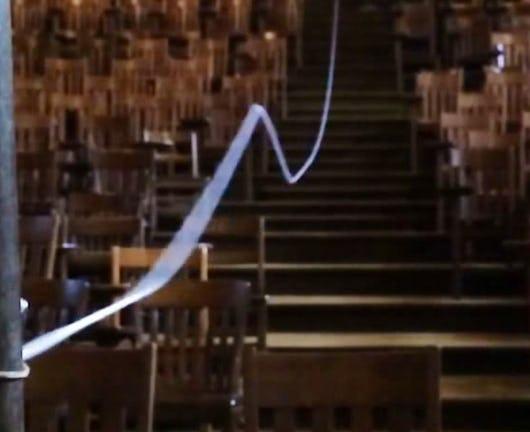
This first course serves as an introduction to the physics of waves and light. Upon completion, learners will understand how mathematical laws and conservation principles describe wave propagation and light in the context of both geometrical and physical optics. Learners will gain experience in solving physics problems with tools such as graphical analysis, algebra, vector analysis, and calculus.

Class Deals by MOOC List - Click here and see Coursera's Active Discounts, Deals, and Promo Codes.

This first course covers the Wave Equation, Normal Modes, Wave Propagation, and Dispersion. Each of the three modules contains complete video lectures, conceptual quizzes, and a set of homework problems. Once the modules are completed, the course ends with an exam. This comprehensive course is similar in detail and rigor to those taught on-campus at Rice. It will thoroughly prepare learners for their upcoming introductory physics courses or more advanced courses in physics.
This course is part of the Waves and Optics Specialization.

What you'll learn

  • Learners will be prepared to evaluate real-world data regarding oscillators and wave motion.
  • Learners can solve complicated mathematical problems related to oscillators and waves.
  • Learners will be prepared for more advanced courses in physics.

Syllabus

Oscillators
Waves I
Waves II
Oscillators and Waves Exam
Go to Class
MOOC List is learner-supported. When you buy through links on our site, we may earn an affiliate commission.

Related Courses

Microsoft 365 Copilot: Personal Productivity for All (Coursera) Coursera
Vanderbilt University

Microsoft 365 Copilot: Personal Productivity for All (Coursera)

Dive into the next wave of digital productivity with our course centered on Microsoft 365 Copilot. As impactful as the smartphone revolution, Microsoft 365 Copilot is poised to redefine how we approach myriad tasks, bringing the nuanced capabilities of generative AI to your fingertips. With this course, discover how to leverage this powerful assistant in your daily routine, transforming every challenge into an opportunity for excellence.

Sep 21st 2026
1 Week
Density Functional Theory (Coursera) Coursera
École Polytechnique

Density Functional Theory (Coursera)

The aim of this course is to give a thorough introduction to Density Functional Theory (DFT). DFT is today the most widely used method to study interacting electrons, and its applicability ranges from atoms to solid systems, from nuclei to quantum fluids. In this course, we introduce the most important concepts underlying DFT, its foundation, and basic ideas. We will in particular stress the features and reasons that lead DFT to become the dominant method for simulating quantum mechanical systems.

Sep 21st 2026
3 Weeks
Cross Functional Collaboration (Coursera) Coursera
Starweaver

Cross Functional Collaboration (Coursera)

Welcome to the "Cross-Functional Collaboration" course! This course focuses on the principles and strategies for collaborating effectively with colleagues from different functional areas. Through this course, you will learn techniques to overcome challenges, foster teamwork, and leverage diverse perspectives to achieve common goals. The course emphasizes the importance of building a culture of trust and cooperation among team members and covers various techniques to improve communication, manage conflicts, and make informed decisions through collaborative efforts.

Sep 14th 2026
1 Week
Mechanics: Motion, Forces, Energy and Gravity, from Particles to Planets (Coursera) Coursera
UNSW Sydney - University of New South Wales

Mechanics: Motion, Forces, Energy and Gravity, from Particles to Planets (Coursera)

Most of the phenomena in the world around you are, at the fundamental level, based on physics, and much of physics is based on mechanics. Mechanics begins by quantifying motion, and then explaining it in terms of forces, energy and momentum. This allows us to analyse the operation of many familiar phenomena around us, but also the mechanics of planets, stars and galaxies.

Sep 14th 2026
5-12 Weeks
Quantum Optics 1 : Single Photons (Coursera) Coursera
École Polytechnique

Quantum Optics 1 : Single Photons (Coursera)

This course gives you access to basic tools and concepts to understand research articles and books on modern quantum optics. You will learn about quantization of light, formalism to describe quantum states of light without any classical analogue, and observables allowing one to demonstrate typical quantum properties of these states. These tools will be applied to the emblematic case of a one-photon wave packet, which behaves both as a particle and a wave.

Sep 21st 2026
5-12 Weeks
Global Warming I: The Science and Modeling of Climate Change (Coursera) Coursera
University of Chicago

Global Warming I: The Science and Modeling of Climate Change (Coursera)

This class describes the science of global warming and the forecast for humans’ impact on Earth’s climate. Intended for an audience without much scientific background but a healthy sense of curiosity, the class brings together insights and perspectives from physics, chemistry, biology, earth and atmospheric sciences, and even some economics—all based on a foundation of simple mathematics (algebra).

Sep 21st 2026
5-12 Weeks
Basic Modeling for Discrete Optimization (Coursera) Coursera
University of Melbourne,The Chinese University of Hong Kong

Basic Modeling for Discrete Optimization (Coursera)

Optimization is a common form of decision making, and is ubiquitous in our society. Its applications range from solving Sudoku puzzles to arranging seating in a wedding banquet. The same technology can schedule planes and their crews, coordinate the production of steel, and organize the transportation of iron ore from the mines to the ports. Good decisions in manpower and material resources management also allow corporations to improve profit by millions of dollars.

Sep 14th 2026
4 Weeks
Astro 101: Black Holes (Coursera) Coursera
University of Alberta

Astro 101: Black Holes (Coursera)

What is a black hole? Do they really exist? How do they form? How are they related to stars? What would happen if you fell into one? How do you see a black hole if they emit no light? What’s the difference between a black hole and a really dark star? Could a particle accelerator create a black hole? Can a black hole also be a worm hole or a time machine? In Astro 101: Black Holes, you will explore the concepts behind black holes. Using the theme of black holes, you will learn the basic ideas of astronomy, relativity, and quantum physics.

Sep 14th 2026
5-12 Weeks