Modern & Contemporary American Poetry (“ModPo”) (Coursera)

Modern & Contemporary American Poetry (“ModPo”) (Coursera)

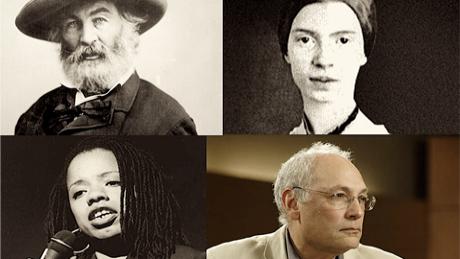
ModPo is a FREE (no fee, no charge) fast-paced introduction to modern and contemporary U.S. poetry, with an emphasis on experimental verse, from Emily Dickinson and Walt Whitman to the present. Participants (who need no prior experience with poetry) will learn how to read poems that are supposedly "difficult." We encounter and discuss the poems one at a time. It's much easier than it seems! Join us and try it!

Class Deals by MOOC List - Click here and see Coursera's Active Discounts, Deals, and Promo Codes.

ModPo is open all year, so you can enroll now, or any time, and join us. Each year we host a lively, interactive 10-week session, in which we move together through the ten-week syllabus. The next live 10-week session of ModPo will begin on September 4, 2021, and will conclude on November 15, 2021. Al Filreis will be in touch with you by email before the September 4 start of the course with all the information you'll need to participate.
During the 10 weeks of the course, you will be guided through poems, video discussions of each poem, and community discussions of each poem. And (unique among open online courses) we offer weekly, interactive live webcasts. Our famed TAs also offer office hours throughout the week. We help arrange meet-ups and in-site study groups.
If you are curious about the ModPo team, type "ModPo YouTube introduction" into Google or your favorite search engine, and watch the 20-minute introductory video. You will get an overview of the course and will meet the brilliant TAs, who will be encountering the poems with you all the way to the end.

Syllabus

WEEK 1
chapter 1.1 (week 1)—Whitman & Dickinson, two proto-modernists
Week 1 of ModPo 2022 runs from Sunday, September 4 at 9 AM through Sunday, September 11 at 9 AM. For those doing ModPo on their own or in small groups, the week 1 materials are open and available all year.

In this first week of our course, we'll encounter two 19th-century American poets whose quite different approaches to verse similarly challenged the official verse culture of the time. As a matter of form (but also of content), Walt Whitman and Emily Dickinson were radicals. What sort of radicalism is this? In a way, this course is all about exploring expressions of that radicalism from Whitman and Dickinson to the present day. Such challenges to official verse culture (and often U.S. culture at large) present us with a lineage of ideas about art and expression, a tradition that can be outlined, mostly followed, somewhat traced. In this course, we follow, to the best of our ability — and given the limits of time — that tradition and try to make overall sense of it. We will read Divya Victor's "W Is for Walt Whitman's Soul" toward the end of week 1 in anticipation of other later responses to Whitman and Dickinson encountered in week 2.

You will find that we do this one poem at a time. Here in week 1, we will explore Dickinson first, Whitman second, and then begin to sketch out the major differences between them, which, some say, amount to two opposite ends of the spectrum of poetic experimentalism and dissent in the nineteenth century. Which is to say: on the spectrum of traditional-to-experimental poetry, these two poets are on the same end (experimental); on the spectrum of experimentalism, their approaches can put them on opposite ends. In short, they offer us alternative poetic radicalisms, and their influences down the line (which we will explore in week 2) are both powerful but are also largely distinct. One question you'll be prepared to ask by the end of the course: Is the Dickinsonian or the Whitmanian tradition more ascendant and apt in today's experimental poetry?

ASSIGNMENTS: During this week, there are two quizzes due (see below); there are no writing assignments or peer reviews due. There is a live webcast on Wednesday, September 7, 2022, at 3PM (Philadelphia time).
Go to Class
MOOC List is learner-supported. When you buy through links on our site, we may earn an affiliate commission.

Related Courses

Modern Africa (saylor.org) Saylor Academy
Saylor.org

Modern Africa (saylor.org)

This course will introduce you to the major events and dynamics of three distinct periods in African history, namely (1) the colonial period, (2) the era of decolonization, and (3) the post-colonial period.

Legacy Course
Self-Paced
Literature of the English Country House (FutureLearn) FutureLearn
The University of Sheffield

Literature of the English Country House (FutureLearn)

Take a journey through the literature of English country houses from the time of Thomas More to Oscar Wilde. Trace the history and context of country house literature. Through the course you will investigate and discuss the role and representation of the English country house in literature, and learn how to build your own authoritative interpretation of these texts.

Feb 8th 2021
5-12 Weeks
Modern American Poetry (Coursera) Coursera
University of Illinois at Urbana-Champaign

Modern American Poetry (Coursera)

Twelve experienced faculty members from across the United States present their analyses of ground-breaking modern American poets in richly illustrated video lectures. The course highlights both major poets—from Walt Whitman and Emily Dickinson through T.S. Eliot, H.D., Amy Lowell, Hart Crane, Langston Hughes, Muriel Rukeyser, and many others—and influential movements. The course mixes historical overview with close readings of individual poets and poems.

Jul 20th 2026
4 Weeks
Modern Revolutions (saylor.org) Saylor Academy
Saylor.org

Modern Revolutions (saylor.org)

In this course, you will gain a better understanding of the modern world by studying some of the most important political revolutions that took place between the 17th century and today. You will seek to understand the causes of each revolution, analyze the ideologies that inspired the revolutionaries, examine revolutionary uses of violence, and consider how historical revolutions still shape contemporary politics.

Self Paced
Self-Paced
Plagues, Witches, and War: The Worlds of Historical Fiction (Coursera) Coursera
University of Virginia

Plagues, Witches, and War: The Worlds of Historical Fiction (Coursera)

A unique and exciting introduction to the genre and craft of historical fiction, for curious students, aspiring authors--anyone with a passion for the past. Read classics of the genre, encounter bestselling writers of historical fiction, and discover your own historical archive while interacting with a global community of interested readers.

Jul 20th 2026
5-12 Weeks
Découper le temps : les périodes de l'histoire (FUN) FUN
Université Paris 1 Panthéon-Sorbonne

Découper le temps : les périodes de l'histoire (FUN)

L’objet du cours est de comprendre les raisons qui poussent l’historien à découper le temps. L’enseignement de l’histoire en France est traditionnellement découpé en quatre périodes canoniques : histoire ancienne, médiévale, moderne et contemporaine. Que signifient ces époques qui sont le produit d’une histoire avant tout européenne et méditerranéenne ? Ce qui pose la question de la pertinence de cette périodisation pour d’autres aires géographiques.

No sessions available
5-12 Weeks
Poetry and the Holocaust (FutureLearn) FutureLearn
Yad Vashem

Poetry and the Holocaust (FutureLearn)

Explore personal accounts of the Holocaust through poetry and discover how poems can help you understand events of the past. Study Holocaust poetry to better comprehend this dark period in history. On this course, you’ll understand the events of the Holocaust and World War II through poetry which underlines the individual experience.

Available Now
3 Weeks
Contemporary Italian Literature (UNINETTUNO) UNINETTUNO OpenupEd
International Telematic University UNINETTUNO

Contemporary Italian Literature (UNINETTUNO)

The module, whose title is “The ways of narrating: the Italian Novel of the Twentieth Century”, deals with the development of the Italian novel in the last century and focuses on its main authors and texts. Beside analysing in depth some leading figures of the Twentieth Century Italian novel, the video-lessons will get an insight into innovative narrative techniques and the author’s relationships with the literary tradition.

Self Paced
Self-Paced
Dante tra poesia e scienza (Federica Web Learning) Federica Web Learning
University of Naples Federico II

Dante tra poesia e scienza (Federica Web Learning)

La Commedia di Dante, una delle opere più importanti della letteratura di tutti i tempi, è endiadi di poesia e scienza. Certamente la cultura scientifica di Dante è vasta per i suoi tempi; essa è talmente fusa nel discorso poetico che non disturba l’orecchio e la mente del lettore; essa non è espressione di mera conoscenza, ma rientra sempre nel concetto del poeta di leggere unitariamente il mondo e le sue espressioni; e di sicuro essa è la manifestazione più alta della scienza del Medioevo, frutto di non poche letture di una cultura scientifica non solo europea, ma anche araba, conosciuta attraverso le traduzioni latine delle opere o dalla frequentazione, come appare dalle ultime ipotesi di ricerche, di musulmani residenti in paesi dell’Italia settentrionale.

Mar 6th 2017
5-12 Weeks
The Great Poems Series: Unbinding Prometheus (OpenLearning) OpenLearning
OpenLearning

The Great Poems Series: Unbinding Prometheus (OpenLearning)

Jean-Jacques Rousseau wrote “Man is born free, but he is everywhere in chains.” Poet Percy Shelley believed words could be stronger than shackles, and wrote poems intended to free mankind from their chains. Some have argued that poetry can do nothing--or as W.H. Auden said, "Poetry makes nothing happen." Yet Henry David Thoreau, Karl Marx, Mahatma Gandhi, Martin Luther King and Nelson Mandela were inspired by Shelley's words to live in the service of freedom and dignity, and they changed the world. The Unbinding Prometheus MOOC investigates both what Shelley's words have meant over time, and what his words might mean for us today.

Self Paced
Self-Paced