Modeling and Design for Mechanical Engineers with Autodesk Fusion 360 (Coursera)

Offered by Autodesk,
Modeling and Design for Mechanical Engineers with Autodesk Fusion 360 (Coursera)

There are many considerations that play a part in engineering a new product. Regardless of what that product is, there are fundamentals such as form, fit, and function when it comes to digital modeling. In this course, we lay the foundation to create any design and dive deep into topics about the control of the design. From assembly joints and joint limits to complex shapes using forms, rest assured that your design will be rock solid.

Class Deals by MOOC List - Click here and see Coursera's Active Discounts, Deals, and Promo Codes.

After completing this course you'll be able to:

  • Create and drive a mechanical gear assembly.
  • Create and modify a form-based design.
  • Use design tools for molded parts.
  • Demonstrate proficiency in the setup and creation of a design.

What You Will Learn

  • Create and drive a mechanical gear assembly.
  • Create and modify a form-based design.
  • Use design tools for molded parts.
  • Demonstrate proficiency in the setup and creation of a design.

Course 2 of 4 in the Autodesk CAD/CAM/CAE for Mechanical Engineering Specialization.

Syllabus

WEEK 1
The Basics of Modeling
In Week 1, we’ll cover the control and creation of sketches, construction geometry, and conversion into solid bodies. Understanding how to define and reuse sketch elements is a critical step in defining geometry that can be easily updated later to accommodate design changes.

WEEK 2
The Basics of Assemblies
In Week 2, we’ll talk about the creation, organization, and management of assemblies of components in Fusion 360. Replicating contacts and motion through the application of joints, motion links and contacts, and understanding how best to begin a design for reuse while exploring the integration of off the shelf components and assembly management.

WEEK 3
Exploring Design Tools for Production
In Week 3, we’ll focus on the tools used to produce production-ready molded parts. With features like adding draft, creating ribs, or detailing threads, rest assured that design requirements will be meet for production.

WEEK 4
Creating complex designs with form tools
In Week 4, we’ll cover form tools as an option when creating complex designs. Form tools allow for a different design approach than the traditional sketch and feature creation by allowing you to explore shapes while pushing and pulling vertices, faces, and edges. We will explore the basics of form creation and manipulation as well as advanced control and creation of designs with forms.

Go to Class
MOOC List is learner-supported. When you buy through links on our site, we may earn an affiliate commission.

Related Courses

Introduction to Solid Edge (Coursera) Coursera
Siemens

Introduction to Solid Edge (Coursera)

The Introduction to Siemens Solid Edge software will enable you to learn basic design concepts in both 2D and 3D environments using Computer-Aided Design (CAD) software. The concepts include 2D sketches, basic shapes, 3D models, and simple assemblies. You’ll gain experience using commands such as extrude, revolve, rounds, blend, and thinwall to more efficiently design solid models. Additionally, you’ll learn about drafting concepts such as detailing, drawing view, section cuts, and design intent.

Aug 31st 2026
5-12 Weeks
Introduction to 3D Modeling (Coursera) Coursera
University of Michigan

Introduction to 3D Modeling (Coursera)

On this four-week practical course from the University of Michigan, you’ll not only learn how to use the Rhino software to create your 3D models, but you’ll also gain basic design skills to help bring your imagination to life. This course will guide you through 3D modeling within Rhino, so you’ll cover the fundamentals of the software as well as 3D modeling in general. You’ll first look at how to navigate the user interface and the different tools that you’ll be using to create models throughout this course. You’ll familiarize yourself with the 3D space and 3D objects before jumping straight in to create your own objects and building blocks.

Sep 7th 2026
4 Weeks
Physics 101 - Rotational Motion and Gravitation (Coursera) Coursera
Rice University

Physics 101 - Rotational Motion and Gravitation (Coursera)

This course serves as an introduction to the physics of rotational motion and gravitation. Upon completion, learners will have an understanding of how mathematical laws and conservation principles describe the motions and interactions of objects all around us. They will gain experience in solving physics problems with tools such as graphical analysis, algebra, vector analysis, and calculus.

Aug 31st 2026
4 Weeks
Fundamentals of waves and vibrations (Coursera) Coursera
École Polytechnique

Fundamentals of waves and vibrations (Coursera)

Waves are everywhere. On water of course, but also in the air as you hear a plane, and under your feet during an earthquake certainly. Vibrations, too, are everywhere In your bike as you go over a bump, in you guitar as you play, and of course in your smartphone. You can guess that there is something in common behind all this. This is exactly the purpose of this course !

Aug 31st 2026
5-12 Weeks
Fundamentals of Engineering Exam Review (Coursera) Coursera
Georgia Institute of Technology

Fundamentals of Engineering Exam Review (Coursera)

The purpose of this course is to review the material covered in the Fundamentals of Engineering (FE) exam to enable the student to pass it. It will be presented in modules corresponding to the FE topics, particularly those in Civil and Mechanical Engineering. Each module will review main concepts, illustrate them with examples, and provide extensive practice problems.

Sep 7th 2026
5-12 Weeks
Material Processing (Coursera) Coursera
Georgia Institute of Technology

Material Processing (Coursera)

Have you ever wondered why ceramics are hard and brittle while metals tend to be ductile? Why some materials conduct heat or electricity while others are insulators? Why adding just a small amount of carbon to iron results in an alloy that is so much stronger than the base metal? In this course, you will learn how a material’s properties are determined by the microstructure of the material, which is in turn determined by composition and the processing that the material has undergone.

Sep 14th 2026
2 Weeks
Material Behavior (Coursera) Coursera
Georgia Institute of Technology

Material Behavior (Coursera)

Have you ever wondered why ceramics are hard and brittle while metals tend to be ductile? Why some materials conduct heat or electricity while others are insulators? Why adding just a small amount of carbon to iron results in an alloy that is so much stronger than the base metal? In this course, you will learn how a material’s properties are determined by the microstructure of the material, which is in turn determined by composition and the processing that the material has undergone.

Sep 7th 2026
5-12 Weeks
Fundamentals of Fluid Power (Coursera) Coursera
University of Minnesota

Fundamentals of Fluid Power (Coursera)

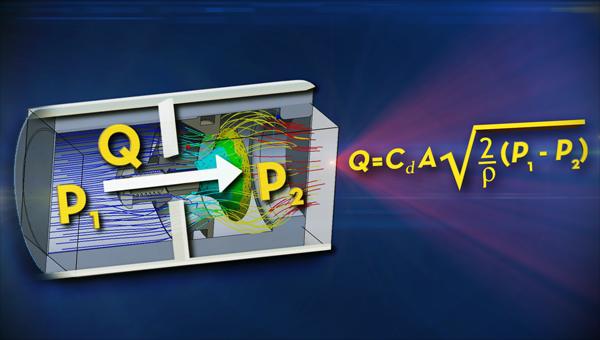
In this course, you will be introduced to the fundamental principles and analytical modeling of fluid power components, circuits, and systems. You will learn the benefits and limitations of fluid power compared with other power transmission technologies; the operation, use, and symbols of common hydraulic components; how to formulate and analyze models of hydraulic components and circuits; and how to design and predict the performance of fluid power circuits.

Aug 31st 2026
5-12 Weeks
Ideal Gases (Coursera) Coursera
University of Colorado Boulder

Ideal Gases (Coursera)

Course 3 of Statistical Thermodynamics, Ideal Gases, explores the behavior of systems when intermolecular forces are not important. This done by evaluating the appropriate partition functions for translational, rotational, vibrational and/or electronic motion. We start with pure ideal gases including monatomic, diatomic and polyatomic species.

Aug 31st 2026
3 Weeks
Linear Regression and Modeling (Coursera) Coursera
Duke University

Linear Regression and Modeling (Coursera)

This course introduces simple and multiple linear regression models. These models allow you to assess the relationship between variables in a data set and a continuous response variable. Is there a relationship between the physical attractiveness of a professor and their student evaluation scores? Can we predict the test score for a child based on certain characteristics of his or her mother? In this course, you will learn the fundamental theory behind linear regression and, through data examples, learn to fit, examine, and utilize regression models to examine relationships between multiple variables, using the free statistical software R and RStudio.

Aug 31st 2026
4 Weeks
Modeling Time Series and Sequential Data (Coursera) Coursera
SAS

Modeling Time Series and Sequential Data (Coursera)

In this course you learn to build, refine, extrapolate, and, in some cases, interpret models designed for a single, sequential series. There are three modeling approaches presented. The traditional, Box-Jenkins approach for modeling time series is covered in the first part of the course. This presentation moves students from models for stationary data, or ARMA, to models for trend and seasonality, ARIMA, and concludes with information about specifying transfer function components in an ARIMAX, or time series regression, model. A Bayesian approach to modeling time series is considered next.

Aug 31st 2026
5-12 Weeks