Microeconomics: When Markets Fail (Coursera)

Microeconomics: When Markets Fail (Coursera)

Perfect markets achieve efficiency: maximizing total surplus generated. But real markets are imperfect. In this course we will explore a set of market imperfections to understand why they fail and to explore possible remedies including as antitrust policy, regulation, government intervention. Examples are taken from everyday life, from goods and services that we all purchase and use. We will apply the theory to current events and policy debates through weekly exercises. These will empower you to be an educated, critical thinker who can understand, analyze and evaluate market outcomes.

Class Deals by MOOC List - Click here and see Coursera's Active Discounts, Deals, and Promo Codes.

Syllabus

WEEK 1
Costs and Profits + Perfect Competition
In the first part of the course we learnt that if we allow market forces to work we reach an efficient outcome: the maximum benefit that can be generated by a market. The second part of the course explores cases where the markets fail to accomplish our goals. This week sets up the benchmark case of the perfectly competitive market: a model we will modify in the next few weeks. We define Perfect Competition, learn to model it graphically and discuss some key results in terms of long run profits and implications for efficiency.

WEEK 2
Monopoly
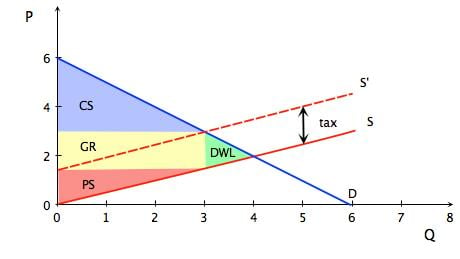
A monopoly is a case where there is only one firm in the market. We will define and model this case and explain why market power is good for the firm, bad for consumers. We will also show that society as a whole suffers from the lack of competition.

WEEK 3
Monopoly Continued
Monopolies come in various types: one price monopoly, natural monopoly, price discrimination and monopolistic competition. This week we will expand the basic monopoly model to cover these cases and then explore market outcomes in each case. We will also discuss how government may intervene in such cases to benefit society as a whole and increase the surplus generated by the market.

WEEK 4
Externalities + Public Goods
Two classic cases of market failure will be defined and explored: externalities and public goods. We will define each case, demonstrate why the market fails to provide the efficient outcome and suggest interventions through either marked design or regulation.

WEEK 5
Asymetric Information and Inequlity
Up to this point we assumed that there is full information in the market. We are now ready to relax this assumption as we introduce the concepts of moral hazard and adverse selection. We learn that asymmetric information may lead to market failure and we discuss some remedies. The last segment in the course is a reminder that besides efficiency, equity is also a criteria we all care about. A short introduction will explore how economist measure poverty and inequality.

Go to Class
MOOC List is learner-supported. When you buy through links on our site, we may earn an affiliate commission.

Related Courses

Business Economics and Game Theory for Decision Making (Coursera) Coursera
Illinois Tech

Business Economics and Game Theory for Decision Making (Coursera)

Good decision making and strategy do not exist in isolation: the success and profitability of a business depend not only on the organization’s own strategic moves but also on those that other firms make, especially competitors. Understanding the strategic linkages among firms can therefore be immensely valuable. Economics and Game theory offer tools that can specifically enhance one's understanding and ability to exploit such strategic linkages. This course will cover one of the most crucial decisions that a firm offering a differentiated product needs to make – how to price its product.

Jun 8th 2026
5-12 Weeks
Trading Algorithms (Coursera) Coursera
Indian School of Business - ISB

Trading Algorithms (Coursera)

This course covers two of the seven trading strategies that work in emerging markets. The seven include strategies based on momentum, momentum crashes, price reversal, persistence of earnings, quality of earnings, underlying business growth, behavioral biases and textual analysis of business reports about the company.

Jun 8th 2026
4 Weeks
Issues in Supply Chain Management (Coursera) Coursera
University of Illinois at Urbana-Champaign

Issues in Supply Chain Management (Coursera)

Learners in this course will examine global trade agreements -- including policies, barriers, and regulations -- of agricultural commodities, and discuss implications of world and economic disruptions on the food supply chain. Throughout this course, learners will also discuss issues of sustainability, technology, and the environment as it relates to the supply and distribution of food products.

Jun 8th 2026
5-12 Weeks
Understanding Financial Markets (Coursera) Coursera
University of Geneva

Understanding Financial Markets (Coursera)

In this course, you will learn what the main financial markets and their characteristics are as well as how they are linked to the economy. Our very diversified team of experts will start by teaching you how the price of stocks and bonds are computed and why they move while you will become increasingly aware of the notion of risk and why it matters when measuring an investment's performance. The focus will then move to less popular markets such as gold, emerging markets, real estate, hedge funds and private markets.

Jun 8th 2026
4 Weeks
After the Arab Spring – Democratic Aspirations and State Failure (Coursera) Coursera
University of Copenhagen

After the Arab Spring – Democratic Aspirations and State Failure (Coursera)

Learn why the hope and excitement of the Arab Spring is gone, why so many Arab states are falling apart, why the youth are so frustrated, why there are so many refugees, and what can be done about it. The so-called Arab Spring appeared to end decades of exceptionalism and bring the Arab world back into the mainstream of global developments. The rebellions promised the return of politics and the reassertion of popular sovereignty against their corrupt and geriatric leaders. Much hope and flowery language greeted the young men and women who deposed their leaders and tried to build new, better societies.

Jun 8th 2026
5-12 Weeks
The Power of Markets I: The Basics of Supply and Demand and Consumer Behavior (Coursera) Coursera
University of Rochester

The Power of Markets I: The Basics of Supply and Demand and Consumer Behavior (Coursera)

This opening module of the Power of Markets course covers the basic assumptions about market participants made by economists, the concept of opportunity cost, and the key determinants of supply and demand. We will then learn how to use the supply-demand framework to explain and predict market outcomes and to show how government policies affect those market outcomes. We will look at how quantity demanded and supplied respond to their key determinants in quantitative (elasticity) as well as qualitative terms. The last two weeks of the first module will investigate consumer behavior more closely and show how consumer choices are driven by the interplay of preferences and budget constraints.

Jun 8th 2026
4 Weeks
Cost and Economics in Pricing Strategy (Coursera) Coursera
University of Virginia,Boston Consulting Group - BCG

Cost and Economics in Pricing Strategy (Coursera)

How much should you charge for your products and services? Traditionally, businesses have answered this question based on the cost to produce or provide their goods and services. This course shows you the economic factors behind pricing based on cost and the pros and cons of a cost-based pricing approach. Developed at the Darden School of Business at the University of Virginia, and led by top-ranked Darden faculty and Boston Consulting Group global pricing experts, the course provides the practical and research-based models and methods you need to set prices that maximize your profits.

Jun 8th 2026
4 Weeks
Social and Economic Networks: Models and Analysis (Coursera) Coursera
Stanford University

Social and Economic Networks: Models and Analysis (Coursera)

Learn how to model social and economic networks and their impact on human behavior. How do networks form, why do they exhibit certain patterns, and how does their structure impact diffusion, learning, and other behaviors? We will bring together models and techniques from economics, sociology, math, physics, statistics and computer science to answer these questions.

Jun 8th 2026
5-12 Weeks
Oil & Gas Industry Operations and Markets (Coursera) Coursera
Duke University

Oil & Gas Industry Operations and Markets (Coursera)

The oil and gas industry has an enormous impact on all aspects of daily life. Individuals, corporations, and national governments make financial and policy decisions based on the cost, use, and availability of these two natural resources. This two-week course looks at the two most fundamental aspects of the oil and gas industry, its operations and markets, each of which is addressed as a separate module in the course.

Jun 10th 2026
2 Weeks
Agriculture, Economics and Nature (Coursera) Coursera
University of Western Australia

Agriculture, Economics and Nature (Coursera)

Sound economic thinking is crucial for farmers because they depend on good economic decision making to survive. Governments depend on economic information to make good policy decisions on behalf of the community. This course will help you to contribute to better decision making by farmers, or by agencies servicing agriculture, and it will help you to understand why farmers respond to policies and economic opportunities in the ways they do.

Jun 8th 2026
5-12 Weeks
The Power of Markets III: Input Markets and Promoting Efficiency (Coursera) Coursera
University of Rochester

The Power of Markets III: Input Markets and Promoting Efficiency (Coursera)

The final module of the Power of Markets course begins by further exploring firm behavior in imperfectly competitive market settings: how firms with monopoly power can increase profits through price discrimination; and the price-output combinations we can expect firms to select in cases of monopolistic competition and oligopoly. We will also analyze monopolies from an efficiency perspective and look at the effects of imperfect information on firm and consumer behavior. We will next turn to exploring input markets and what determines the demand for an input by a firm, an industry, and the overall market.

Jun 8th 2026
4 Weeks
Fundamentals of Customers and Competition, with Goldman Sachs 10,000 Women (Coursera) Coursera
Goldman Sachs

Fundamentals of Customers and Competition, with Goldman Sachs 10,000 Women (Coursera)

This course is one of 10 courses available in the Goldman Sachs 10,000 Women collection, designed for entrepreneurs ready to take their business to the next level. In this course, you will examine your customers’ buying process and explore the benefits of segmenting your customers. Through mapping your competitors and analyzing your competitive edge, you will consider how an understanding of your customers and competitors can maximize value for your business as you grow.

Jun 8th 2026
1 Week