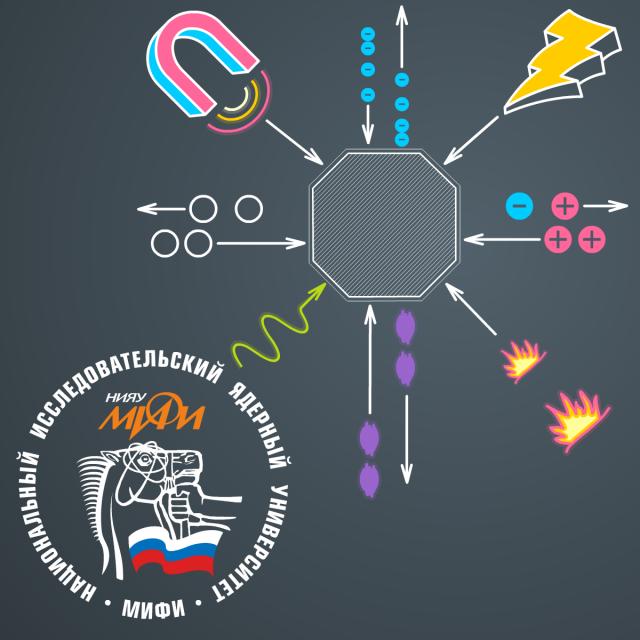
Methods of Surface Analysis (Coursera)

Methods of Surface Analysis (Coursera)

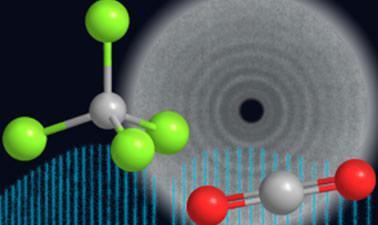
There is a vast variety of contemporary surface analysis methods that you can use for your research. If you are not sure which one is right for you, or if you want to obtain the right information about different surface analysis techniques, then this course is for you!

Class Deals by MOOC List - Click here and see Coursera's Active Discounts, Deals, and Promo Codes.

This course describes the most widely used analysis methods in contemporary surface science. It presents the strengths and weaknesses of each method so that you can choose the one that provides you with the information you need. It also reviews what each method cannot give to you, as well as how to interpret the results obtained from each method.
This course is filled with examples to help you become familiar with the graphs and figures obtained from common surface analysis methods.
Each method is described in a similar way: basic principle, apparatus scheme, example results, special features, and actual device examples.

Syllabus

WEEK 1
Introduction
Module 1 gets the students familiar with the main features of modern surface analysis methods and values, which they could provide. Question-answer concept. An interesting correlation between analytical spot size and composition accuracy is shown and explained.
Particle Diagnostics. Secondary Ion Mass Spectrometry (SIMS)
This module deals with methods which utilize heavy particles (protons and other ions) as primary bombarding particles. In SIMS sputtering yield is being analyzed, giving great information on surface composition.

WEEK 2
Particle Diagnostics. Rutherford Backscattering
This module deals with methods which utilize heavy particles (protons and other ions) as primary bombarding particles. In a family of RBS, ERD and partially NRA methods simple Newtonian laws of elastic collisions lead to a precise knowledge of surface composition. A tiny bit of nuclear physics is present in the NRA method though it shares basic principles with RBS and ERD.

WEEK 3
Electron Diagnostics. Spectroscopy
These methods use an electron beam as primary. Knowing the all the atoms have their signature band structure on can use that knowledge to identify the elements with AES and EDS methods. They both need a primary electron beam and they both rely on creating vacancies in the core energy leveles and filling of these vacancies with higher level electrons. In AES Auger electron energies are measured as they are emitted from the specimen. In EDS characteristic X-ray photon energies are measured. Both give information on the sample composition though in a different way, yet having the same starting processes.

WEEK 4
Electron Diagnostics. Microscopy
One could not mention electron microscopes when talking about electron diagnostics. TEM and SEM are discussed, and their basic principles exposed. Methods of obtaining better quality images are shown.

WEEK 5
X-ray Diagnostics
Of many X-ray diagnostics XPS stands out as the most popular. This powerful tool utilizes the photo-emission effect. A primary X-ray beam leads to the emission of photo-electrons from the sample. By measuring of their energy one can precisely obtain elemental and even chemical composition of the sample.


Go to Class
MOOC List is learner-supported. When you buy through links on our site, we may earn an affiliate commission.

Related Courses

Quantitative Methods (Coursera) Coursera
University of Amsterdam

Quantitative Methods (Coursera)

Discover the principles of solid scientific methods in the behavioral and social sciences. Join us and learn to separate sloppy science from solid research! This course will cover the fundamental principles of science, some history and philosophy of science, research designs, measurement, sampling and ethics. The course is comparable to a university level introductory course on quantitative research methods in the social sciences, but has a strong focus on research integrity. We will use examples from sociology, political sciences, educational sciences, communication sciences and psychology.

Jul 20th 2026
5-12 Weeks
Cómputo evolutivo (Coursera) Coursera
Universidad Nacional Autónoma de México

Cómputo evolutivo (Coursera)

La computación evolutiva (evolutionary computation, EC), aplica la teoría de la evolución natural y la genética en la adaptación evolutiva de estructuras computacionales, proporcionando un medio alternativo para atacar problemas complejos en diversas áreas, como la ingeniería, economía, química, medicina y, porque no, las artes. Una población de posibles soluciones de un problema dado es análoga a una población de organismos vivos que evolucionan cada generación, al recombinar los mejores individuos de la población y transmitir sus características de dichos individuos padres, a sus descendientes.

Jul 27th 2026
4 Weeks
Genealogy: Researching Your Family Tree (FutureLearn) FutureLearn
University of Strathclyde

Genealogy: Researching Your Family Tree (FutureLearn)

Dive into your family ancestry and learn how to create a family tree on this online genealogy course. Discover the basics of genealogy and build your own family tree. Have you ever wondered about your family ancestry or wanted to create a family tree of your own? On this 6-week genealogy course for beginners, you’ll learn how to uncover the past and record your family history. The information on this course does not apply to just one country, so you can learn about your family lineage no matter where you’re from.

Self Paced
5-12 Weeks
Técnicas Cuantitativas y Cualitativas para la Investigación (edX) EdX
Universitat Politècnica de València,UPValenciaX

Técnicas Cuantitativas y Cualitativas para la Investigación (edX)

El curso pretende acercar al alumno al método científico y, en concreto, cómo éste se aplica al estudio y análisis de los métodos de casos. El curso que se propone es ideal para investigadores y alumnos que se encuentren cursando trabajos de fin de grado, trabajos de fin de máster o realizando tesis, así como todos aquellos del área de la administración que quieran realizar un análisis cuantitativo o cualitativo en sus estudios.

Self Paced
Self-Paced
Quantum Mechanics of Molecular Structures (edX) EdX
The University of Tokyo,UTokyoX

Quantum Mechanics of Molecular Structures (edX)

Learn two methods used to determine molecular structures and their properties in this introduction to Quantum Mechanics. Knowing the geometrical structure of the molecules around us is one of the most important and fundamental issues in the field of chemistry. This course introduces the two primary methods used to determine the geometrical structure of molecules: molecular spectroscopy and gas electron diffraction.

Self Paced
Self-Paced
Human-Centered Design for Inclusive Innovation (Coursera) Coursera
University of Toronto

Human-Centered Design for Inclusive Innovation (Coursera)

This course introduces the principles and practices of human-centered design (also sometimes called “design thinking”) which are essential for developing innovative and inclusive products, services, processes and policies. You will learn by doing, experiencing the design process through exercises and a mini-bootcamp. In this course, you will learn about and experience key human-centered design practices: empathize, reframe, ideate, prototype and test. You will learn why human-centered design is a central component of Gender Analytics. You will develop skills in problem finding (and not just problem solving) by understanding users', stakeholders’ and beneficiaries' lived experiences.

Jul 27th 2026
4 Weeks
Understanding Medical Research: Your Facebook Friend is Wrong (Coursera) Coursera
Yale University

Understanding Medical Research: Your Facebook Friend is Wrong (Coursera)

How can you tell if the bold headlines seen on social media are truly touting the next big thing or if the article isn't worth the paper it's printed on? Understanding Medical Studies, will provide you with the tools and skills you need to critically interpret medical studies, and determine for yourself the difference between good and bad science. The course covers study-design, research methods, and statistical interpretation. It also delves into the dark side of medical research by covering fraud, biases, and common misinterpretations of data. Each lesson will highlight case-studies from real-world journal articles.

Aug 10th 2026
5-12 Weeks
社会调查与研究方法 (下)Methodologies in Social Research (Part 2) (Coursera) Coursera
Peking University

社会调查与研究方法 (下)Methodologies in Social Research (Part 2) (Coursera)

社会调查与研究方法, 首先,是一套观察社会现象、测量社会现象的工具; 其次,是一套分析和运用社会现象数据的科学方法; 最高境界,则是一套针对社会、经济、教育、政治、法律、管理、公共卫生、新闻报道等人类的生产与生活现象,进行科学沟通的思维逻辑与表达方式。

Aug 10th 2026
5-12 Weeks
Introduction to Molecular Spectroscopy (Coursera) Coursera
University of Manchester

Introduction to Molecular Spectroscopy (Coursera)

The course introduces the three key spectroscopic methods used by chemists and biochemists to analyse the molecular and electronic structure of atoms and molecules. These are UV/Visible , Infra-red (IR) and Nuclear Magnetic Resonance (NMR) spectroscopies. The content is presented using short focussed and interactive screencast presentations accompanied by formative quizzes to probe understanding of the key concepts presented. Numerous exercises are provided to facilitate mastery of each topic. A unique virtual spectroscopic laboratory is made available to enable students to measure and analyse spectra online. Assessment is via summative quizzes completed during the course period.

Aug 10th 2026
4 Weeks
Studying Cities: Social Science Methods for Urban Research (Coursera) Coursera
Erasmus University Rotterdam

Studying Cities: Social Science Methods for Urban Research (Coursera)

Are you looking to learn more about how to conduct scientific research, specifically in an urban or local context? Then you have found the right course: Studying Cities: Social Science Methods for Urban Research by the Institute for Housing and Urban Development Studies (IHS), Erasmus University Rotterdam. During the course you will gain more insight in the different steps of the research cycle, and build a firm foundation for your own future research endeavors.

Jul 20th 2026
5-12 Weeks
Foundations of Health Equity Research (Coursera) Coursera
Johns Hopkins University

Foundations of Health Equity Research (Coursera)

Introduces students to the core principles of health equity research. Covers topics such as defining health equity, engaging community and policy stakeholders, patient-centeredness, cultural competence, and dissemination of research findings. Content will recognize different geographic, cultural, and social contexts where health inequities occur.

Jul 20th 2026
5-12 Weeks
The Diversity of Exoplanets (Coursera) Coursera
University of Geneva

The Diversity of Exoplanets (Coursera)

In this MOOC, you will have the opportunity to practice several methods of detection and characterisation of exoplanets. You will discover their statistical properties and the current state of knowledge we have in this very recent field of research. You will also understand the limitations and biases of the different detection techniques.

Jul 27th 2026
5-12 Weeks