EdX

Mecanique des Fluides (edX)

Mecanique des Fluides (edX)

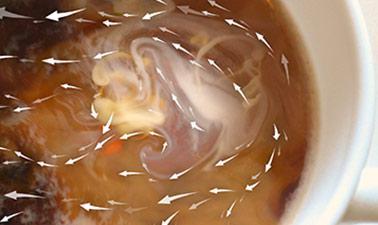
Ce cours de base est composé des sept premiers modules communs à deux cours bachelor, donnés à l’EPFL en génie mécanique et génie civil. Ce cours est une première introduction à la mécanique des fluides. Nous allons aborder tout d'abord les propriétés physiques des fluides : les états de la matière et la notion de viscosité.

Class Deals by MOOC List - Click here and see EdX's Active Discounts, Deals, and Promo Codes.

Un chapitre sera dédié à la tension de surface et à la capillarité. Nous introduirons ensuite le concept de similitude et l’utilisation des nombres adimensionnels. Nous allons alors considérer la statique des fluides à travers la loi de l'hydrostatique. La dynamique des fluides sera abordée en premier lieu par la cinématique. Ensuite, nous traiterons des équations de bilan avec notamment une application du théorème de conservation de l’énergie cinétique : le théorème de Bernoulli. Dans le dernier, nous montrerons que ce théorème relativement simple permet d’expliquer et de calculer des écoulements tels que ceux observés dans les rivières. Les vidéos du cours seront enrichies de vidéos d’expériences qui illustreront les concepts clés et par des quiz pour tester votre intuition et vos connaissances. Le dernier module vous permettra de piloter à distance une expérience d'hydraulique qui a lieu dans les laboratoires de l'EPFL.

This course gives an introduction to fluid mechanics. We will first discuss the physical properties of fluids: the states of matter, the definition of viscosity, surface tension and capillarity. We will then introduce the concept of similarity and the use of dimensionless numbers. We will then consider hydrostatics, followed by kinematics. Then, we will deal with balance equations, including an application of the conservation of kinetic energy: the Bernoulli theorem. In the last chapter, we will show that this relatively simple theorem allows describing river flows. The lecture videos will be complemented by videos of experiments and formative tests. This module will also allow you to control remotely a hydraulic experiment at the EPFL laboratories.

What you'll learn:

  • Décrire les propriétés physiques des fluides: les états de la matière et la notion de viscosité.
  • Aborder la dynamique des fluides par la cinématique.
  • Expliquer et calculer des écoulements avec le théorème de Bernoulli.
Go to Class
MOOC List is learner-supported. When you buy through links on our site, we may earn an affiliate commission.

Related Courses

Quantum Mechanics of Molecular Structures (edX) EdX
The University of Tokyo,UTokyoX

Quantum Mechanics of Molecular Structures (edX)

Learn two methods used to determine molecular structures and their properties in this introduction to Quantum Mechanics. Knowing the geometrical structure of the molecules around us is one of the most important and fundamental issues in the field of chemistry. This course introduces the two primary methods used to determine the geometrical structure of molecules: molecular spectroscopy and gas electron diffraction.

Self Paced
Self-Paced
Science & Cooking: From Haute Cuisine to Soft Matter Science (chemistry) (edX) EdX
HarvardX,Harvard University

Science & Cooking: From Haute Cuisine to Soft Matter Science (chemistry) (edX)

Top chefs and Harvard researchers explore how everyday cooking and haute cuisine can illuminate basic principles in chemistry, physics, and engineering. Learn about food molecules and how chemical reactions can affect food texture and flavor. During each module of this course, chefs reveal the secrets behind some of their most famous culinary creations — often right in their own restaurants. Inspired by such cooking mastery, the Harvard team will then explain the science behind the recipe.

Self Paced
Self-Paced
Math in Sports (edX) EdX
University of Notre Dame,NotreDameX

Math in Sports (edX)

In this course you will learn to use some mathematical tools that can help predict and analyze sporting performances and outcomes. This course will help coaches, players, and enthusiasts to make educated decisions about strategy, training, and execution. We will discuss topics such as the myth of the Hot Hand and the curse of the Sports Illustrated cover; how understanding data can improve athletic performance; and how best to pick your Fantasy Football team.

No sessions available
4 Weeks
How Stuff Moves, Part 1: Linear Motion (edX) EdX
Harvey Mudd College,HarveyMuddX

How Stuff Moves, Part 1: Linear Motion (edX)

A Calculus-based introduction to Newtonian mechanics that emphasizes problem-solving. WHAT IS “HOW STUFF MOVES”? Mechanics is the study of how things move. It was the first quantitative science to achieve wide power to predict behavior, including things never before directly observed. Newton, Leibniz, and others invented calculus to describe motion and we will find both differential and integral calculus extremely useful throughout this course.

No sessions available
4 Weeks
Quantum Detectors (edX) EdX
Purdue University,PurdueX

Quantum Detectors (edX)

Learn about quantum sensors and devices that extract maximal information from the world around us. Classical detectors and sensors are ubiquitous around us from heat sensors in cars to light detectors in a camera cell phone. Leveraging advances in the theory of noise and measurement, an important paradigm of quantum metrology has emerged. Here, ultra-precision measurement devices collect maximal information from the world around us at the quantum limit.

Feb 12th 2024
5-12 Weeks