The Making of the US President: A Short History in Five Elections (Coursera)

The Making of the US President: A Short History in Five Elections (Coursera)

As Americans choose their next president, this course explores the history of presidential elections via five case studies. It tells the story of key campaigns in US history, and by doing so it explores how politics changed over time—and how understanding the past sheds light on the current campaign.

Class Deals by MOOC List - Click here and see Coursera's Active Discounts, Deals, and Promo Codes.

The five elections that we'll investigate are among the most significant in American political history. In 1800, Thomas Jefferson won the presidency in a contest that encouraged politicians to reform the electoral college, the system by which presidents are still chosen. The election of Abraham Lincoln in 1860 prompted the outbreak of the Civil War. It's an election that helps us to understand the development of political parties. In 1968, the Vietnam War was a dominant concern for Americans, and yet foreign policy played a secondary role in Richard Nixon's victory. Twelve years later, in 1980, Ronald Reagan won an election that initiated a new era of conservatism. As election day approaches, we'll turn our attention to the 2008 election, which many saw as signaling a turn to progressivism and as revealing the impact of the digital revolution on campaign politics.

Syllabus

WEEK 1
The Election of 1800
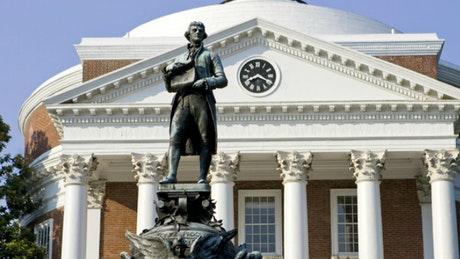
The stormy election of 1800 culminated in the election of Thomas Jefferson as president, but it also played an important role in encouraging American politicians to reform the electoral college, which remains the system by which presidents are chosen.
The Election of 1860
With four candidates seeking the White House in 1860, the election of Abraham Lincoln prompted South Carolina's secession, the establishment of the Confederate States of America, and the Civil War. Exploring the 1860 election helps us to understand the development of political parties, voting, and radicalism in American politics.

WEEK 2
The Election of 1968
The problems that America faced in fighting the Vietnam War forced Lyndon Johnson to withdraw his candidacy for reelection, and the war would be seen as a leading factor in the victory of Richard Nixon. But how important was, and is, foreign policy in American domestic politics?
The Election of 1980
The election of 1980 is often seen as marking modern America's embrace of conservatism, in a manner that still shapes the nation and the world today. Examining the 1980 election helps us to understand why conservative ideas on the economy and foreign policy gained popularity, and why Reagan proved a powerful salesperson for the Right.

WEEK 3
The Election of 2008
At the end of our course, we look back to the election of Barack Obama in 2008. This is explored through the testimony and perspectives of a practitioner who took part in the Obama campaign, of a journalist who traveled across America in fall 2008, and of a political scientist who has written about the election. Did Obama's victory signal a turn to progressivism, and how did digital technologies transform electoral politics?
The Election of 2016
It is too soon to tell the history of the 2016 presidential election (and so last year's election is not one of the five that are at the heart of our course), but how does does history help us to understand the Clinton-Trump contest and its outcome? By way of concluding "The Making of the US President," we reflect on historical parallels (and discontinuities).

Go to Class
MOOC List is learner-supported. When you buy through links on our site, we may earn an affiliate commission.

Related Courses

Democracia y decisiones públicas. Introducción al análisis de políticas públicas (Coursera) Coursera
Universitat Autònoma de Barcelona

Democracia y decisiones públicas. Introducción al análisis de políticas públicas (Coursera)

¿Qué son las políticas públicas? Son la plasmación más concreta de la política. Lo que los gobiernos hacen, y dejan de hacer, para hacer frente a los problemas colectivos. Este curso trata sobre cómo se decide qué problemas abordar y qué soluciones adoptar. Un proceso primordialmente político y social que suele escapar al análisis puramente racional.

Aug 31st 2026
5-12 Weeks
The Business, Politics, Policy, & Players of Space Programs (Coursera) Coursera
University of Colorado Boulder

The Business, Politics, Policy, & Players of Space Programs (Coursera)

Welcome Course 3 - The Business, Politics, Policy, & Players of Space Programs. If you are here, you have successfully completed both Course 1 and 2 of this specialization. Course 3 has nine lessons spread out over 4 weeks with 31 Learning Objectives. In this course, we will discover who and what funds the exploration that we have enjoyed learning about in Course 1 and 2. We will also focus on a few specific applications of some of the concepts we have learned about so far with two companies, the Global Positioning System, and the an academic program that could be implemented at your institution of higher learning.

Aug 31st 2026
4 Weeks
China’s First Empires and the Rise of Buddhism (edX) EdX
HarvardX,Harvard University

China’s First Empires and the Rise of Buddhism (edX)

Learn about the Qin and Han dynasties, and how Buddhism and ideas of self-realization influenced the medieval period. This course, the second in a collection on Chinese history and culture, addresses how the Qin dynasty conquered China and established a new system of government and how the Han dynasty built a stable, centralized empire that lasted for hundreds of years. We cover the early history of Buddhism in China and how the rising feudal aristocracy responded to the loss of empire by looking inward.

Self Paced
Self-Paced
Il potere dei sondaggi (edX) EdX
University of Naples Federico II,FedericaX

Il potere dei sondaggi (edX)

Ascoltare, capire e governare l'opinione pubblica. I sondaggi sono diventati un elemento centrale della cassetta degli attrezzi degli attori della politica e dell'informazione. Questo corso offre un viaggio all'interno del mondo dei sondaggi, nel modo in cui sono stati usati nel tempo, per riscoprire il loro valore principale di strumento della democrazia e per eliminare i rischi di un utilizzo distorto dei sondaggi. Gli insuccessi incassati negli ultimi anni dagli exit polls hanno contribuito a rilanciare il dibattito sull’attendibilità e l’utilità dello strumento sondaggistico.

Self Paced
Self-Paced
Gender and Development (FutureLearn) FutureLearn
Deakin University

Gender and Development (FutureLearn)

Does gender matter in international and community development? Find out in this free online course. Explore the relationship between gender and development. This online course explores why gender matters in contemporary international and community development, asking you to: explore the challenges for achieving gender justice throughout the world; examine the concepts of gender, development and what brings gender and development together.

Jul 3rd 2023
2 Weeks
Come ci si governa nel mondo (e in Italia) (Federica Web Learning) Federica Web Learning
University of Naples Federico II

Come ci si governa nel mondo (e in Italia) (Federica Web Learning)

Com’è organizzato il potere politico nelle nostre democrazie? Chi comanda e perché? Su quali basi giuridiche? Secondo quali soluzioni organizzative, o 'modelli', appunto? Sviluppatisi sulla base di quali criteri e principi? Adottati seguendo quali tradizioni culturali? Con quali vantaggi e quali svantaggi? Perseguendo quali obiettivi e nel rispetto di quali valori? E come si comportano quei diversi 'modelli' nella loro dinamica? Questo, è un corso giuridico, anche se, come vedremo subito, si avvale di altre discipline fino al punto che lo si potrebbe considerare – in realtà – multidisciplinare.

May 11th 2017
No Information
How Technology is Shaping Democracy and the 2020 Election (Coursera) Coursera
Stanford University

How Technology is Shaping Democracy and the 2020 Election (Coursera)

Democracy can only thrive with the participation of well-informed citizens. The 2020 U.S. presidential election will be historic for many reasons and all parties are leveraging the power of technology to both influence and mobilize voters. More than ever, digital tools and platforms are shaping the opinions and behaviors of voters who will determine the future of the governance of the United States. This new course examines the unprecedented influence of technology and technology policy on America’s elections and democratic process and takes a close look at how a public sphere plagued by polarization, online filter bubbles, a lack of transparency in content moderation policies, and foreign and domestic misinformation and disinformation campaigns, impacts our ability to be well-informed citizens.

Oct 21st 2024
1 Week