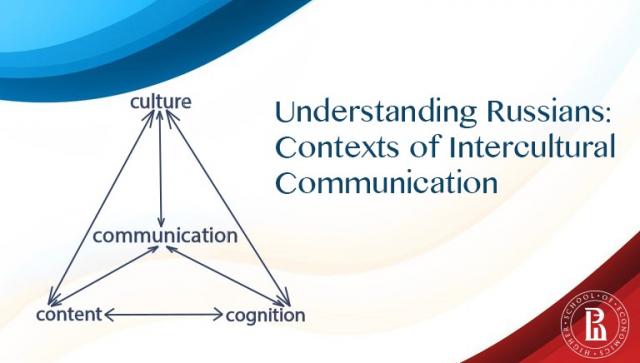
In the course “Understanding Russians: Contexts of Intercultural Communications": we will: build skills in the analysis of the intercultural communication process using Russian-Western communication as an example; apply the knowledge of interrelations between different contexts of communication (cultural, institutional, professional, social, interpersonal, etc, to the cultural history and national psychology of Russians. The purpose of the course is to provide the students with a broad overview of the basic principles governing the past, the present and the future interactions between Russia and the West, with a focus on the culture and national psychology of Russians and Western Europeans.
Class Deals by MOOC List - Click here and see Coursera's Active Discounts, Deals, and Promo Codes.
For example, we will look at the cases when basic cultural values of Russians show up through the linguistic choices shaping language production which is consequently misattributed by Western partners. No matter what the language of intercultural communication is – Russian, or English – the meaning of many linguistic expressions may be reconstructed wrongly by the representatives of another culture.
Some of the basic questions we will tackle are:
• What are the concepts of culture that have the strongest influence on communication?
• What are Russian basic cultural values and how they shape modern Russian consciousness?
• What are the specific communication patterns of modern Russians, including those of public and electronic discourse?
• What is important to know about communication with Russians in organizational contexts?
Importantly, this course is NOT just a list of practical instructions of dos and don’ts of dealing with Russians. The course contains a substantial academic component introducing the key notions and concepts of the Theory of Communication, which will be extensively introduced throughout the first few modules of the course. These theoretical grounds will be further on used as a tool for analyzing the intercultural communications with Russians.
Syllabus
WEEK 1
Introduction to the Course
Dear Student, welcome to the first module of the course "Understanding Russians: Contexts of Intercultural Communication"! My name is Mira Bergelson and I will teach this class, assisted by Yulia Badryzlova, Tatiana Golubeva and the team of Coursera and HSE technical specialists. Thanks for joining us and for your interest in the Russian communication patterns.
Intercultural Communication as an Academic Discipline
We want this course to be not only a learning experience, but a cultural journey full of discoveries and fun. We will begin by introducing the notion of Intercultural Communication. We will look at ICC as an academic field: have a glimpse of its history, look at its place among other disciplines, discover possible approaches to it, and see why it is important to study the context of cultural events and phenomena.
WEEK 2
Culture in Intercultural Communication
This lecture will focus around Culture per se and the language we need to be able to discuss it. The more complex and less formalized is the subject of the discussion, the more crucial are its instruments. We will introduce various dimensions that are applicable to different cultures and will also start to discuss the Russian culture in these terms. Starting this week we will also present short interviews of Prof. Bergelson's with people (non-Russians culturally) who have lived and worked in Russia, and who will serve as experts on various issues and contexts of communication with Russians. As stereotypes are one of the central concepts in the cross-cultural discourse, this week we will see interviews centered on this topic. The experts you will meet -- and not only this week -- are Anna Skaya (CEO VisualDNA Russia), Michael Johnston, (Private Equity Sector Lead Director of Strategy at Deloitte), and Ilya Gnoensky who specializes in crisis management.
WEEK 3
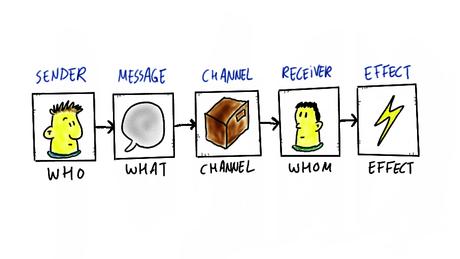
Theory of Communication
In this week's lectures we will shift our focus, and will be looking at the basics of communication in order to apply them later to the Russian communication style. We hope you will find this information useful for understanding various motives that govern the way people (not only Russians!) interact. Anna Skaya and Michael Johnston will continue to be our experts, and your weekly quiz will await you as well. We wish you a nice learning experience in this section of the course.
WEEK 4
Culture’s Impact on Communication: Politeness
The lectures you'll see this week will be devoted to the linguocultural aspects of Politeness in Russian communication style and to other dimensions of Russian communication. We will meet an exciting new expert, Jennifer Eremeeva, an American author and blogger based in Moscow. And it's time for the first peer-reviewed assignment, "Critical incident analyzed". It offers you a critical incident of communication with Russian partners, in which you are expected to both simulate your response and give your analysis of what is culturally sensitive in this piece of discourse.
WEEK 5
Communication in Organizational Contexts
This week of the course is devoted to Russian communication in organizational contexts. Organizations are crucial: they shape culture and are shaped by culture. You will learn how Russian organizational culture developed throughout Russian history and how it influenced the way today's Russians behave in organizational and business environment. Our guests Michael Johnston and Ilya Gnoensky will add to the discussion by sharing their impressions on the Russian corporate culture and management styles.
WEEK 6
Social Stratification and Occupational Cultures in Russia
The material covered in the remaining weeks of the class will contain less theory of intercultural communications and more information about contemporary Russia, its ways of life and their historic background. This week we will speak about the social stratification (plus the recent history of the social strata) in Russia, as well as the Russian professional and occupational communication (including the recent changes in it) – both domestically and in the context of international contacts. The lecture will be wrapped up with a case study in which Prof. Bergelson took part some time ago to demonstrate intercultural communications studies at work – in the analysis of an international educational program between a major Russian and a major US university. As in the previous weeks, we will have guest experts to enrich the lecture material with their first-hand experience of living and working in Russia: Margaret Sullivan will describe what it is like to work for an NGO in Russia; Dirk Meissner will speak about teaching students and doing academic work at our home university, the Higher School of Economics.
WEEK 7
Interpersonal Communication
This week we will talk about the specific Russian features of interpersonal communication, communication across genders, and the generational discourse systems. Specifically, we will have a look at such issues as: friendship, dating, role of women; family structure, having and raising children, education, demographic and generational issues, ideological orientations, cross-gender communication, and forms and modes of address across various discourse systems. The Weekly Reading (one of which is optional) will provide further lively examples and evidence about some of these topics. Our guest speakers Anna Skaya and Jennifer Eremeeva will share their experience of cross-gender communication in Russia.
WEEK 8
Culture as a Narrative
Sad to say, this is the last week of lectures in our course. And in this last week we present not factual data or charts or tables, but rather a narrative -- this time a narrative of Russian history in broad impressionistic strokes. We do believe in narratives: they are never complete, but they provide attitudes. And culture – more than anything else – is a narrative. This time we will look at narratives as a source of knowledge about a culture, and, specifically, at such cultural narratives as: national Russian holidays, the key events of Russian history, personal stories of Russians in the 20th century, and Russian jokes and humor. Two video interviews with Jennifer Eremeeva will be dealing with some of these topics.