Machine Learning in Retail (Coursera)

Machine Learning in Retail (Coursera)

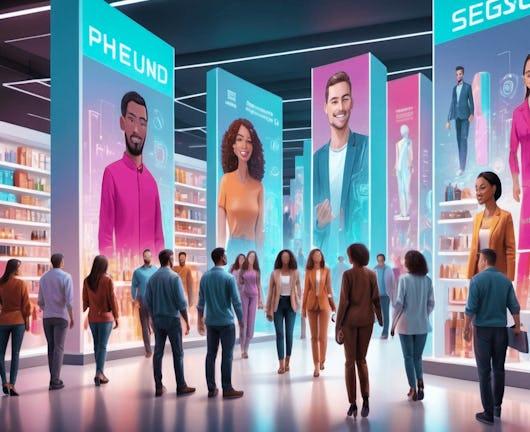
Who are your customers? What are they like? How do they interact with your business? This Short Course was created to help analysts better understand their customer behaviour through the power of machine learning. In this course, you will apply two different machine learning techniques to segment customers according to their purchasing behaviour and provide actionable insights for each group. Along the way, you'll also examine some other retail case studies, including web visitor analysis for marketing and store clustering for logistics.

Class Deals by MOOC List - Click here and see Coursera's Active Discounts, Deals, and Promo Codes.

By the end, you'll be able to use customer purchase data to group customers using machine learning, analyse your results to extract business insights and apply multiple types of machine learning to generate business value.
This course is unique because it focuses strongly on interpreting your data within a retail context and supports you in identifying opportunities for machine learning in your workplace.
To be successful in this project, you should already be familiar with Python Pandas for data manipulation, filtering and aggregation. You should also have some experience with basic principles of data analysis, like histograms and summary statistics.

Syllabus

Machine learning for Retail

Go to Class
MOOC List is learner-supported. When you buy through links on our site, we may earn an affiliate commission.

Related Courses

Machine Learning: Clustering & Retrieval (Coursera) Coursera
University of Washington

Machine Learning: Clustering & Retrieval (Coursera)

Case Studies: Finding Similar Documents. A reader is interested in a specific news article and you want to find similar articles to recommend. What is the right notion of similarity? Moreover, what if there are millions of other documents? Each time you want to a retrieve a new document, do you need to search through all other documents? How do you group similar documents together? How do you discover new, emerging topics that the documents cover?

Jun 8th 2026
5-12 Weeks
Neural Networks and Deep Learning (Coursera) Coursera
DeepLearning.AI

Neural Networks and Deep Learning (Coursera)

If you want to break into cutting-edge AI, this course will help you do so. Deep learning engineers are highly sought after, and mastering deep learning will give you numerous new career opportunities. Deep learning is also a new "superpower" that will let you build AI systems that just weren't possible a few years ago. In this course, you will learn the foundations of deep learning.

Jun 8th 2026
4 Weeks
Structuring Machine Learning Projects (Coursera) Coursera
DeepLearning.AI

Structuring Machine Learning Projects (Coursera)

You will learn how to build a successful machine learning project. If you aspire to be a technical leader in AI, and know how to set direction for your team's work, this course will show you how. Much of this content has never been taught elsewhere, and is drawn from my experience building and shipping many deep learning products. This course also has two "flight simulators" that let you practice decision-making as a machine learning project leader. This provides "industry experience" that you might otherwise get only after years of ML work experience.

Jun 8th 2026
2 Weeks
Introduction to Machine Learning (Coursera) Coursera
Duke University

Introduction to Machine Learning (Coursera)

This course will provide you a foundational understanding of machine learning models (logistic regression, multilayer perceptrons, convolutional neural networks, natural language processing, etc.) as well as demonstrate how these models can solve complex problems in a variety of industries, from medical diagnostics to image recognition to text prediction.

Jun 12th 2026
5-12 Weeks
Managing Machine Learning Projects with Google Cloud (Coursera) Coursera
Google Cloud

Managing Machine Learning Projects with Google Cloud (Coursera)

Business professionals in non-technical roles have a unique opportunity to lead or influence machine learning projects. If you have questions about machine learning and want to understand how to use it, without the technical jargon, this course is for you. Learn how to translate business problems into machine learning use cases and vet them for feasibility and impact.

Jun 8th 2026
4 Weeks
Recommender Systems: Evaluation and Metrics (Coursera) Coursera
University of Minnesota

Recommender Systems: Evaluation and Metrics (Coursera)

In this course you will learn how to evaluate recommender systems. You will gain familiarity with several families of metrics, including ones to measure prediction accuracy, rank accuracy, decision-support, and other factors such as diversity, product coverage, and serendipity. You will learn how different metrics relate to different user goals and business goals.

Jun 8th 2026
4 Weeks
Preparing for the Google Cloud Professional Data Engineer Exam (Coursera) Coursera
Google Cloud

Preparing for the Google Cloud Professional Data Engineer Exam (Coursera)

From the course: "The best way to prepare for the exam is to be competent in the skills required of the job." This course uses a top-down approach to recognize knowledge and skills already known, and to surface information and skill areas for additional preparation. You can use this course to help create your own custom preparation plan. It helps you distinguish what you know from what you don't know. And it helps you develop and practice skills required of practitioners who perform this job.

Jun 13th 2026
5-12 Weeks
Text Retrieval and Search Engines (Coursera) Coursera
University of Illinois at Urbana-Champaign

Text Retrieval and Search Engines (Coursera)

Recent years have seen a dramatic growth of natural language text data, including web pages, news articles, scientific literature, emails, enterprise documents, and social media such as blog articles, forum posts, product reviews, and tweets. Text data are unique in that they are usually generated directly by humans rather than a computer system or sensors, and are thus especially valuable for discovering knowledge about people’s opinions and preferences, in addition to many other kinds of knowledge that we encode in text.

Jun 8th 2026
5-12 Weeks
How to Finance and Grow Your Startup – Without VC (Coursera) Coursera
University of London,London Business School

How to Finance and Grow Your Startup – Without VC (Coursera)

Who? If you’re an entrepreneur at any stage of your journey, or even an aspiring one, and you need money to start or grow your business, this course is for you. What? This course will introduce, and help you put to use in your startup, the five models through which your customers can – and will, if you ask them! – fund your business. These five time-tested models have been put to use by entrepreneurial superstars like Michael Dell, Bill Gates, Richard Branson and more. Sadly, though, the five models are rarely talked about and not widely understood. Until now! The five models will be brought to life by the real-world stories of an inspiring collection of incredibly creative entrepreneurs from around the world – including successes and failures – through a series of captivating no-holds-barred interviews with founders and others, and investors, too.

Jun 9th 2026
5-12 Weeks
The Unix Workbench (Coursera) Coursera
Johns Hopkins University

The Unix Workbench (Coursera)

Unix forms a foundation that is often very helpful for accomplishing other goals you might have for you and your computer, whether that goal is running a business, writing a book, curing disease, or creating the next great app. The means to these goals are sometimes carried out by writing software. Software can’t be mined out of the ground, nor can software seeds be planted in spring to harvest by autumn. Software isn’t produced in factories on an assembly line. Software is a hand-made, often bespoke good. If a software developer is an artisan, then Unix is their workbench.

Jun 8th 2026
4 Weeks
Probabilistic Graphical Models 1: Representation (Coursera) Coursera
Stanford University

Probabilistic Graphical Models 1: Representation (Coursera)

Probabilistic graphical models (PGMs) are a rich framework for encoding probability distributions over complex domains: joint (multivariate) distributions over large numbers of random variables that interact with each other. These representations sit at the intersection of statistics and computer science, relying on concepts from probability theory, graph algorithms, machine learning, and more. They are the basis for the state-of-the-art methods in a wide variety of applications, such as medical diagnosis, image understanding, speech recognition, natural language processing, and many, many more. They are also a foundational tool in formulating many machine learning problems.

Jun 8th 2026
5-12 Weeks