Lisboa e o Mar: uma História de Chegadas e Partidas (EMMA)

Offered by Universidade Aberta,
Lisboa e o Mar: uma História de Chegadas e Partidas (EMMA)

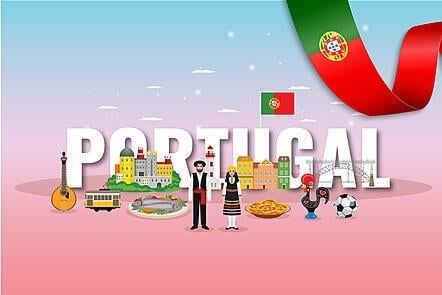
Situada junto à foz do rio Tejo, a cidade de Lisboa tem sido um lugar de múltiplos encontros culturais e de cruzamento de influências, desde a sua fundação. Através dos séculos, diferentes comunidades étnicas e religiosas coexistiram na cidade, que no século XIII assumiu uma importância que não mais viria a perder. Pessoas de todas as partes do mundo chegaram e partiram de Lisboa. O eco dos seus conhecimentos, experiências e costumes influenciou e deixou marcas na história e cultura portuguesa. Mas Lisboa foi também ponto de partida de muitos portugueses que, movidos por razões de ordem vária, cruzaram os mares e deixaram sinais da sua presença por todo o mundo. Neste curso vamos focar-nos na história de Lisboa a partir desta perspetiva.

Learning Objectives:
Este curso é desenhado utilizando uma abordagem multidisciplinar. O seu propósito é preparar os que nele participam para compreender e analisar criticamente a multiplicidade de perspetivas relacionadas com a complexa e diversificada dimensão da relação de Lisboa com as pessoas e culturas que a cruzaram ao longo dos séculos. Focar-nos-emos em importantes temas, em diferentes períodos históricos, que demonstram o processo do intersecção de influências no plano cultural, político, social e económico.
/div>

Outcomes:
Espera-se que os participantes estudem de forma independente, explorem os recursos, pesquisem e explorem outros materiais relevantes por sua própria iniciativa, realizem as atividades e reflitam sobre as suas experiências de aprendizagem, produzam artefactos (textos, vídeos, apresentações, mapas conceptuais, etc.) que demonstrem a sua compreensão dos temas abordados e a sua competência na aplicação desse conhecimento. Espera-se, igualmente, que interajam com outros participantes do curso e assumam um papel ativo no diálogo em torno dos temas que serão abordados, contribuindo de forma relevante para a criação de conhecimento. Os participantes são responsáveis não apenas pela sua própria aprendizagem mas também de contribuir para uma dinâmica comunidade de aprendizagem.

Course Structure

Lesson 1 - Ambientação ao Curso - Boot Camp
Lesson 2 - Roteiro de Aprendizagem do MOOC: Lisboa e o Mar
Lesson 3 - Lisboa no séc. XVI: espaço de encontro de culturas numa história global
Lesson 4 - Lisboa e o seu porto na Época dos Descobrimentos
Lesson 5 - Lisboa e a diáspora cristã nova na Época Moderna
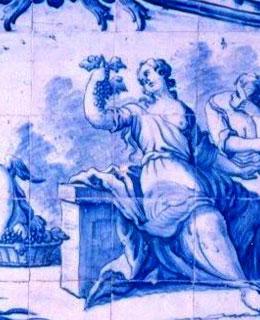
Lesson 6 - Lisboa e a geografia do azulejo barroco no espaço atlântico
Go to Class
MOOC List is learner-supported. When you buy through links on our site, we may earn an affiliate commission.

Related Courses

Egiptología (Egyptology) (Coursera) Coursera
Universitat Autònoma de Barcelona

Egiptología (Egyptology) (Coursera)

¿Sientes curiosidad por la civilización del antiguo Egipto? ¿Eres un apasionado de su cultura e historia? En este curso nos acercaremos a los templos de los antiguos faraones, a sus complejos funerarios, a sus ciudades, a su escritura jeroglífica, a su religión y a muchos otros aspectos de esta gran civilización.

Oct 26th 2026
5-12 Weeks
Film, Images & Historical Interpretation in the 20th Century: The Camera Never Lies (Coursera) Coursera
University of London,Royal Holloway, University of London

Film, Images & Historical Interpretation in the 20th Century: The Camera Never Lies (Coursera)

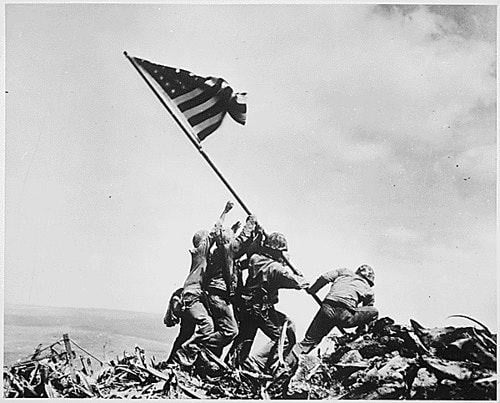
This course is a short taster on the topic of the use of Images, Film, and their use in historical interpretation in the 20th century. It is primarily provided for those who have a general interest in history that draws on photojournalism as primary evidence, and films based on historical events.

Nov 2nd 2026
5-12 Weeks
Let's Learn Portuguese Language (FutureLearn) FutureLearn
University of Malaya

Let's Learn Portuguese Language (FutureLearn)

Enhance your vacation and gain an understanding of one of the world's friendliest and most vibrant countries through language. Learn how to speak like a local with Universiti Malaya. Do you want to learn the language Cristiano Ronaldo speaks? Master the basics of Portuguese language here. This two week course will give you the tools you need to speak Portuguese like a local without having to travel to Portugal.

Self Paced
2 Weeks
Philosophy, Science and Religion: Science and Philosophy (Coursera) Coursera
University of Edinburgh

Philosophy, Science and Religion: Science and Philosophy (Coursera)

Philosophy, Science and Religion mark three of the most fundamental modes of thinking about the world and our place in it. Are these modes incompatible? Put another way: is the intellectually responsible thing to do to ‘pick sides’ and identify with one of these approaches at the exclusion of others? Or, are they complementary or mutually supportive? As is typical of questions of such magnitude, the devil is in the details. For example, it is important to work out what is really distinctive about each of these ways of inquiring about the world. In order to gain some clarity here, we’ll be investigating what some of the current leading thinkers in philosophy, science and religion are actually doing.

Oct 26th 2026
5-12 Weeks
The Emergence of the Modern Middle East - Part II (Coursera) Coursera
Tel Aviv University

The Emergence of the Modern Middle East - Part II (Coursera)

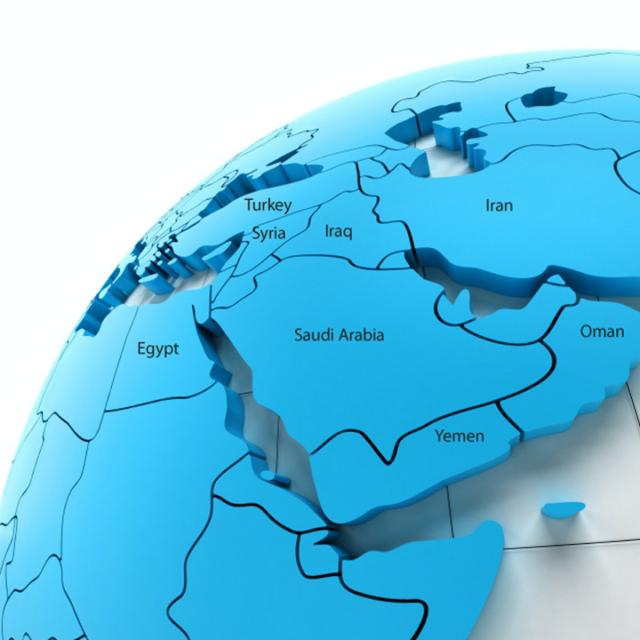
This course will discuss the developments in the Middle East from the early 20th century to the present. It will discuss the rise and retreat of Arab nationalism, the problems of internal cohesion of the Arab states, issues of religion and state, and the evolution of Islamist politics. It will also focus on the evolution of the Arab-Israeli conflict and its impact on the region and will conclude with an in depth analysis of the “Arab Spring” by placing these contemporary revolutionary events in their historical context.

Nov 2nd 2026
5-12 Weeks
Age of Cathedrals (Coursera) Coursera
Yale University

Age of Cathedrals (Coursera)

An introduction to some of the most astonishing architectural monuments the world has ever known—Gothic cathedrals. We shall study the art, literature, intellectual life, economics, and new social arrangements that arose in the shadow of the cathedrals and that were such an important part of the revival of cities in the twelfth and thirteenth centuries. The goal of the course is a better appreciation of the High Middle Ages, a world that is still recognizably our own.

Oct 26th 2026
5-12 Weeks
A Voice of Their Own. Women's Spirituality in the Middle Ages. (Coursera) Coursera
University of Barcelona

A Voice of Their Own. Women's Spirituality in the Middle Ages. (Coursera)

Have you ever heard about medieval mysticism or medieval heresies? Have you ever wondered about the particular role women played in medieval spirituality? Do Hildegard of Bingen, Clare of Assisi, Marguerite Porete, the Cathar ladies or Isabel de Villena ring a bell? Have you ever felt like you wanted to know more about them? If your answer to any of these questions was yes, then this MOOC, A voice of their own. Women’s spirituality in the Middle ages is what you were looking for.

Oct 26th 2026
5-12 Weeks
Soul Beliefs: Causes and Consequences - Unit 2: Belief Systems (Coursera) Coursera
Rutgers University

Soul Beliefs: Causes and Consequences - Unit 2: Belief Systems (Coursera)

Throughout history, the vast majority of people around the globe have believed they have, however defined, a “soul.” While the question of whether the soul exists cannot be answered by science, what we can study are the causes and consequences of various beliefs about the soul and its prospects of surviving the death of the body. Why are soul and afterlife beliefs so common in human history? Are there adaptive advantages to assuming souls exist?

Oct 26th 2026
5-12 Weeks
Intellectual Change in Early China: Warring States and Han (Coursera) Coursera
The Chinese University of Hong Kong

Intellectual Change in Early China: Warring States and Han (Coursera)

This sequence of four courses will propose a multi-disciplinary approach to the study of Chinese cultural history conceived of as a succession of modes of rationality (philosophical, bureaucratic, and economic). The focus will be on the moments of paradigm shift from one mode of rationality to another. For each of these moments, cultural facts and artifacts—thought, literature, ritual—will be examined in relationship to changing social, political, and economic systems.

Nov 2nd 2026
5-12 Weeks
The Politics of Skepticism (Coursera) Coursera
Erasmus University Rotterdam

The Politics of Skepticism (Coursera)

This is a course about the history of Skepticism from the ancient Greeks to today, with special attention to the political ramifications of questioning man's ability to know the world and himself with any certainty. We will discuss the debates raging between Plato and the Sophists, the rise of Christianity in the Roman world, and the so-called 'Skeptical Crisis' of the Renaissance as well as Pierre Bayle's Skepticism and David Hume's.

Oct 26th 2026
5-12 Weeks