Philosophy for Children and P.E.A.C.E. (EMMA)

Philosophy for Children and P.E.A.C.E. (EMMA)

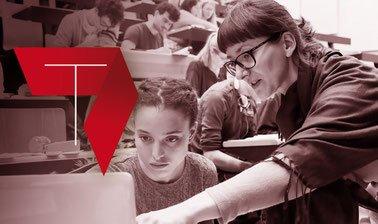
This course is brought to you by the Department of Humanities and the Philosophy for Children Course at University of Naples, Federico II and the PEACE project, a LLL/Comenius project that offers training in the use of philosophical enquiry in the curriculum to foster a cosmopolitan mindset in young people

It aims to demonstrate how important philosophy is to the development of critical and creative thinking. It aims to show teachers how they can use stories, sketches and games to translate the complexity of philosophical enquiry into manageable and profitable discussion with the children in their classes. The course looks at the background and theory behind P4C, and then introduces the method and approach used. It then takes participants into different classrooms as observers of P4C sessions in practice, with guided observation tasks to aid understanding. The P.E.A.C.E project illustrates a specific application of the P4C approach; it uses philosophy to foster a more tolerant and cosmopolitan mindset in children. The final module enables participants to gain first-hand experience of P4C by involving them in a P4C pratical session of their own with one of the P4C trainers from the University of Naples.
The course introduces participants to the origins, theory and practice of Philosophy for Children. It shows how the technique is used in the classroom and, through the PEACE project, illustrates how it can be used to address specific areas of children's education e.g. living in a multicultural classroom/society. Participants discover a series of materials that can be used or adapted for use in their own classroom, and gain first-hand experience of using the P4C methodology in a practical session.

Go to Class
MOOC List is learner-supported. When you buy through links on our site, we may earn an affiliate commission.

Related Courses

Pedagogia Generale e Sociale: pratiche educative (EMMA) EMMA
University of Naples Federico II

Pedagogia Generale e Sociale: pratiche educative (EMMA)

Questo corso di pedagogia generale si propone come il continuum naturale del precedente, che era focalizzato sulle teorie e sui modelli. In questa seconda parte del percoso, oggetto del discorso saranno le pratiche educative, ovvero l'applicazione dei concetti precedentemente illustrati. La pedagogia infatti è un ambito di ricerca empirica oltre che critico/teoretica, per cui l'attenzione sarà rivolta ai contesti in cui si realizza l'apprendimento, all'agire educativo, ai metodi educativi e all'educazione come strumento di crescita ed inclusione sociale.

Self Paced
Self-Paced
Uncommon Sense Teaching (Coursera) Coursera
Deep Teaching Solutions

Uncommon Sense Teaching (Coursera)

Do your students spend too much (or too little) time learning, with disappointing results? Do they procrastinate in their study because it’s boring and they’re easily distracted? Are you working to make your teaching even more inclusive? Uncommon Sense Teaching will give you practical new insights that will help you solve these goals and challenges, and many more.

Oct 5th 2026
4 Weeks
e-Learning Ecologies: Innovative Approaches to Teaching and Learning for the Digital Age (Coursera) Coursera
University of Illinois at Urbana-Champaign

e-Learning Ecologies: Innovative Approaches to Teaching and Learning for the Digital Age (Coursera)

For three decades and longer we have heard educators and technologists making a case for the transformative power of technology in learning. However, despite the rhetoric, in many ways and at most institutional sites, education is still relatively untouched by technology. Even when technologies are introduced, the changes sometimes seem insignificant and the results seem disappointing. If the print textbook is replaced by an e-book, do the social relations of knowledge and learning necessarily change at all or for the better?

Oct 5th 2026
4 Weeks
21st Century Learning (EMMA) EMMA
University of Bath,University of Naples Federico II

21st Century Learning (EMMA)

Online technologies, social media and open education have made learning ubiquitous. This Massive Open Online Course (MOOC) will introduce you to 21st century learning practices. You will have a chance to evaluate your digital literacies, create your own personal learning environment, find open educational resources, explore virtual worlds and more!

Self-Paced
Self-Paced
Teaching Children with Visual Impairment: Creating Empowering Classrooms (Coursera) Coursera
University of Cape Town

Teaching Children with Visual Impairment: Creating Empowering Classrooms (Coursera)

In the education of children with visual impairment, there is at present a global movement away from segregated special schooling, and towards inclusive neighbourhood schools. Inclusion provides an opportunity for everyone, teachers as well as learners, to become more acquainted about life with visual impairment and to overcome some of the barriers of difference which have existed in the past. But if it is to be successful, teachers and others require key skills and insights in order to create classroom environments which fully accommodate the learning needs of children with visual impairment.

Oct 5th 2026
4 Weeks
Conciencia Lingüística (Coursera) Coursera
Universidad Autónoma Metropolitana

Conciencia Lingüística (Coursera)

Al finalizar el curso serás capaz de: Tomar conciencia acerca de cómo funciona el lenguaje humano, en lo que se refiere a la formación de palabras y estructuras que usamos a diario, su combinación y sus distintas posibilidades de significado. Con ello, se espera que el estudiante desarrolle una conciencia lingüística sobre el español y, con ello, logre un mayor control sobre el uso creativo de las palabras y las oraciones en español.

Oct 5th 2026
4 Weeks
Aboriginal Worldviews and Education (Coursera) Coursera
University of Toronto

Aboriginal Worldviews and Education (Coursera)

Intended for both Aboriginal and non-Aboriginal learners, this course will explore indigenous ways of knowing and how they can benefit all students. Topics include historical, social, and political issues in Aboriginal education; terminology; cultural, spiritual and philosophical themes in Aboriginal worldviews; and how Aboriginal worldviews can inform professional programs and practices, including but not limited to the field of education.

Oct 5th 2026
5-12 Weeks
Skepticism (Coursera) Coursera
University of California, Irvine

Skepticism (Coursera)

Skepticism is about doubt, and doubt is everywhere in the world around us today. There are doubts about whether man-made climate change is real, whether vaccinations are harmful, whether we can trust our politicians or our media, and so on. When is such skepticism warranted, and when does it stray into unreasonable territory? How widespread can such skepticism get while still being coherent? How might a radical skepticism have pernicious social consequences, such as by leading to relativism (and just what is relativism, and what is problematic about it)?

Oct 5th 2026
4 Weeks
ICT in Primary Education: Transforming children's learning across the curriculum (Coursera) Coursera
University of London

ICT in Primary Education: Transforming children's learning across the curriculum (Coursera)

Why and how are teachers integrating ICT (Information and Communication Technology) into primary education? In this course we analyse examples from schools in different parts of the world, and bring professional teachers, headteachers and policymakers together to share their best ideas and inspiring stories. The materials in the course are based on studies carried out for the UNESCO Institute of IT in Education, Moscow.

Oct 5th 2026
5-12 Weeks
Guerrilla Literacy Learners (EMMA) EMMA
UC Leuven Limburg, Belgium

Guerrilla Literacy Learners (EMMA)

Are you a teacher coaching learners to make sense of their mistakes in knowledge clips by linking rules in an unorthodox way? GuLL offers a new language acquisition approach connecting open educators with graphic facilitation, the art of hosting, narrative coaching and user-centered design. This MOOC is for any educator who is committed to inclusive education, making sure all learners know how to succeed.

Self Paced
Self-Paced
Serious Gaming (Coursera) Coursera
Erasmus University Rotterdam

Serious Gaming (Coursera)

Have you ever wondered how playing games can help us to train people, deal with societal challenges or raise awareness of contemporary social issues? In this MOOC you will learn the ins and outs of games that are designed with exactly those purposes in mind: serious games. We will define serious games and discuss the different types that have been developed. We will explain why people like to play them and what impact they may have.

Oct 12th 2026
5-12 Weeks