Introduction to battery-management systems (Coursera)

Introduction to battery-management systems (Coursera)

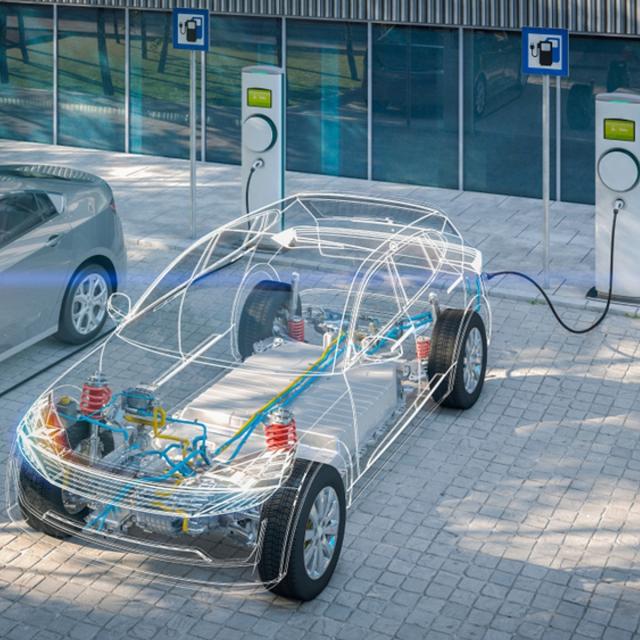
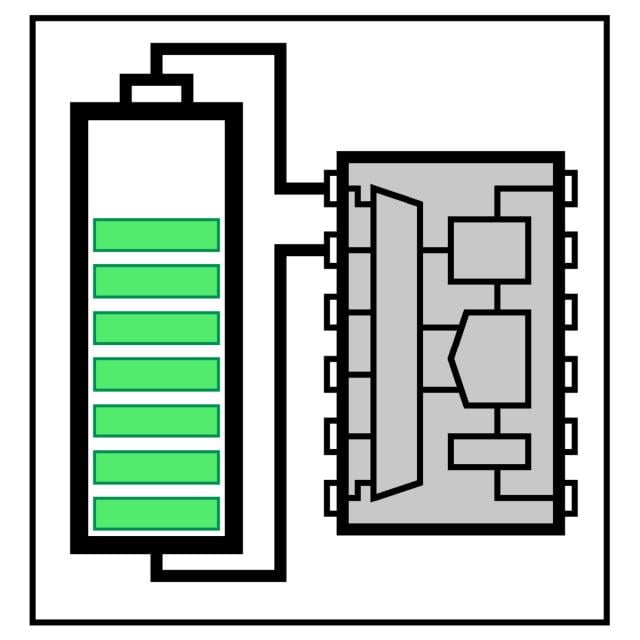
This course will provide you with a firm foundation in lithium-ion cell terminology and function and in battery-management-system requirements as needed by the remainder of the specialization.

Class Deals by MOOC List - Click here and see Coursera's Active Discounts, Deals, and Promo Codes.

After completing this course, you will be able to:

  • List the major functions provided by a battery-management system and state their purpose
  • Match battery terminology to a list of definitions
  • Identify the major components of a lithium-ion cell and their purpose
  • Understand how a battery-management system “measures” current, temperature, and isolation, and how it controls contactors
  • Identify electronic components that can provide protection and specify a minimum set of protections needed
  • Compute stored energy in a battery pack
  • List the manufacturing steps of different types of lithium-ion cells and possible failure modes

Course 1 of 5 in the Algorithms for Battery Management Systems Specialization.

Syllabus

Week 1
Battery Boot Camp
This week, you will learn some important terminology used to describe battery cells, and will learn the principles of operation of standard electrochemical battery cells.

Week 2
How lithium-ion cells work
This week, you will learn some of the principal advantages of lithium-ion cells versus standard electrochemical battery cells, what are their primary components, and how they work.

Week 3
BMS sensing and high-voltage control
This week, you will begin to learn about BMS requirements, and will study the requirements for sensing and high-voltage control in detail.

Week 4
BMS design requirements 2-5
This week, you will continue to learn about BMS requirements, studying requirements for protection, interface, performance management, and diagnostics in detail.

Week 5
How are cells made? How can they fail?
This week, you will learn in more detail than before how lithium-ion cells are made and how they can fail.


Go to Class
MOOC List is learner-supported. When you buy through links on our site, we may earn an affiliate commission.

Related Courses

Physics 102 - Electric Potential and DC Circuits (Coursera) Coursera
Rice University

Physics 102 - Electric Potential and DC Circuits (Coursera)

This course serves as an introduction to the physics of electricity and magnetism. Upon completion, learners will have an understanding of how the forces between electric charges are described by fields, and how these fields are related to electrical circuits. They will gain experience in solving physics problems with tools such as graphical analysis, algebra, vector analysis, and calculus.

Jun 8th 2026
3 Weeks
Signals and Systems, Part 1 (edX) EdX
IIT Bombay,IITBombayX

Signals and Systems, Part 1 (edX)

This course provides the basic toolkit for any signal processing application - the abstraction of signals and systems, from the point of view of analysis and characterization. We encounter signals and systems extensively in our day-to-day lives, from making a phone call, listening to a song, editing photos, manipulating audio files, using speech recognition softwares like Siri and Google now, to taking EEGs, ECGs and X-Ray images.

No sessions available
5-12 Weeks
Haptics: Introduction to Haptics (Stanford Online) Lagunita Stanford Online
Stanford University

Haptics: Introduction to Haptics (Stanford Online)

Participants in this class will learn how to build, program, and control haptic devices, which are mechatronic devices that allow users to feel virtual or remote environments. In the process, participants will gain an appreciation for the capabilities and limitations of human touch, develop an intuitive connection between equations that describe physical interactions and how they feel, and gain practical interdisciplinary engineering skills related to robotics, mechanical engineering, electrical engineering, bioengineering, and computer science.

Self Paced
Self-Paced
Light Emitting Diodes and Semiconductor Lasers (Coursera) Coursera
University of Colorado Boulder

Light Emitting Diodes and Semiconductor Lasers (Coursera)

You will learn about semiconductor light emitting diodes (LEDs) and lasers, and the important rules for their analysis, planning, design, and implementation. You will also apply your knowledge through challenging homework problem sets to cement your understanding of the material and prepare you to apply in your career.

Jun 8th 2026
5-12 Weeks
Introduction to Satellite Communications (Coursera) Coursera
Institut Mines-Telecom

Introduction to Satellite Communications (Coursera)

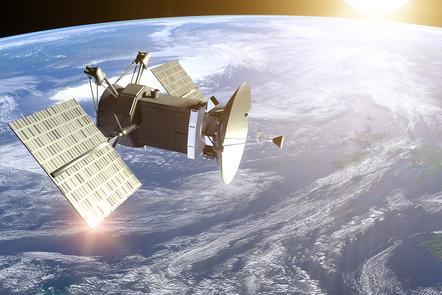
How is a satellite built? How do they fly? How do they communicate and how does the network operate? You will get all the answers in this course from teachers and researchers from three schools associated with Institut Mines-Télécom. The course is made of : teaching videos, equipment demonstrations and simulation programs. They will guide you through the discovery of satellite communications. Professionals in the space field will share there vocation for this scientific and technical sector.

No sessions available
5-12 Weeks
Electrónica Digital Bit a Bit: Aprendiendo fundamentos (Coursera) Coursera
Pontificia Universidad Católica de Chile

Electrónica Digital Bit a Bit: Aprendiendo fundamentos (Coursera)

Es desafiante y hasta atemorizante entender un circuito digital cuando observamos la cantidad de transistores que puede contener, y aún más difícil diseñarlo eficientemente para su implementación en un circuito integrado o una FPGA. Sin embargo, saber diseñar circuitos digitales simples nos abre las puertas para diseñar sistemas digitales más complejos a partir de estos.

May 25th 2026
5-12 Weeks
Physics 102 - AC Circuits and Maxwell's Equations (Coursera) Coursera
Rice University

Physics 102 - AC Circuits and Maxwell's Equations (Coursera)

This course serves as an introduction to the physics of electricity and magnetism. Upon completion, learners will have an understanding of how the forces between electric charges are described by fields, and how these fields are related to electrical circuits. They will gain experience in solving physics problems with tools such as graphical analysis, algebra, vector analysis, and calculus. The course follows the typical progression of topics of a first-semester university physics course: charges, electric forces, electric fields potential, magnetic fields, currents, magnetic moments, electromagnetic induction, and circuits.

Jun 8th 2026
3 Weeks
Internet of Things: Multimedia Technologies (Coursera) Coursera
University of California, San Diego

Internet of Things: Multimedia Technologies (Coursera)

Content is an eminent example of the features that contributed to the success of wireless Internet. Mobile platforms such as the Snapdragon™ processor have special hardware and software capabilities to make acquisition, processing and rendering of multimedia content efficient and cost-effective.

May 25th 2026
3 Weeks
Interfacing with the Arduino (Coursera) Coursera
University of California, Irvine

Interfacing with the Arduino (Coursera)

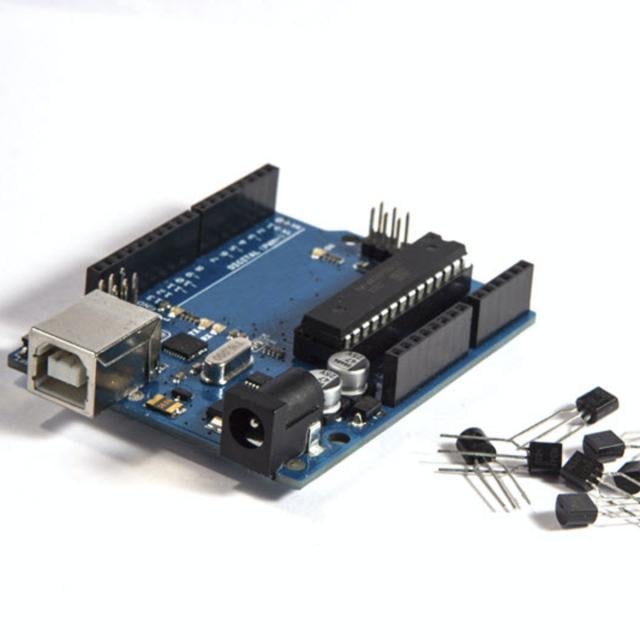
Arduino senses the environment by receiving inputs from add-on devices such as sensors, and can control the world around it by adjusting lights, motors, and other actuators. In this class you will learn how and when to use the different types of sensors and how to connect them to the Arduino. Since the external world uses continuous or analog signals and the hardware is digital you will learn how these signals are converted back-and-forth and how this must be considered as you program your device. You'll also learn about the use of Arduino-specific shields and the shields software libraries to interface with the real world.

Jun 8th 2026
4 Weeks
Physics 102 - Magnetic Fields and Faraday's Law (Coursera) Coursera
Rice University

Physics 102 - Magnetic Fields and Faraday's Law (Coursera)

This course serves as an introduction to the physics of electricity and magnetism. Upon completion, learners will have an understanding of how the forces between electric charges are described by fields, and how these fields are related to electrical circuits. They will gain experience in solving physics problems with tools such as graphical analysis, algebra, vector analysis, and calculus. The course follows the typical progression of topics of a first-semester university physics course: charges, electric forces, electric fields potential, magnetic fields, currents, magnetic moments, electromagnetic induction, and circuits.

Jun 8th 2026
4 Weeks