Equivalent Circuit Cell Model Simulation (Coursera)

Equivalent Circuit Cell Model Simulation (Coursera)

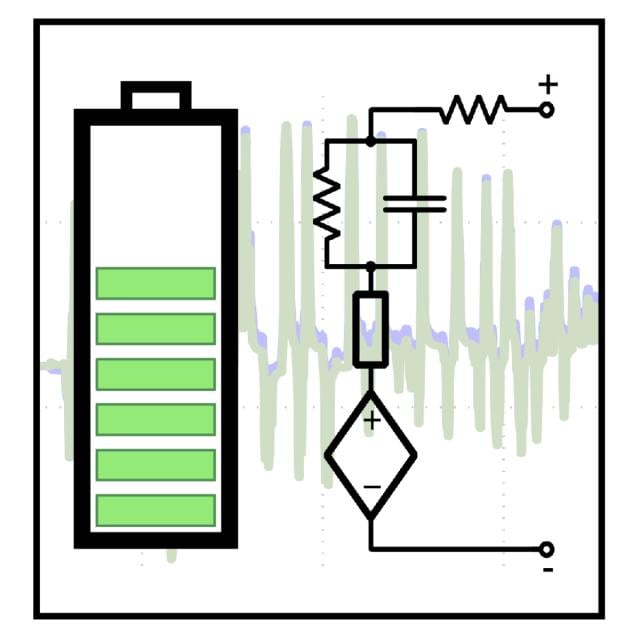
In this course, you will learn the purpose of each component in an equivalent-circuit model of a lithium-ion battery cell, how to determine their parameter values from lab-test data, and how to use them to simulate cell behaviors under different load profiles.

Class Deals by MOOC List - Click here and see Coursera's Active Discounts, Deals, and Promo Codes.

By the end of the course, you will be able to:

  • State the purpose for each component in an equivalent-circuit model
  • Compute approximate parameter values for a circuit model using data from a simple lab test
  • Determine coulombic efficiency of a cell from lab-test data
  • Use provided Octave/MATLAB script to compute open-circuit-voltage relationship for a cell from lab-test data
  • Use provided Octave/MATLAB script to compute optimized values for dynamic parameters in model
  • Simulate an electric vehicle to yield estimates of range and to specify drivetrain components
  • Simulate battery packs to understand and predict behaviors when there is cell-to-cell variation in parameter values

What You Will Learn
How to design equivalent-circuit models for lithium-ion battery cells

Course 2 of 5 in the Algorithms for Battery Management Systems Specialization.

Syllabus

Week 1
Defining an equivalent-circuit model of a Li-ion cell
In this module, you will learn how to derive the equations of an equivalent-circuit model of a lithium-ion battery cell.

Week 2
Identifying parameters of static model
In this module, you will learn how to determine the parameter values of the static part of an equivalent-circuit model.

Week 3
Identifying parameters of dynamic model
In this module, you will learn how to determine the parameter values of the dynamic part of an equivalent-circuit model.

Week 4
Simulating battery packs in different configurations
In this module, you will learn how to generalize the capability of simulating the voltage response of a single battery cell to a profile of input current versus time to being able to simulate constant-voltage and constant-power control of a battery cell, as well as different configurations of cells built into battery packs.

Week 5
Co-simulating battery and electric-vehicle load
In this honors module, you will learn how to co-simulate a battery pack and an electric-vehicle load. This ability aids in sizing vehicle components and the battery-pack.

Week 6
Capstone project
In this final module for the course, you will modify three sample Octave programs to create functions that can simulate temperature-dependent cells, battery packs built from PCMs, and battery packs built from SCMs.


Go to Class
MOOC List is learner-supported. When you buy through links on our site, we may earn an affiliate commission.

Related Courses

Outsmarting intermittency (Coursera) Coursera
École Polytechnique

Outsmarting intermittency (Coursera)

Solar and wind offer clean and renewable ways to produce large amounts of electricity. They have boomed over the last few years, evolving from an eco-daydream to a major market and showing unprecedented growth rates. Yet, installing solar panels and wind turbines is by no means the end of the story. The electrical grid, which connects production means to the end-users’ sockets, is not a simple electron pipe. It is the beating heart of our electricity system and ensures its stability. Solar and wind raise specific challenges for the grid, and these challenges will have to be tackled if we want to deploy larger amounts of renewable sources.

Jun 8th 2026
4 Weeks
Silicon Thin Film Solar Cells (Coursera) Coursera
École Polytechnique

Silicon Thin Film Solar Cells (Coursera)

This course consists of a general presentation of solar cells based on silicon thin films. It is the third MOOC of the photovoltaic series of Ecole polytechnique on Coursera. The general aspects of the photovoltaic field are treated in "Photovoltaic Solar Energy". And the detailed description of the crystalline silicon solar cells can be found in "Physics of Silicon Solar Cells".

May 18th 2026
3 Weeks
Distribución de la energía eléctrica (edX) EdX
Tecnológico de Monterrey,TecdeMonterreyX

Distribución de la energía eléctrica (edX)

Aprende las formas en que la energía eléctrica se distribuye al usuario final por medio de la infraestructura eléctrica existente. Conoces los procesos que se requieren para llevar la energía eléctrica desde el lugar donde se genera (plantas eléctricas) hasta el lugar donde la necesitas?, ¿sabes cómo funciona una red de distribución? En este curso en línea obtendrás las respuestas, ya que conocerás las formas en las que la energía eléctrica se distribuye al usuario final por medio de la infraestructura existente.

Self Paced
Self-Paced
Haptics: Introduction to Haptics (Stanford Online) Lagunita Stanford Online
Stanford University

Haptics: Introduction to Haptics (Stanford Online)

Participants in this class will learn how to build, program, and control haptic devices, which are mechatronic devices that allow users to feel virtual or remote environments. In the process, participants will gain an appreciation for the capabilities and limitations of human touch, develop an intuitive connection between equations that describe physical interactions and how they feel, and gain practical interdisciplinary engineering skills related to robotics, mechanical engineering, electrical engineering, bioengineering, and computer science.

Self Paced
Self-Paced
Fundamentals of particle accelerator technology (NPAP MOOC) (Coursera) Coursera
Lund University

Fundamentals of particle accelerator technology (NPAP MOOC) (Coursera)

Did you know that particle accelerators play an important role in many functions of todays society and that there are over 30 000 accelerators in operation worldwide? A few examples are accelerators for radiotherapy which are the largest application of accelerators, altogether with more than 11000 accelerators worldwide. These accelerators range from very compact electron linear accelerators with a length of only about 1 m to large carbon ion synchrotrons with a circumference of more than 50 m and a huge rotating carbon ion gantry with a weight of 600 tons!

May 18th 2026
5-12 Weeks
Statistical Thermodynamics: Molecules to Machines (Coursera) Coursera
Carnegie Mellon University

Statistical Thermodynamics: Molecules to Machines (Coursera)

Modern engineering research focuses on designing new materials and processes at the molecular level. Statistical thermodynamics provides the formalism for understanding how molecular interactions lead to the observed collective behavior at the macroscale. This course will develop a molecular-level understanding of key thermodynamic quantities like heat, work, free energy and entropy. These concepts will be applied in understanding several important engineering and biological applications.

Jun 14th 2026
5-12 Weeks
Physics 102 - AC Circuits and Maxwell's Equations (Coursera) Coursera
Rice University

Physics 102 - AC Circuits and Maxwell's Equations (Coursera)

This course serves as an introduction to the physics of electricity and magnetism. Upon completion, learners will have an understanding of how the forces between electric charges are described by fields, and how these fields are related to electrical circuits. They will gain experience in solving physics problems with tools such as graphical analysis, algebra, vector analysis, and calculus. The course follows the typical progression of topics of a first-semester university physics course: charges, electric forces, electric fields potential, magnetic fields, currents, magnetic moments, electromagnetic induction, and circuits.

Jun 8th 2026
3 Weeks
Light Emitting Diodes and Semiconductor Lasers (Coursera) Coursera
University of Colorado Boulder

Light Emitting Diodes and Semiconductor Lasers (Coursera)

You will learn about semiconductor light emitting diodes (LEDs) and lasers, and the important rules for their analysis, planning, design, and implementation. You will also apply your knowledge through challenging homework problem sets to cement your understanding of the material and prepare you to apply in your career.

Jun 8th 2026
5-12 Weeks
RF and millimeter-Wave Circuit Design (Coursera) Coursera
Eindhoven University of Technology

RF and millimeter-Wave Circuit Design (Coursera)

This unique Master-level course offered by the Center for Wireless Technology Eindhoven (CWT/e) of the Eindhoven University of Technology, The Netherlands, provides students with in-depth knowledge and hands-on experience on RF and mmWave circuit design. The course covers the topics on how to derive the RF wireless systems specifications, and how to design the main building blocks of a transceiver, i.e., low noise amplifier, power amplifier, RF mixers, oscillators, and PLL frequency synthesizers. It is divided into two parts: (1) theoretical lectures will cover the basis of RF and mmWave Circuit Design; and (2) design labs will include simulation and implementation of these circuits.

May 18th 2026
5-12 Weeks
Introduction to Semiconductor Devices 1 (Coursera) Coursera
Korea Advanced Institute of Science and Technology - KAIST

Introduction to Semiconductor Devices 1 (Coursera)

This course aims to provide a general understanding of semiconductor devices. This course explores the principles and the operation mechanism of semiconductor, such as charge transfer, p-n junction, junction capacitors, and Metal-Oxide-Semiconductor Field Effect Transistors(MOSFETs).

Jun 1st 2026
5-12 Weeks