Life Below Water: Conservation, Current Issues, Possible Solutions (FutureLearn)

Life Below Water: Conservation, Current Issues, Possible Solutions (FutureLearn)

Explore the human impact on underwater biodiversity, ecosystems, and animals, and solutions for preserving life below water. Develop knowledge and research skills in marine conservation. It is widely accepted that the phenomenal biodiversity within underwater ecosystems and habitats has been very negatively affected by human interaction. The exact nature and course of the damage, and what can be done about it, are not as clearly understood. This four-week course by the University of the Sunshine Coast aims to change that.

Class Deals by MOOC List - Click here and see FutureLearn's Active Discounts, Deals, and Promo Codes.

You’ll develop research and analytic skills, gaining insights into how to measure and minimise human impact on marine life. Ultimately, you’ll learn how to preserve underwater biodiversity and better protect aquatic animals.

Explore marine biodiversity and aquatic ecology
On this course, you’ll take a deep dive into the ecosystems found below the water’s surface. You’ll also be introduced to the form, function, and evolution of aquatic animals.
As you learn what types of species exist, and how they have adapted to survive, you’ll gain greater insights into how to ensure animal conservation in these environments.

Gain a deeper understanding of the environmental impact of humans
In addition to natural aquatic ecology you’ll examine how human behaviour exacerbates climate change, and the effects that climate change has on underwater fauna and flora.
With an understanding of the threats to marine life, you’ll then take a look at new developments in marine science, and how this is leading to solutions to human impact.

Enjoy world-class education with the University of the Sunshine Coast
Throughout the course, you’ll be guided by the specialists at the University of the Sunshine Coast who are at the forefront of research into aquatic and terrestrial systems.
You’ll learn from ecology experts to help develop your skills, confidence, and knowledge in marine conservation.

What topics will you cover?
Over the duration of the course, you’ll look at the following subjects:

  • Biodiversity and ecology
  • Form, function, and evolution in marine animals
  • Human impacts and climate change
  • Cutting-edge research and possible conservation solutions

Learning on this course
You can take this self-guided course and learn at your own pace. On every step of the course you can meet other learners, share your ideas and join in with active discussions in the comments.
What will you achieve?
By the end of the course, you‘ll be able to...

  • Identify common groups of aquatic species, including marine mammals, reptiles, fish and seabirds
  • Discuss common problems facing species in aquatic environments, including climate change, urbanisation, and fisheries exploitation
  • Explain key aspects of the morphology, behaviour and ecology of species in aquatic environments, including crocodile movement, diving mammals, and shark reproduction
  • Investigate the advanced techniques and technology which are used to study and solve conservation issues by scientists.

Who is the course for?
This course is designed for anyone interested in the ecology and conservation of aquatic animals. The knowledge gained can be used to pursue opportunities outside environmentalism, in diverse fields such as business, education, finance, and eco-tourism.
Go to Class
MOOC List is learner-supported. When you buy through links on our site, we may earn an affiliate commission.

Related Courses

Introduction to Biology: Biodiversity (Coursera) Coursera
Rice University

Introduction to Biology: Biodiversity (Coursera)

In this course we will examine the incredible variety of life that inhabits this planet including microorganisms, plants, and animals. For each of the major groups we’ll learn about their characteristics, functions, and how they came into existence as well as some of the roles they play in the natural world, and how they’re relevant to people. We’ll also take a close look at us humans and consider what we know about our origins and what might become of us in the future.

Jun 22nd 2026
5-12 Weeks
Invitation to Ex-Noguchi Room: Preservation and Utilization of Cultural Properties in Universities (FutureLearn) FutureLearn
Keio University

Invitation to Ex-Noguchi Room: Preservation and Utilization of Cultural Properties in Universities (FutureLearn)

Learn how to preserve, restore and utilize cultural properties in universities—a case study from Keio University, Tokyo. In this course, we will examine how to bring attention to cultural properties in a university, preserve and utilize them. The course focuses on the ‘Ex-Noguchi Room’ as a case study, which is a cultural property of Keio University in Tokyo. The space and what its contents are no longer in thier original state due to the partial reconstruction.

Available now
2 Weeks
Fashion Values: Nature (FutureLearn) FutureLearn
London College of Fashion

Fashion Values: Nature (FutureLearn)

Understand biodiversity in the context of fashion and create a plan for fashion that protects our earth’s systems. Discover fashion practices that can protect, restore, and regenerate ecosystems. Nature is the life force that provides us with the air, water, soil, and minerals that sustain life on earth. These elements come together in the clothes we wear. This course will help you build the knowledge, skills, and connections to reimagine fashion’s practices and develop a plan to put nature first.

Available now
4 Weeks
Aeroecology: Exploring Biodiversity with Radar (Coursera) Coursera
University of Leeds

Aeroecology: Exploring Biodiversity with Radar (Coursera)

Learn how aeroecology, a discipline that studies airborne life forms, has been revolutionised with the use of radar with this unique course. This course is designed to help scientists, researchers as well as ecology enthusiasts to develop skills in using radar to explore biodiversity. You will explore the origins and evolution of radar from a military technology to a powerful tool with multiple scientific applications, including aeroecology. You will then be introduced to studying global biodiversity trends and learn how to evaluate traditional methods and emerging technologies used by scientists to monitor the natural world.

Jun 15th 2026
2 Weeks
Bugs 101: Insect-Human Interactions (Coursera) Coursera
University of Alberta

Bugs 101: Insect-Human Interactions (Coursera)

Of all the animals on earth, which are the strongest for their size? What about the fastest? Who were the first animals to evolve flight? Insects take all of these titles and more! As the most abundant animals on the planet, insects and other arthropods affect our lives in so many ways. From beneficial interactions like pollination and biological pest control, to the transmission of life threatening diseases; this course will teach you about the big ways that these little arthropods impact our lives.

Jun 22nd 2026
13-24 Weeks
Beyond the Sustainable Development Goals (SDGs): Addressing Sustainability and Development (Coursera) Coursera
University of Michigan

Beyond the Sustainable Development Goals (SDGs): Addressing Sustainability and Development (Coursera)

We’re excited you’re here! This course, “Beyond the Sustainable Development Goals (SDGs): Addressing Sustainability and Development,” is the first course in the upcoming Sustainability and Development MasterTrack Certificate program (Fall 2020), but you can also take this course as a stand-alone learning opportunity.

Jun 24th 2026
5-12 Weeks
Western Religions & Ecology (Coursera) Coursera
Yale University

Western Religions & Ecology (Coursera)

At first glance the fields of religion and ecology may seem and unlikely pairing, but a deeper consideration reveals the two have a great deal to contribute to one another and are indeed inextricably linked. Religions recognize the unity and interdependence of humans with nature. Ecological sciences affirm this deep interconnection with the natural world. This partnership can inspire work for the wellbeing of the Earth community

Jun 22nd 2026
5-12 Weeks
Agroforestry I: Principles and Practices (Coursera) Coursera
University of Florida

Agroforestry I: Principles and Practices (Coursera)

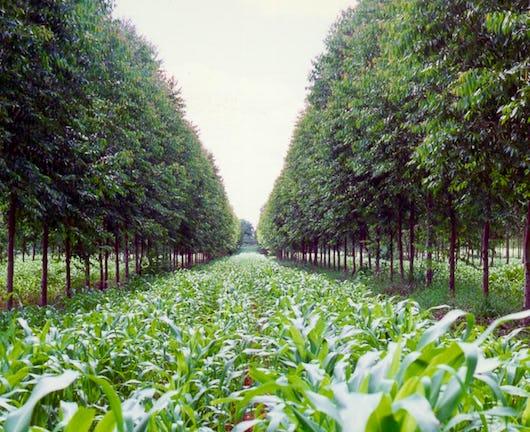
Agroforestry – the practice of growing trees and crops in interacting combinations – is recognized the world over as an integrated approach to sustainable land-use. Agroforestry systems, being multifunctional, facilitate not only the production of food and wood products but also provide a variety of ecosystem services such as climate-change mitigation, biodiversity conservation, and soil quality improvement. This course teaches a broad overview of the most current research and best practices in global agroforestry.

Jun 15th 2026
5-12 Weeks
Agroforestry V: Ecosystem Services, Food and Sustainability (Coursera) Coursera
University of Florida

Agroforestry V: Ecosystem Services, Food and Sustainability (Coursera)

Welcome to Agroforestry V: Ecosystem Services, Food Security and Sustainable Development, a detailed review of fundamental principles and best practices for successful agroforestry projects. This interdisciplinary module, presented by leading experts in the field, is the final in the five-module course covering the various aspects of agroforestry including the global distribution of the practices, their underlying principles, and major scientific advances during the past nearly five decades.

Jun 22nd 2026
2 Weeks
Les transitions énergétique-écologiques dans les pays du Sud (Coursera) Coursera
École normale supérieure

Les transitions énergétique-écologiques dans les pays du Sud (Coursera)

Ce MOOC co-produit par l'Agence Française de Développement et l'ENS se situe à la confluence du développement des pays du Sud et le développement durable. Il a : une dimension macroéconomique et financière portée notamment par Gael Giraud et Alain Grandjean en tant qu’intervenants; une dimension écologique et climatique portée notamment par David Claessen et les intervenants de l’ENS, et une dimension de focus sur les pays du Sud portée notamment par les intervenants de l’AFD.

Jun 22nd 2026
5-12 Weeks
The Worldview of Thomas Berry: The Flourishing of the Earth Community (Coursera) Coursera
Yale University

The Worldview of Thomas Berry: The Flourishing of the Earth Community (Coursera)

Thomas Berry (1914-2009) was a historian of world religions and an early voice awakening moral sensibilities to the environmental crisis. He is known for articulating a “new story” of the universe that explores the implications of the evolutionary sciences and cultural traditions for creating a flourishing future. This course investigates Berry’s life and thought in relation to the Journey of the Universe project.

Jun 22nd 2026
5-12 Weeks