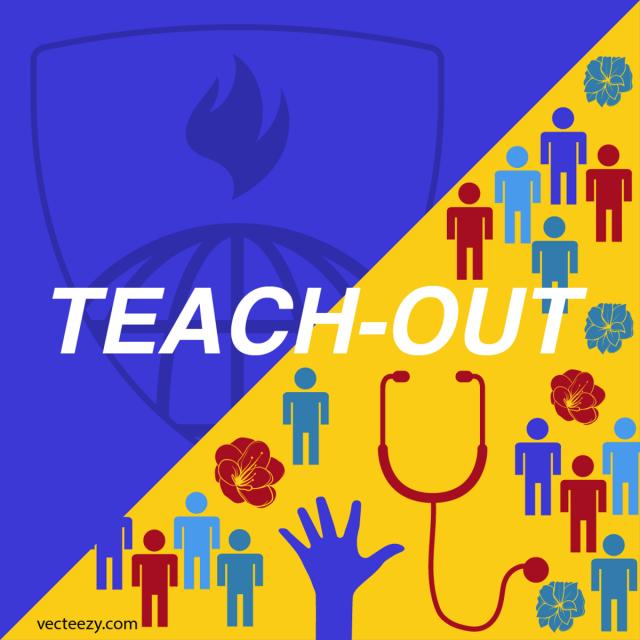
Let's talk about it: A Health and Immigration Teach Out (Coursera)

Let's talk about it: A Health and Immigration Teach Out (Coursera)

As the United States grapples with both the short-term and long-term impacts and considers how different groups and individuals are affected, it can easily become overwhelming to keep up with conversations about health and immigration. Most people can generally agree that health and immigration policy affect ALL communities, families, and individuals in one way or another.

Class Deals by MOOC List - Click here and see Coursera's Active Discounts, Deals, and Promo Codes.

This Teach-Out is designed to help you have a more well-informed discussion about health and immigration.
As part of this Teach-Out, you will hear the first-hand perspectives of researchers, elected officials, healthcare systems, business leaders, and community members. You will get a sneak peek into safe spaces within the immigrant community. Along the way, you will also get to test yourself and your knowledge about immigration and health, and do a fact-check with helpful resources and information. Last but not least, you will share in the spirit of a Teach-Out: bringing people together to learn about and address a current and important topic in society.
At the end of each lesson, you will be asked to practice how to talk about it by sharing your thoughts and reflections on the different topics that were discussed.

Syllabus

WEEK 1: The Intersection of Immigration and Health Policy
WEEK 2: Common Sense, Safe Spaces, Trust, and Leadership

Go to Class
MOOC List is learner-supported. When you buy through links on our site, we may earn an affiliate commission.

Related Courses

Weight Management: Beyond Balancing Calories (Coursera) Coursera
Emory University

Weight Management: Beyond Balancing Calories (Coursera)

Across the globe, more people are suffering from obesity than at any other time in our history. Why has obesity become so common and so challenging? In this course, we will look at the root cause of obesity, as explained by the latest science. We will see how our food environment has evolved over the last half-century, and how it is altering our biology to over-consume calories and resist sustained weight loss.

Sep 14th 2026
5-12 Weeks
eHealth: More than just an electronic record (Coursera) Coursera
The University of Sydney

eHealth: More than just an electronic record (Coursera)

The MOOC, "eHealth: More than just an electronic record!", is multidisciplinary in nature, and aims to equip the global audience of health clinicians, students, managers, administrators, and researchers to reflect on the overall impact of eHealth on the integration of care. It explores the breadth of technology application, current and emerging trends, and showcases both local and international eHealth practice and research.

Sep 14th 2026
5-12 Weeks
Population Health: Fundamentals of Population Health Management (Coursera) Coursera
Leiden University

Population Health: Fundamentals of Population Health Management (Coursera)

What are the principles of Population Health Management as a pro-active management approach to improve health and to tackle health disparities? In this course we will discuss the basic principles of Population Health Management that will help you as (future) health care professional or policymaker to analyse current healthcare challenges and to design possible solutions using the Population Health Management Approach.

Sep 14th 2026
4 Weeks
Stories of Infection (Coursera) Coursera
Stanford University

Stories of Infection (Coursera)

This course introduces learners to a variety of infectious diseases using a patient-centered, story-based approach. Through illustrated, short videos, learners will follow the course of each patient’s illness, from initial presentation to resolution. Integrating the relevant microbiology, pathophysiology and immunology, this course aims to engage and entice the learner towards future studies in microbiology, immunology and infectious diseases.

Sep 14th 2026
5-12 Weeks
Medical Neuroscience (Coursera) Coursera
Duke University

Medical Neuroscience (Coursera)

Medical Neuroscience explores the functional organization and neurophysiology of the human central nervous system, while providing a neurobiological framework for understanding human behavior. In this course, you will discover the organization of the neural systems in the brain and spinal cord that mediate sensation, motivate bodily action, and integrate sensorimotor signals with memory, emotion and related faculties of cognition. The overall goal of this course is to provide the foundation for understanding the impairments of sensation, action and cognition that accompany injury, disease or dysfunction in the central nervous system. The course will build upon knowledge acquired through prior studies of cell and molecular biology, general physiology and human anatomy, as we focus primarily on the central nervous system.

Sep 14th 2026
13-24 Weeks
Curanderismo: Global & Cultural Influences of Traditional Healing (Coursera) Coursera
University of New Mexico

Curanderismo: Global & Cultural Influences of Traditional Healing (Coursera)

As the last of four courses on Curanderismo, the art of Hispanic/Latino traditional medicine, this course focuses specifically on traditional healing using different techniques of many countries around the world. As an educational and cultural platform, this course will share a number of traditional global perspectives.

Sep 14th 2026
5-12 Weeks
Case Studies in Personalized Medicine (Coursera) Coursera
Vanderbilt University

Case Studies in Personalized Medicine (Coursera)

Learn how advances in biomedicine hold the potential to revolutionize drug development, drug treatments, and disease prevention: where are we now, and what does the future hold? This course will present short primers in genetics and mechanisms underlying variability in drug responses. A series of case studies will be used to illustrate principles of how genetics are being brought to bear on refining diagnoses and on personalizing treatment in rare and common diseases. The ethical and operational issues around how to implement large scale genomic sequencing in clinical practice will be addressed.

Sep 14th 2026
5-12 Weeks
Epidemiology: The Basic Science of Public Health (Coursera) Coursera
University of North Carolina

Epidemiology: The Basic Science of Public Health (Coursera)

Often called “the cornerstone” of public health, epidemiology is the study of the distribution and determinants of diseases, health conditions, or events among populations and the application of that study to control health problems. By applying the concepts learned in this course to current public health problems and issues, students will understand the practice of epidemiology as it relates to real life and makes for a better appreciation of public health programs and policies. This course explores public health issues like cardiovascular and infectious diseases – both locally and globally – through the lens of epidemiology.

Sep 14th 2026
5-12 Weeks
Epidemics (Coursera) Coursera
University of Hong Kong

Epidemics (Coursera)

“If history is our guide, we can assume that the battle between the intellect and will of the human species and the extraordinary adaptability of microbes will be never-ending.” Despite all the remarkable technological breakthroughs that we have made over the past few decades, the threat from infectious diseases has significantly accelerated. In this course, we will learn why this is the case by looking at the fundamental scientific principles underlying epidemics and the public health actions behind their prevention and control in the 21st century.

Sep 14th 2026
5-12 Weeks
Impacting the Opioid Crisis: Prevention, Education, and Practice for Non-Prescribing Providers (Coursera) Coursera
University of Michigan

Impacting the Opioid Crisis: Prevention, Education, and Practice for Non-Prescribing Providers (Coursera)

This course will empower non-prescribing providers to directly impact the ongoing opioid crisis in the United States through increased knowledge and tools that will transform practice and policies. The course will inform you about the opioid epidemic and provide information and research about evidence-based strategies that are focused on prevention, intervention, education, or policy.

Sep 14th 2026
5-12 Weeks