Large Marine Ecosystems: Assessment and Management (Coursera)

Large Marine Ecosystems: Assessment and Management (Coursera)

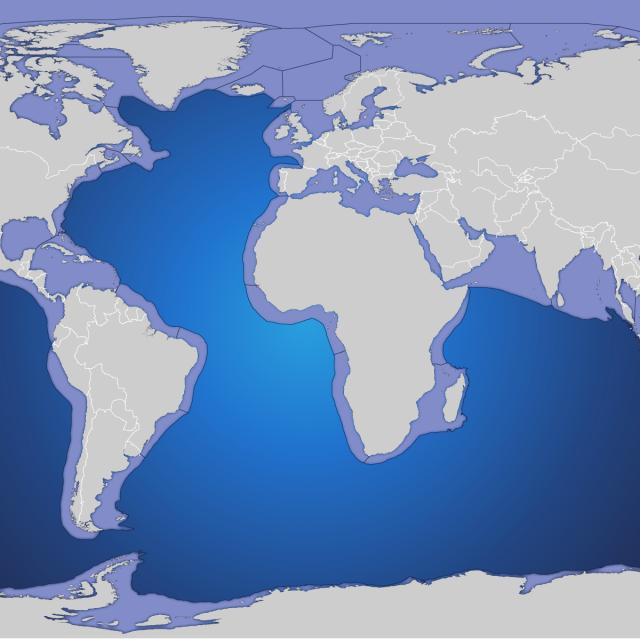
Focusing on the Large Marine Ecosystems (LMEs) of the world, this course will introduce the concept and practice of ecosystem-based management. LMEs occupy areas of coastal ocean at least 200 000 km² or greater in size. These coastal waters produce 12.6 trillion USD in ecosystem goods and services annually and are vitally important for billions of people around the globe.

Class Deals by MOOC List - Click here and see Coursera's Active Discounts, Deals, and Promo Codes.

Because LMEs are bounded by ocean features and are globally linked, management of human activities needs to occur in an integrated fashion across political boundaries and economic sectors (e.g. fishing, shipping, energy, tourism, and mining.) This represents a new type of management approached - shifting from single sector-based to multi-sector assessment and management within the spatial domain of the world's 66 Large Marine Ecosystems. There is global high-level support for this new approach and in this course, we will introduce the concepts and tools for assessing and managing LMEs.
Together, leaders and experts in a global movement to recover and sustain the goods and services of LMEs will introduce you to the mechanisms used for assessment (Transboundary Diagnostic Analysis), planning and implementation (Strategic Action Programme). Based on recent activities in implementation and practice of the LME approach in 22 projects around the globe, we will showcase examples of effective management at this scale, and highlight the challenges and issues. By the end of the online course, we hope you will be able to actively use this knowledge to advance sustainable development of the world’s oceans.
The course was created with the support and input of: the Global Environment Facility (GEF), the United Nations Development Program (UNDP), the National Oceanic and Atmospheric Administration (NOAA), UNESCO-IOC and IW:LEARN.

Syllabus

WEEK 1
What is the Large Marine Ecosystem Approach?
Introducing the Large Marine Ecosystem approach, ecosystem based management principles, and the five modules. There are three topics covered in this first week - ecosystem-based management, the concept of Large Marine Ecosystems, and the 5-module approach to assessment and management. As well as my lectures, there are also summaries of some key readings and links to other resources. We've included practice quizzes to help you recap and test your understanding of the key concepts as we move through the lessons. There is one graded quiz at the end of the week, which carries marks - but you may take the quiz more than once. At the end of this week, and all the other weeks, Dr Kenneth Sherman will share his insights about the topics we have covered.

WEEK 2
The Three Natural Science Modules
In this week, we deal with the three natural science modules within the five module approach.

WEEK 3
The Two Human Dimension Modules
We move onto the two human dimensions of the five module approach.

WEEK 4
Tools and Actions: the Transboundary Diagnostic Analysis and the Strategic Action Programme
This is the heart of the course - delving into the Transboundary Diagnostic Analysis (TDA) and Strategic Action Programme (SAP).

WEEK 5
Implementing transboundary marine Ecosystem-based management (EBM)
Moving into the application of the approaches and the tools we have been discussing - with a description of how LME projects are implemented.

WEEK 6
Taking it home: Examples of best practice
We have included a number of case studies of LMEs, inviting marine ecosystem managers and scientists from across our network to describe their work in implementing EBM.
Go to Class
MOOC List is learner-supported. When you buy through links on our site, we may earn an affiliate commission.

Related Courses

As above, so below: An introduction to soils, ecosystems and livelihoods in the Tropics (edX) EdX
KU Leuven University,KULeuvenX

As above, so below: An introduction to soils, ecosystems and livelihoods in the Tropics (edX)

The tropics are as beautiful and diverse below-ground as they are above-ground. Learn how to use knowledge about the natural variability in soil properties for the sustainable management of ecosystems and farms. Soils form the foundation of sustainable development. They grow our food, fiber and fuel, are a habitat for organisms, buffer and purify water and safeguard archaeological legacies.

Self Paced
Self-Paced
Beyond the Sustainable Development Goals (SDGs): Addressing Sustainability and Development (Coursera) Coursera
University of Michigan

Beyond the Sustainable Development Goals (SDGs): Addressing Sustainability and Development (Coursera)

We’re excited you’re here! This course, “Beyond the Sustainable Development Goals (SDGs): Addressing Sustainability and Development,” is the first course in the upcoming Sustainability and Development MasterTrack Certificate program (Fall 2020), but you can also take this course as a stand-alone learning opportunity.

Jun 10th 2026
5-12 Weeks
Ecology: Ecosystem Dynamics and Conservation (Coursera) Coursera
American Museum of Natural History,Howard Hughes Medical Institute

Ecology: Ecosystem Dynamics and Conservation (Coursera)

This course is an introduction to ecology and ecosystem dynamics using a systems thinking lens. Through a case study on Mozambique's Gorongosa National Park, learners will explore how scientists study ecosystems, and investigate the complex array of factors that inform management efforts.

May 25th 2026
5-12 Weeks
Water: Addressing the Global Crisis (edX) EdX
SDGAcademyX,SDG Academy

Water: Addressing the Global Crisis (edX)

We are living in a water stressed world. It is a global crisis and therefore we must act now! What can we do to save the planet and ensure availability of water for all by 2030? Water isthe source of all life. Without it, neither humans nor nature will survive. Yet lack of access to water is a rapidly growing problem and one of the world’s gravest risks. It is a global crisis.

Self Paced
Self-Paced
IUCN Red List of Ecosystems: The Global Standard for Assessing Risks to Ecosystems (FutureLearn) FutureLearn
Deakin University

IUCN Red List of Ecosystems: The Global Standard for Assessing Risks to Ecosystems (FutureLearn)

This course introduces the IUCN Red List of Ecosystems and its successful use and policy impact through real-world case studies. Learn how the Red List of Ecosystems is helping to sustain global biodiversity. Nature is under threat around the world. Understanding where ecosystems are at greatest risk allows us to act to sustain species and ecosystems.

Available Now
2 Weeks
Citizen Science: Living Soils, Growing Food (FutureLearn) FutureLearn
University of Dundee,Grow Observatory

Citizen Science: Living Soils, Growing Food (FutureLearn)

Learn about approaches to food growing that can help regenerate soil and solve environmental issues. Use regenerative growing practices in your own garden. Soil loss and degradation are serious issues all over the world. We need to find effective regenerative practices to solve many local and global environmental challenges. On this course, you’ll discover interesting things about your own soil and become part of the new GROW Citizen Observatory European-wide community.

No sessions available
3 Weeks
EPortfolio Self-development Study (EMMA) EMMA
Universitat Oberta de Catalunya

EPortfolio Self-development Study (EMMA)

ePortfolios have become increasingly popular based on their potential to be applied to a wide array of contexts as well as their ability to be used in a great variety of individual or organizational purposes. ePortfolios offer the opportunity to create and manage an online space of digital artefacts that provide evidence of competencies and abilities acquired over a specific period of time. In this way, ePortfolios can be designed to enhance traditional learning and teaching methods, record achievements, the Recognition of Prior Learning (RPL), assist individuals with Personal Development Planning (PDP) or the Personal Career Development (CPD), among others.

Self-Paced
Self-Paced
Ingénierie écologique (FUN) FUN
Université Virtuelle Environnement et Développement - UVED

Ingénierie écologique (FUN)

Restaurer des écosystèmes dégradés, dépolluer des milieux, créer des continuités écologiques, développer une agriculture plus respectueuse de l'environnement, sont autant de défis qui se posent aujourd'hui à nous. Pour y répondre, de plus en plus de réflexions et de pratiques se tournent vers l'ingénierie écologique, solutions que l'on dit "basées sur la nature". Ce MOOC vous propose d'en découvrir les fondements, les enjeux, les outils, les acteurs ainsi que les conditions de mise en œuvre.

No sessions available
4 Weeks
Microbiomes & Sustainability (edX) EdX
National University of Singapore,NUS

Microbiomes & Sustainability (edX)

The course is an introduction to microbiomes and sustainability. It argues that global microbiomes are fundamentally relevant to sustainability. Topics include principles of sustainability, sustainable development, microbiomes in humans and the environment, bioremediation, and bioretention. For more than 3.5 billion years microbes and their communities (microbiomes) have shaped the Earth and its inhabitants.

This course is archived
4 Weeks
What is Climate Change? (Coursera) Coursera
University of Colorado Boulder

What is Climate Change? (Coursera)

In this course, learners will become familiar with the scientific evidence that demonstrates human-caused climate change. We will explore how greenhouse gases cause the Earth to warm, and why our recent warming is attributed to human activities. We will also discuss where our climate is headed, including anticipated future temperature, precipitation, and sea level. Learners will engage with the consequences of these changes on our ecosystems, infrastructure, and communities.

Jun 1st 2026
3 Weeks