计算机系统基础(一) :程序的表示、转换与链接 (Coursera)

Offered by Nanjing University,
计算机系统基础(一) :程序的表示、转换与链接 (Coursera)

主要介绍高级语言程序中的数据类型及其运算、语句和过程调用等的机器级表示、转换与链接。

Class Deals by MOOC List - Click here and see Coursera's Active Discounts, Deals, and Promo Codes.

本课程主要介绍高级语言程序中的数据类型及其运算、语句和过程调用等是如何在计算机系统中实现的。主要包含三个主题:(1)表示。不同数据类型(如带符号整数、无符号整数、浮点数、数组、结构等)数据在寄存器或存储器中的表示和存储;指令的格式、编码及其在存储器中的存储;存储地址(指针)的表示。(2)转换。高级语言程序中的过程(函数调用)、循环、选择等语句与机器级代码之间的对应关系。(3)链接。多个可重定位目标文件如何链接生成可执行目标文件并加载到系统中。
通过本课程的学习,使学生能从程序员角度认识计算机系统,能够建立高级语言程序、ISA、OS、编译器、链接器等之间的相互关联,对指令在硬件上的执行过程和指令的底层硬件执行机制有一定的认识和理解,从而增强学生在程序调试、性能提升、程序移植和健壮性等方面的能力,并为后续的“计算机组成与设计”、“操作系统”、“编译原理”、“计算机体系结构”等课程打下坚实基础。

Go to Class
MOOC List is learner-supported. When you buy through links on our site, we may earn an affiliate commission.

Related Courses

Architecting Smart IoT Devices (Coursera) Coursera
EIT Digital

Architecting Smart IoT Devices (Coursera)

This course will teach you how to develop an embedded systems device. In order to reduce the time to market, many pre-made hardware and software components are available today. You'll discover all the available hardware and software components, such as processor families, operating systems, boards and networks. You'll also learn how to actually use and integrate these components.

Oct 19th 2026
5-12 Weeks
Introduction to Self-Driving Cars (Coursera) Coursera
University of Toronto

Introduction to Self-Driving Cars (Coursera)

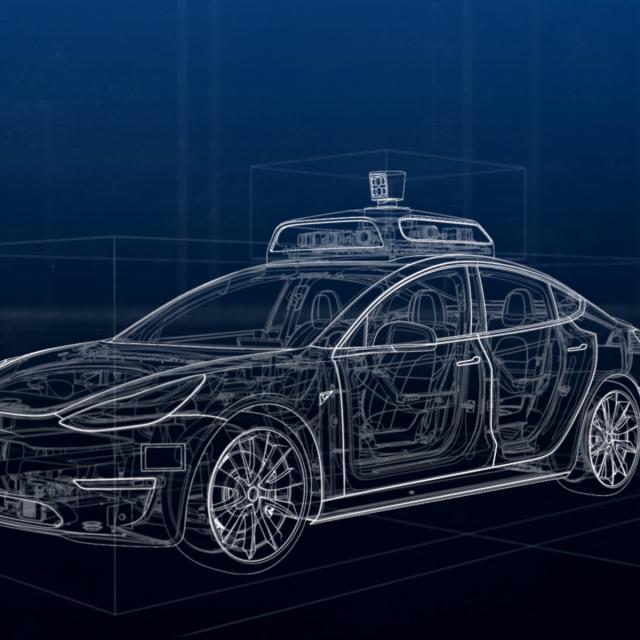
Welcome to Introduction to Self-Driving Cars, the first course in University of Toronto’s Self-Driving Cars Specialization. This course will introduce you to the terminology, design considerations and safety assessment of self-driving cars. By the end of this course, you will be able to: Understand commonly used hardware used for self-driving cars; Identify the main components of the self-driving software stack; Program vehicle modelling and control; Analyze the safety frameworks and current industry practices for vehicle development

Oct 19th 2026
5-12 Weeks
How Computers Work (Coursera) Coursera
University of London,Goldsmiths, University of London

How Computers Work (Coursera)

Computers are everywhere, they aren't just the desktops and laptops we use for work but the phones in our pockets and even the watches on our wrists are also computers. You probably use a computer every day and in fact you are reading this on a computer! Just because we use computers all the time, doesn't mean that we understand them, or find them easy to use. Computer Science is the science of computers, it is the field of knowledge that experts use to understand computer systems. Knowing a little computer science will help you understand the computers all around you.

Oct 19th 2026
4 Weeks
Computer Science: Algorithms, Theory, and Machines (Coursera) Coursera
Princeton University

Computer Science: Algorithms, Theory, and Machines (Coursera)

This course introduces the broader discipline of computer science to people having basic familiarity with Java programming. It covers the second half of our book Computer Science: An Interdisciplinary Approach (the first half is covered in our Coursera course Computer Science: Programming with a Purpose, to be released in the fall of 2018). Our intent is to demystify computation and to build awareness about the substantial intellectual underpinnings and rich history of the field of computer science.

Nov 2nd 2026
5-12 Weeks
Introduction to Software Product Management (Coursera) Coursera
University of Alberta

Introduction to Software Product Management (Coursera)

This course highlights the importance and role of software product management. It also provides an overview of the specialization, as well as its goals, structure, and expectations. The course explains the value of process, requirements, planning, and monitoring in producing better software. Upon successful completion of this course, you will be able to: relate software product management to better software products; recognize the role of a software product manager; reflect on how Agile principles will improve your own projects.

Oct 26th 2026
2 Weeks
Principles of Computing (Part 2) (Coursera) Coursera
Rice University

Principles of Computing (Part 2) (Coursera)

This two-part course introduces the basic mathematical and programming principles that underlie much of Computer Science. Understanding these principles is crucial to the process of creating efficient and well-structured solutions for computational problems. To get hands-on experience working with these concepts, we will use the Python programming language. The main focus of the class will be weekly mini-projects that build upon the mathematical and programming principles that are taught in the class.

Nov 2nd 2026
4 Weeks
Hypothesis-Driven Development (Coursera) Coursera
University of Virginia

Hypothesis-Driven Development (Coursera)

To deliver agile outcomes, you have to do more than implement agile processes- you have to create focus around what matters to your user and constantly test your ideas. This is easier said than done, but most of today’s high-functioning innovators have a strong culture of experimentation. In this course, you’ll learn how to identify the right questions at the right time, and pair them with the right methods to do just enough testing to make sure you minimize waste and maximize the outcomes you create with your user.

Oct 19th 2026
4 Weeks
Algorithmic Thinking (Part 2) (Coursera) Coursera
Rice University

Algorithmic Thinking (Part 2) (Coursera)

Experienced Computer Scientists analyze and solve computational problems at a level of abstraction that is beyond that of any particular programming language. This two-part class is designed to train students in the mathematical concepts and process of "Algorithmic Thinking", allowing them to build simpler, more efficient solutions to computational problems.

Nov 2nd 2026
4 Weeks
Programming Fundamentals (Coursera) Coursera
Duke University

Programming Fundamentals (Coursera)

Programming is an increasingly important skill, whether you aspire to a career in software development, or in other fields. This course is the first in the specialization Introduction to Programming in C, but its lessons extend to any language you might want to learn. This is because programming is fundamentally about figuring out how to solve a class of problems and writing the algorithm, a clear set of steps to solve any problem in its class.

Nov 2nd 2026
4 Weeks