Introduction to Self-Driving Cars (Coursera)

Offered by University of Toronto,
Introduction to Self-Driving Cars (Coursera)

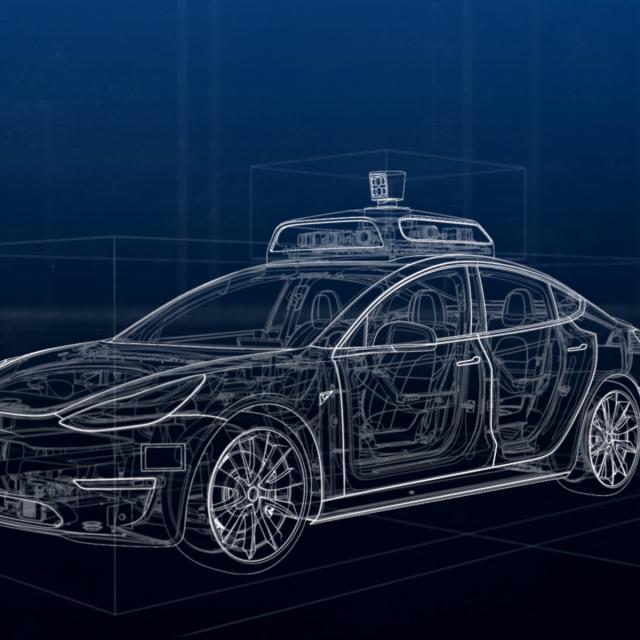
Welcome to Introduction to Self-Driving Cars, the first course in University of Toronto’s Self-Driving Cars Specialization. This course will introduce you to the terminology, design considerations and safety assessment of self-driving cars. By the end of this course, you will be able to: Understand commonly used hardware used for self-driving cars; Identify the main components of the self-driving software stack; Program vehicle modelling and control; Analyze the safety frameworks and current industry practices for vehicle development

Class Deals by MOOC List - Click here and see Coursera's Active Discounts, Deals, and Promo Codes.

For the final project in this course, you will develop control code to navigate a self-driving car around a racetrack in the CARLA simulation environment. You will construct longitudinal and lateral dynamic models for a vehicle and create controllers that regulate speed and path tracking performance using Python. You’ll test the limits of your control design and learn the challenges inherent in driving at the limit of vehicle performance.
This is an advanced course, intended for learners with a background in mechanical engineering, computer and electrical engineering, or robotics. To succeed in this course, you should have programming experience in Python 3.0, familiarity with Linear Algebra (matrices, vectors, matrix multiplication, rank, Eigenvalues and vectors and inverses), Statistics (Gaussian probability distributions), Calculus and Physics (forces, moments, inertia, Newton's Laws).
You will also need certain hardware and software specifications in order to effectively run the CARLA simulator: Windows 7 64-bit (or later) or Ubuntu 16.04 (or later), Quad-core Intel or AMD processor (2.5 GHz or faster), NVIDIA GeForce 470 GTX or AMD Radeon 6870 HD series card or higher, 8 GB RAM, and OpenGL 3 or greater (for Linux computers).

What You Will Learn
-Understand commonly used hardware used for self-driving cars
-Identify the main components of the self-driving software stack
-Program vehicle modelling and control

  • Analyze the safety frameworks and current industry practices for vehicle development

Course 1 of 4 in the Self-Driving Cars Specialization

Syllabus

WEEK 1
Welcome to the Self-Driving Cars Specialization!
This module will introduce you to the main concepts and layout of the specialization and discusses the major advances made in the field over the last two decades, highlighting the most recent progress made by major players in terms of safety and performance metrics, where available.
The Requirements for Autonomy
Self-driving cars present an extremely rich and inter-disciplinary problem. This module introduces the language and structure of the problem definition, defining the most salient elements of the driving task and the driving environment.

WEEK 2
Self-Driving Hardware and Software Architectures
System architectures for self-driving vehicles are extremely diverse, as no standardized solution has yet emerged. This module describes both the hardware and software architectures commonly used and some of the tradeoffs in terms of cost, reliability, performance and complexity that constrain autonomous vehicle design.

WEEK 3
Safety Assurance for Autonomous Vehicles
As the self-driving domain matures, the requirement for safety assurance on public roads become more critical to self-driving developers. You will evaluate the challenges and approaches employed to date to tackle the immense challenge of assuring the safe operation of autonomous vehicles in an uncontrolled public road driving environment.

WEEK 4
Vehicle Dynamic Modeling
The first task for automating an driverless vehicle is to define a model for how the vehicle moves given steering, throttle and brake commands. This module progresses through a sequence of increasing fidelity physics-based models that are used to design vehicle controllers and motion planners that adhere to the limits of vehicle capabilities.

WEEK 5
Vehicle Longitudinal Control
Longitudinal control of an autonomous vehicle involves tracking a speed profile along a fixed path, and can be achieved with reasonable accuracy using classic control techniques. This week, you will learn how to develop a baseline controller that is applicable for a significant subset of driving conditions, which include most non-evasive or highly-dynamic motions.

WEEK 6
Vehicle Lateral Control
This week, you will learn about how lateral vehicle control ensures that a fixed path through the environment is tracked accurately. You will see how to define geometry of the path following control problem and develop both a simple geometric control and a dynamic model predictive control approach.

WEEK 7
Putting it all together
For the last week of the course, now you will get hands on with a simulation of an autonomous vehicle that requires longitudinal and lateral vehicle control design to track a predefined path along a racetrack with a given speed profile. You are encouraged to modify the speed profile and/or path to improve their lap time, without any requirement to do so. Work and play!

Go to Class
MOOC List is learner-supported. When you buy through links on our site, we may earn an affiliate commission.

Related Courses

Making Your First Virtual Reality Game (Coursera) Coursera
University of London,Goldsmiths, University of London

Making Your First Virtual Reality Game (Coursera)

Virtual Reality is one of the most exciting experiences that technology can give us. The immersion and presence you can have in VR is quite unlike any other medium. Like many others, you are excited about the possibilities of this new medium and want to get started developing your own VR experiences. This course will take you through all of the steps you need to create a VR game or other project.

Jun 8th 2026
5-12 Weeks
Networking and Security in iOS Applications (Coursera) Coursera
University of California, Irvine

Networking and Security in iOS Applications (Coursera)

You will learn to extend your knowledge of making iOS apps so that they can securely interact with web services and receive push notifications. You'll learn how to store data securely on a device using Core Data. You’ll also learn to securely deploy apps to the App Store and beta users over-the-air. The format of the course is through a series of code tutorials. We will walk you through the creation of several apps that you can keep as a personal app toolbox. When you make your own apps after this course, you can bring in these capabilities as needed. When necessary we pop out of the code tutorials to talk about concepts at a higher level so that what you are programming makes sense.

Jun 8th 2026
4 Weeks
Agile Meets Design Thinking (Coursera) Coursera
University of Virginia

Agile Meets Design Thinking (Coursera)

Despite everyone's good intentions, hard work and solid ideas, too many projects end up creating unneeded, unusable, and unsellable products. But it doesn't have to be this way. Agile and design thinking offer a different--and effective--approach to product development, one that results in valuable solutions to meaningful problems. In this course, you’ll learn how to determine what's valuable to a user early in the process--to frontload value--by focusing your team on testable narratives about the user and creating a strong shared perspective.

Jun 8th 2026
4 Weeks
Reviews & Metrics for Software Improvements (Coursera) Coursera
University of Alberta

Reviews & Metrics for Software Improvements (Coursera)

This course covers techniques for monitoring your projects in order to align client needs, project plans, and software production. It focuses on metrics and reviews to track and improve project progress and software quality. What you will learn: apply techniques to measure and visualize project progress, integrate Agile review practices to increase project visibility; reflect on lessons learned in software projects through retrospective exercises; improve project and process quality through ongoing measurement

Jun 8th 2026
4 Weeks
The Raspberry Pi Platform and Python Programming for the Raspberry Pi (Coursera) Coursera
University of California, Irvine

The Raspberry Pi Platform and Python Programming for the Raspberry Pi (Coursera)

The Raspberry Pi is a small, affordable single-board computer that you will use to design and develop fun and practical IoT devices while learning programming and computer hardware. In addition, you will learn how to set up up the Raspberry Pi environment, get a Linux operating system running, and write and execute some basic Python code on the Raspberry Pi. You will also learn how to use Python-based IDE (integrated development environments) for the Raspberry Pi and how to trace and debug Python code on the device.

Jun 8th 2026
4 Weeks
The Arduino Platform and C Programming (Coursera) Coursera
University of California, Irvine

The Arduino Platform and C Programming (Coursera)

The Arduino is an open-source computer hardware/software platform for building digital devices and interactive objects that can sense and control the physical world around them. In this class you will learn how the Arduino platform works in terms of the physical board and libraries and the IDE (integrated development environment). You will also learn about shields, which are smaller boards that plug into the main Arduino board to perform other functions such as sensing light, heat, GPS tracking, or providing a user interface display. The course will also cover programming the Arduino using C code and accessing the pins on the board via the software to control external devices.

Jun 8th 2026
4 Weeks
TDD - Desenvolvimento de Software Guiado por Testes (Coursera) Coursera
Instituto Tecnológico de Aeronáutica

TDD - Desenvolvimento de Software Guiado por Testes (Coursera)

Neste curso, assumimos que você já sabe projetar e desenvolver programas mais complexos em Java, com método e organização graças às boas práticas e princípios exercitados no curso anterior; mas você talvez não se sinta ainda confortável em projetar programas usando técnicas ágeis, como o desenvolvimento guiado por testes (TDD).

Jun 8th 2026
4 Weeks
Hardware Security (Coursera) Coursera
University of Maryland, College Park

Hardware Security (Coursera)

In this course, we will study security and trust from the hardware perspective. Upon completing the course, students will understand the vulnerabilities in current digital system design flow and the physical attacks to these systems. They will learn that security starts from hardware design and be familiar with the tools and skills to build secure and trusted hardware.

Jun 8th 2026
5-12 Weeks
Software Processes and Agile Practices (Coursera) Coursera
University of Alberta

Software Processes and Agile Practices (Coursera)

This course delves into a variety of processes to structure software development. It also covers the foundations of core Agile practices, such as Extreme Programming and Scrum. Upon successful completion of this course, you will be able to: distinguish between different process models for organizing software production; gauge the applicability of process models for a software development project; apply the fundamentals of Agile software development and management practices.

Jun 8th 2026
4 Weeks