IoT Devices (Coursera)

IoT Devices (Coursera)

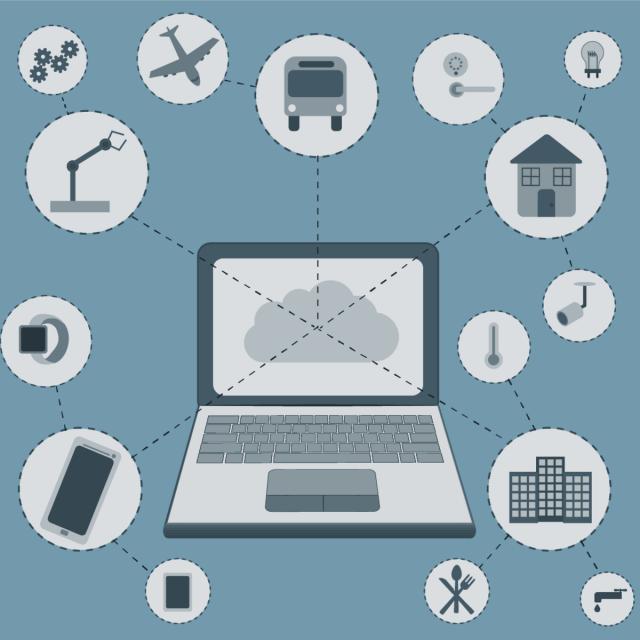
The Internet of Things (IoT) stands to be the next revolution in computing. Billions of data-spouting devices connected to the Internet are already fundamentally changing the way we live and work. This course teaches a deep understanding of IoT technologies from the ground up. Students will learn IoT device programming (Arduino and Raspberry Pi), sensing and actuating technologies, IoT protocol stacks (Zigbee, 5G, NFC, MQTT, etc), networking backhaul design and security enforcement, data science for IoT, and cloud-based IoT platforms such as AWS IoT.

Class Deals by MOOC List - Click here and see Coursera's Active Discounts, Deals, and Promo Codes.

Students will be guided through laboratory assignments designed to give them practical real-world experience, where they will deploy a distributed wifi monitoring service, a cloud-based IoT service platform serving tens of thousands of heartbeat sensors, and more. Students will emerge from the class with a cutting-edge education on this rapidly emerging technology segment, and with the confidence to carry out tasks they will commonly encounter in industrial settings. Important: This whole series of courses consists in part of practical experimentation using actual hardware, which you will need to acquire. (Cost may vary between 100 and 200 USD depending on your location). Most parts that are needed for the first course, will be re-used in the following courses.

What You Will Learn

  • Assembly of networked devices, programming of networked devices

Course 1 of 4 in the Hands-on Internet of Things Specialization

Syllabus

WEEK 1
Orientation, Basics and Lab instructions
Welcome to our first course on Internet of Things! You will become familiar with the course and our learning environment. The orientation will also help you obtain the technical skills required to navigate the course.In this week you'll see that The Internet of Things is amazing, but it's not like it's some completely new thing. The amazing devices and technologies being are made up of systems, protocols, and architectures that have been around for decades. So in order to understand IoT, it's important to understand some key pieces of the Internet. We'll also get you started on the lab project - the best way to get your hands on things. In this practical lab we will guide you to gain experience with Internet of Things devices. You will do this by implementing a 2019 Honda Civic. In particular, you will be implementing a vehicular network and computation infrastructure comparable to that in the 2019 Honda Civic. Your infrastructure will perform real-time communications within the automobile to perform life-saving features such as obstacle avoidance and lane departure mitigation. Doing this will give you strong experience in programming IoT components, as well as teach you about vehicular networks, an emerging powerful use case for IoT.

WEEK 2
Devices: IoT circuits
In this week we will describe the foundational notions of electricity and IoT circuits you will need to build real IoT devices. We will start off by describing what electricity is and how it flows through electronics. We will present what electronic components are out there, how to choose the set you need for your target system, and how to construct the circuitry between them to build the logic underlying your device.

WEEK 3
IoT Devices Architecture
In computing, we have the concept of architecture as well. You don't just design computing systems. In this module, you will learn about how IoT systems are architected. We will start off by describing the higher-level components used to build IoT systems such as ICs and breakout modules. We will present computational platforms used in constructing real IoT devices, typical components used therein, and alternative designs used to connect them together.

WEEK 4
Devices: Arduino Programming and Lab Submission
In this week, we will study the design of IoT platforms - how their components are assembled together, and how software running on top orchestrates their actions to perform their intended purpose. We'll also collect your submission of the lab project you started in week 1.


Go to Class
MOOC List is learner-supported. When you buy through links on our site, we may earn an affiliate commission.

Related Courses

RF and millimeter-Wave Circuit Design (Coursera) Coursera
Eindhoven University of Technology

RF and millimeter-Wave Circuit Design (Coursera)

This unique Master-level course offered by the Center for Wireless Technology Eindhoven (CWT/e) of the Eindhoven University of Technology, The Netherlands, provides students with in-depth knowledge and hands-on experience on RF and mmWave circuit design. The course covers the topics on how to derive the RF wireless systems specifications, and how to design the main building blocks of a transceiver, i.e., low noise amplifier, power amplifier, RF mixers, oscillators, and PLL frequency synthesizers. It is divided into two parts: (1) theoretical lectures will cover the basis of RF and mmWave Circuit Design; and (2) design labs will include simulation and implementation of these circuits.

Sep 7th 2026
5-12 Weeks
Introdução ao Big Data (Coursera) Coursera
FIA Business School

Introdução ao Big Data (Coursera)

Este curso é indicado para profissionais que desejam entender de forma fácil o que é Big Data, conhecer algumas tecnologias de Big Data, ter acesso a algumas aplicações de Analytics, Internet das Coisas - IOT e de Big Data. Ao final do curso você será capaz de participar de um projeto de Big Data contribuindo com estratégias e direcionando o projeto para a escolha da adequada técnica de análise de dados.

Sep 7th 2026
4 Weeks
Cloud Computing Security (Coursera) Coursera
University of Colorado System

Cloud Computing Security (Coursera)

In this MOOC, we will learn Cloud Computing basics using AWS as an example, We will guide you to create AWS account, planning AWS resources for your cloud systems, create AWS EC2 instances, access them and configure the popular LAMP web services with MySQL database. We will guide you to create user accounts for your programmer or operators using AWS Identify and Access management GUI, Register your domain name and setup DNS entry for your servers using AWS Route 53 in 22 mintues! and show you how to use AWS Command Line interface to create and managing instances and services programmatically.

Sep 7th 2026
4 Weeks
Cadeia de Suprimentos na Nuvem (Coursera) Coursera
FIA Business School

Cadeia de Suprimentos na Nuvem (Coursera)

Nossas boas-vindas ao Curso Cadeia de Suprimentos na Nuvem. Neste curso, você aprenderá como o supply chain pode ampliar o valor da empresa explorando as diversas ferramentas disponíveis em cloud para potencializar a visibilidade e a responsividade da cadeia, melhorando o nível de serviço prestado aos clientes.

Sep 14th 2026
5-12 Weeks
Arduino y algunas aplicaciones (Coursera) Coursera
Universidad Nacional Autónoma de México

Arduino y algunas aplicaciones (Coursera)

Arduino es una iniciativa empleada para simplificar el uso de los microcontroladores, que surgió en 2005 como resultado de un proyecto de estudiantes en el Instituto IVREA. Nació con el objetivo de disminuir el costo de los microcontroladores, que entonces los estudiantes empleaban para sus proyectos y que resultaban demasiado costosos.

Sep 14th 2026
3 Weeks
AWS Cloud Practitioner Essentials (Coursera) Coursera
AWS

AWS Cloud Practitioner Essentials (Coursera)

Welcome to AWS Cloud Practitioner Essentials. If you’re new to the cloud, whether you’re in a technical or non-technical role such as finance, legal, sales, marketing, this course will provide you with an understand of fundamental AWS Cloud concepts to help you gain confidence to contribute to your organization’s cloud initiatives. This course is also the starting point to prepare for your AWS Certified Cloud Practitioner certification whenever it’s convenient for you.

Sep 7th 2026
5-12 Weeks
Cloud Computing Concepts, Part 1 (Coursera) Coursera
University of Illinois at Urbana-Champaign

Cloud Computing Concepts, Part 1 (Coursera)

Cloud computing systems today, whether open-source or used inside companies, are built using a common set of core techniques, algorithms, and design philosophies—all centered around distributed systems. Learn about such fundamental distributed computing "concepts" for cloud computing. Some of these concepts include: clouds, MapReduce, key-value/NoSQL stores, classical distributed algorithms, widely-used distributed algorithms, scalability, trending areas, and much, much more!

Aug 31st 2026
5-12 Weeks
Internet of Things: Communication Technologies (Coursera) Coursera
University of California, San Diego

Internet of Things: Communication Technologies (Coursera)

Have you wondered how “Things” talk to each other and the cloud? Do you understand the alternatives for conveying latency-sensitive real time data versus reliable signaling data? Building on the skills from the Sensing and Actuation course, we will explore protocols to exchange information between processors.

Sep 7th 2026
4 Weeks
Introduction to Embedded Machine Learning (Coursera) Coursera
Edge Impulse

Introduction to Embedded Machine Learning (Coursera)

Machine learning allows us to teach computers to make predictions and decisions based on data and learn from experiences. In recent years, incredible optimizations have been made to machine learning algorithms, software frameworks, and embedded hardware. Thanks to this, running deep neural networks and other complex machine learning algorithms is possible on low-power devices like microcontrollers. This course will give you a broad overview of how machine learning works, how to train neural networks, and how to deploy those networks to microcontrollers.

Sep 13th 2026
3 Weeks
Internet of Things Capstone: Build a Mobile Surveillance System (Coursera) Coursera
University of California, San Diego

Internet of Things Capstone: Build a Mobile Surveillance System (Coursera)

In the Capstone project for the Internet of Things specialization, you will design and build your own system that uses at least 2 sensors, at least 1 communication protocol and at least 1 actuator. You will have a chance to revisit and apply what you have learned in our courses to achieve a robust, practical and/or fun-filled project. We absolutely encourage you to design whatever you can think up! This is your chance to be creative or to explore an idea that you have had. But if you don’t have your own idea, we provide the description of a surveillance system, for you to build.

Sep 14th 2026
4 Weeks
Introduction to Cloud Computing (Coursera) Coursera
IBM

Introduction to Cloud Computing (Coursera)

Start your cloud computing journey with this self-paced introductory course! Whether you need general cloud computing knowledge for school or business, or you are considering a career change, this beginner-friendly course is right for you. In this course you’ll learn about essential characteristics of cloud computing and emerging technologies supported by cloud. You’ll explore cloud service models, including Infrastructure as a Service (IaaS), Platform as a Service (PaaS), Software as a Service (SaaS), and Public, Private, and Hybrid deployment models.

Sep 7th 2026
5-12 Weeks
IoT Communications and Networks (Coursera) Coursera
Institut Mines-Telecom

IoT Communications and Networks (Coursera)

By presenting the building blocks of the IoT network architecture, this MOOC will help learners adapt to the fast changing communications and networking environment of IoT. The IoT world represents billions of sophisticated objects, such as sensors, actuators and meters, that are deployed nearly everywhere, in homes, hospitals, factories, cities, and are connected to the Internet. However, they come with limited capacity in terms of memory storage, computational power and energy; how can these objects then ensure network reliability and timely transmission?

Sep 14th 2026
4 Weeks