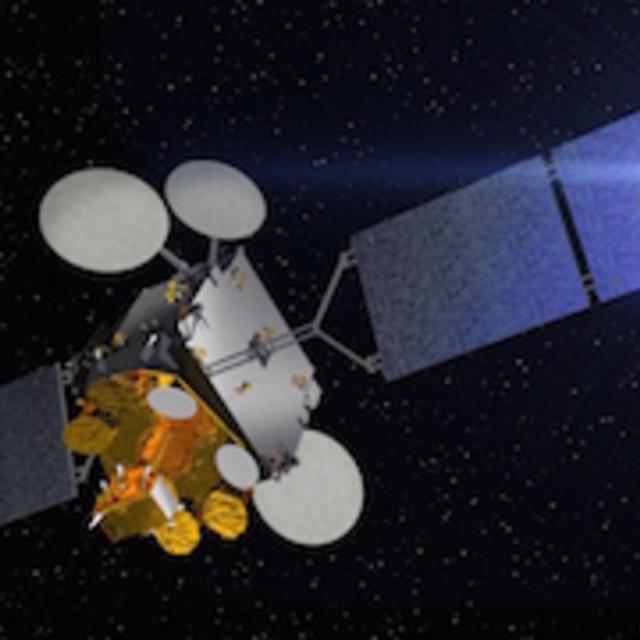
Introduction to Satellite Communications (Coursera)

Introduction to Satellite Communications (Coursera)

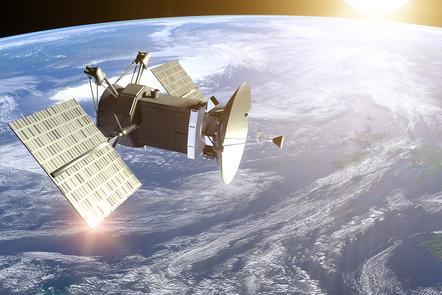
How is a satellite built? How do they fly? How do they communicate and how does the network operate? You will get all the answers in this course from teachers and researchers from three schools associated with Institut Mines-Télécom. The course is made of : teaching videos, equipment demonstrations and simulation programs. They will guide you through the discovery of satellite communications. Professionals in the space field will share there vocation for this scientific and technical sector.

Class Deals by MOOC List - Click here and see Coursera's Active Discounts, Deals, and Promo Codes.

Have you ever wanted to know more about transponders, the geostationary orbit, QPSK modulation, channel coding, link budget, TCP over large bandwdith x delay product links ?
This course is for you! This course is available in English: French-speaking lecturers with English subtitles and fully translated contents (slides, practices). This MOOC is supported by the Patrick and Lina Drahi Foundation.

Syllabus

WEEK 1
Satellites at our service
This module provides an introduction to satellite communications. Why using satellites ? What sort of communication services ? How much does it cost ?

WEEK 2
Satellite and communications
This module describes the overall architecture of a satellite communications system, discusses the concept of orbit and what are the typical sub-systems of a satellite

WEEK 3
Digital communications
This module discusses the basics of information transmission

WEEK 4
Communication techniques
This module covers advanced transmission concepts such as modulation and coding. These operations are the core of a communications system impacting the service performance.

WEEK 5
Hardware and equipments
This module lists the equipments that take part to the communication chain on ground and how the overall communication performance can be assessed

WEEK 6
Networking and services
This module explains how services such as voice, television and Internet access are provided by means of communications satellites.

Go to Class
MOOC List is learner-supported. When you buy through links on our site, we may earn an affiliate commission.

Related Courses

Haptics: Introduction to Haptics (Stanford Online) Lagunita Stanford Online
Stanford University

Haptics: Introduction to Haptics (Stanford Online)

Participants in this class will learn how to build, program, and control haptic devices, which are mechatronic devices that allow users to feel virtual or remote environments. In the process, participants will gain an appreciation for the capabilities and limitations of human touch, develop an intuitive connection between equations that describe physical interactions and how they feel, and gain practical interdisciplinary engineering skills related to robotics, mechanical engineering, electrical engineering, bioengineering, and computer science.

Self Paced
Self-Paced
Industrial Applications of AI (Coursera) Coursera
L&T EduTech

Industrial Applications of AI (Coursera)

The course Embarks on a transformative learning journey exploring the power of Artificial Intelligence across diverse fields such as electrical, mechanical, civil, and general applications. This course elevates the learner’s insight on AI towards the real-world practices by bridging the gap between theory and practical applications. It also provides hands-on experience of applying AI algorithms into potential applications.

Jun 15th 2026
5-12 Weeks
Physics 102 - Electric Charges and Fields (Coursera) Coursera
Rice University

Physics 102 - Electric Charges and Fields (Coursera)

This course serves as an introduction to the physics of electricity and magnetism. Upon completion, learners will have an understanding of how the forces between electric charges are described by fields, and how these fields are related to electrical circuits. They will gain experience in solving physics problems with tools such as graphical analysis, algebra, vector analysis, and calculus. The course follows the typical progression of topics of a first-semester university physics course: charges, electric forces, electric fields potential, magnetic fields, currents, magnetic moments, electromagnetic induction, and circuits.

Jun 22nd 2026
4 Weeks
Physics 102 - Magnetic Fields and Faraday's Law (Coursera) Coursera
Rice University

Physics 102 - Magnetic Fields and Faraday's Law (Coursera)

This course serves as an introduction to the physics of electricity and magnetism. Upon completion, learners will have an understanding of how the forces between electric charges are described by fields, and how these fields are related to electrical circuits. They will gain experience in solving physics problems with tools such as graphical analysis, algebra, vector analysis, and calculus. The course follows the typical progression of topics of a first-semester university physics course: charges, electric forces, electric fields potential, magnetic fields, currents, magnetic moments, electromagnetic induction, and circuits.

Jun 22nd 2026
4 Weeks
Interfacing with the Arduino (Coursera) Coursera
University of California, Irvine

Interfacing with the Arduino (Coursera)

Arduino senses the environment by receiving inputs from add-on devices such as sensors, and can control the world around it by adjusting lights, motors, and other actuators. In this class you will learn how and when to use the different types of sensors and how to connect them to the Arduino. Since the external world uses continuous or analog signals and the hardware is digital you will learn how these signals are converted back-and-forth and how this must be considered as you program your device. You'll also learn about the use of Arduino-specific shields and the shields software libraries to interface with the real world.

Jun 22nd 2026
4 Weeks
Linux System Programming and Introduction to Buildroot (Coursera) Coursera
University of Colorado Boulder

Linux System Programming and Introduction to Buildroot (Coursera)

This course provides an overview of System Programming for the Linux operating system, or software which is interfacing directly with the Linux Kernel and C library. The basic components of a Linux Embedded System, including kernel and root filesystem details are discussed. The Buildroot build system is introduced, which students use to build their own custom Embedded Linux system through programming assignments.

Jun 15th 2026
4 Weeks
Microwave engineering and antennas (Coursera) Coursera
Eindhoven University of Technology

Microwave engineering and antennas (Coursera)

This unique Master-level course provides you with in-depth know-how of microwave engineering and antennas. The course combines both passive and active microwave circuits as well as antenna systems. Future applications, like millimeter-wave 5G/beyond-5G wireless communications or automotive radar, require experts that can co-design highly integrated antenna systems that include both antennas and microwave electronics. We will provide you with the required theoretical foundation as well as hands-on experience using state-of-the-art design tools. The web lectures are supported by many on-line quizzes in which you can practice the background theory.

Jun 8th 2026
5-12 Weeks
Equivalent Circuit Cell Model Simulation (Coursera) Coursera
University of Colorado Boulder,University of Colorado System

Equivalent Circuit Cell Model Simulation (Coursera)

In this course, you will learn the purpose of each component in an equivalent-circuit model of a lithium-ion battery cell, how to determine their parameter values from lab-test data, and how to use them to simulate cell behaviors under different load profiles.

Jun 15th 2026
5-12 Weeks
Physics 102 - Electric Potential and DC Circuits (Coursera) Coursera
Rice University

Physics 102 - Electric Potential and DC Circuits (Coursera)

This course serves as an introduction to the physics of electricity and magnetism. Upon completion, learners will have an understanding of how the forces between electric charges are described by fields, and how these fields are related to electrical circuits. They will gain experience in solving physics problems with tools such as graphical analysis, algebra, vector analysis, and calculus.

Jun 22nd 2026
3 Weeks