Physics 102 - Electric Charges and Fields (Coursera)

Offered by Rice University,
Physics 102 - Electric Charges and Fields (Coursera)

This course serves as an introduction to the physics of electricity and magnetism. Upon completion, learners will have an understanding of how the forces between electric charges are described by fields, and how these fields are related to electrical circuits. They will gain experience in solving physics problems with tools such as graphical analysis, algebra, vector analysis, and calculus. The course follows the typical progression of topics of a first-semester university physics course: charges, electric forces, electric fields potential, magnetic fields, currents, magnetic moments, electromagnetic induction, and circuits.

Class Deals by MOOC List - Click here and see Coursera's Active Discounts, Deals, and Promo Codes.

Each module contains reading links to a free textbook, complete video lectures, conceptual quizzes, and a set of homework problems. Once the modules are completed, the course ends with an exam. This comprehensive course series is similar in detail and rigor to what is taught on-campus. It will thoroughly prepare learners for their upcoming introductory physics courses, or more advanced courses in physics.

Course 1 of 4 in the Introduction to Electricity and Magnetism Specialization

Syllabus

WEEK 1: Charge!
WEEK 2: Electric Field
WEEK 3: Gauss's Law
WEEK 4: EXAM
Go to Class
MOOC List is learner-supported. When you buy through links on our site, we may earn an affiliate commission.

Related Courses

Interfacing with the Arduino (Coursera) Coursera
University of California, Irvine

Interfacing with the Arduino (Coursera)

Arduino senses the environment by receiving inputs from add-on devices such as sensors, and can control the world around it by adjusting lights, motors, and other actuators. In this class you will learn how and when to use the different types of sensors and how to connect them to the Arduino. Since the external world uses continuous or analog signals and the hardware is digital you will learn how these signals are converted back-and-forth and how this must be considered as you program your device. You'll also learn about the use of Arduino-specific shields and the shields software libraries to interface with the real world.

Jun 22nd 2026
4 Weeks
Physics 101 - Rotational Motion and Gravitation (Coursera) Coursera
Rice University

Physics 101 - Rotational Motion and Gravitation (Coursera)

This course serves as an introduction to the physics of rotational motion and gravitation. Upon completion, learners will have an understanding of how mathematical laws and conservation principles describe the motions and interactions of objects all around us. They will gain experience in solving physics problems with tools such as graphical analysis, algebra, vector analysis, and calculus.

Jun 22nd 2026
4 Weeks
Light and Materials (Coursera) Coursera
Rice University

Light and Materials (Coursera)

This second course serves as an introduction to the physics of waves and light. Upon completion, learners will understand how mathematical laws and conservation principles describe wave propagation and light in the context of both geometrical and physical optics. Learners will gain experience in solving physics problems with tools such as graphical analysis, algebra, vector analysis, and calculus.

Jun 22nd 2026
3 Weeks
Electrodynamics: In-depth Solutions for Maxwell’s Equations (Coursera) Coursera
Korea Advanced Institute of Science and Technology - KAIST

Electrodynamics: In-depth Solutions for Maxwell’s Equations (Coursera)

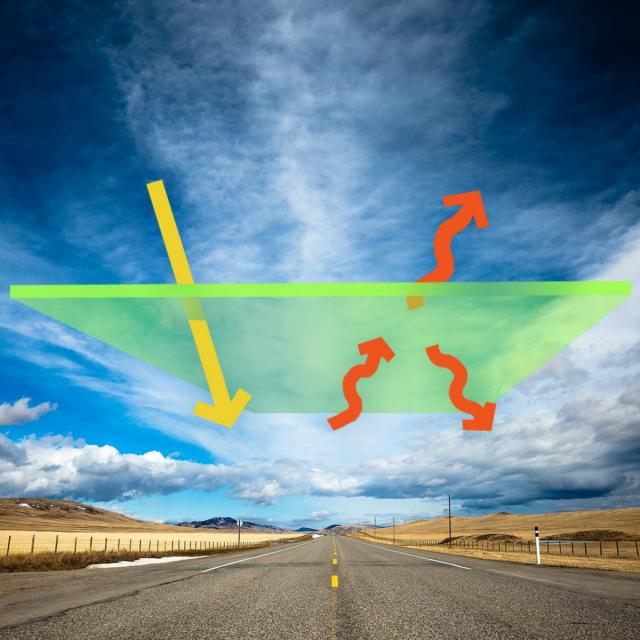
This course is the fourth course in the Electrodynamics series, and is directly proceeded by Electrodynamics: Electric and Magnetic Fields. Previously, we have learned about visualization of fields and solutions which were not time dependent. Here, we will return to Maxwell's Equations and use them to produce wave equations which can be used to analyze complex systems, such as oscillating dipoles. We will also introduce AC circuits, and how they can be simplified, solved, and applied.

Jun 22nd 2026
5-12 Weeks
Light Emitting Diodes and Semiconductor Lasers (Coursera) Coursera
University of Colorado Boulder

Light Emitting Diodes and Semiconductor Lasers (Coursera)

You will learn about semiconductor light emitting diodes (LEDs) and lasers, and the important rules for their analysis, planning, design, and implementation. You will also apply your knowledge through challenging homework problem sets to cement your understanding of the material and prepare you to apply in your career.

Jun 22nd 2026
5-12 Weeks
Astro 101: Black Holes (Coursera) Coursera
University of Alberta

Astro 101: Black Holes (Coursera)

What is a black hole? Do they really exist? How do they form? How are they related to stars? What would happen if you fell into one? How do you see a black hole if they emit no light? What’s the difference between a black hole and a really dark star? Could a particle accelerator create a black hole? Can a black hole also be a worm hole or a time machine? In Astro 101: Black Holes, you will explore the concepts behind black holes. Using the theme of black holes, you will learn the basic ideas of astronomy, relativity, and quantum physics.

Jun 22nd 2026
5-12 Weeks
Physics 102 - AC Circuits and Maxwell's Equations (Coursera) Coursera
Rice University

Physics 102 - AC Circuits and Maxwell's Equations (Coursera)

This course serves as an introduction to the physics of electricity and magnetism. Upon completion, learners will have an understanding of how the forces between electric charges are described by fields, and how these fields are related to electrical circuits. They will gain experience in solving physics problems with tools such as graphical analysis, algebra, vector analysis, and calculus. The course follows the typical progression of topics of a first-semester university physics course: charges, electric forces, electric fields potential, magnetic fields, currents, magnetic moments, electromagnetic induction, and circuits.

Jun 22nd 2026
3 Weeks
Mechanics: Motion, Forces, Energy and Gravity, from Particles to Planets (Coursera) Coursera
UNSW Sydney - University of New South Wales

Mechanics: Motion, Forces, Energy and Gravity, from Particles to Planets (Coursera)

Most of the phenomena in the world around you are, at the fundamental level, based on physics, and much of physics is based on mechanics. Mechanics begins by quantifying motion, and then explaining it in terms of forces, energy and momentum. This allows us to analyse the operation of many familiar phenomena around us, but also the mechanics of planets, stars and galaxies.

Jun 22nd 2026
5-12 Weeks
Oscillators and Waves (Coursera) Coursera
Rice University

Oscillators and Waves (Coursera)

This first course serves as an introduction to the physics of waves and light. Upon completion, learners will understand how mathematical laws and conservation principles describe wave propagation and light in the context of both geometrical and physical optics. Learners will gain experience in solving physics problems with tools such as graphical analysis, algebra, vector analysis, and calculus.

Jun 22nd 2026
4 Weeks
Archaeoastronomy (Coursera) Coursera
Politecnico di Milano

Archaeoastronomy (Coursera)

Archaeoastronomy is the “science of stars and stones”: it studies the relationships between the ancient monuments and the sky, in order to gain a better understanding of the ideas of the architects of the past and of their religious and symbolic world. The course provides the first complete, easy introduction to this fascinating discipline.

Jun 22nd 2026
5-12 Weeks