Global Systemic Risk (Coursera)

Offered by Princeton University,
Global Systemic Risk (Coursera)

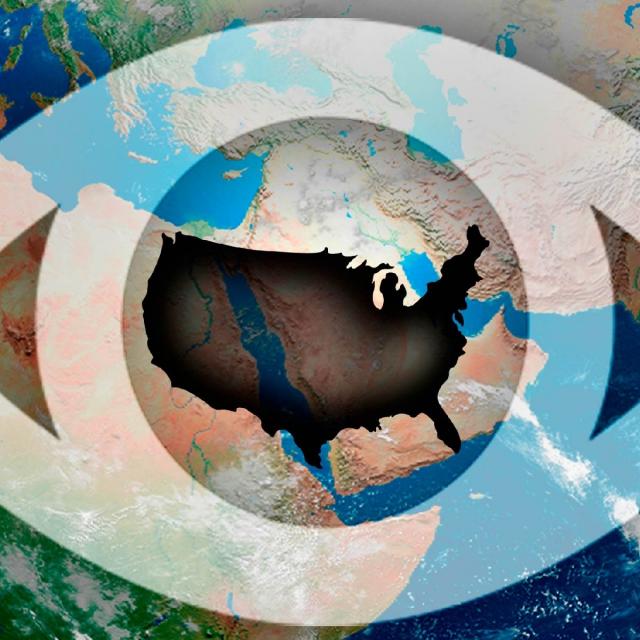
What is globalization and how does it work? How can we understand the process as a whole? How are the parts of the world linked? What are the risks of living in a world where “no one is in charge”? This course introduces students to systems thinking, network theory, and risk analysis and uses these tools to better understand the process of globalization. Focusing on trade, finance, and epidemiology, it analyzes potential challenges to the current global order.

Class Deals by MOOC List - Click here and see Coursera's Active Discounts, Deals, and Promo Codes.

The course will be of interest to those studying global affairs, system dynamics, and world governance. It offers a set of heuristics that students can use to analyze contemporary global challenges. Linking the recording of Abbey Road to the COVID-19 pandemic provides new insights into the apparently chaotic world around us.
Complex systems form the backbone of our increasingly interconnected and interdependent society. What were once more localized economies, supply chains, and social-ecological systems are now rapidly globalizing, and interacting with one another across countless spatial and temporal scales as technologies expand at ever greater velocities. These tightly coupled systems deliver greater efficiency and prosperity, but at the cost of greater fragility and the threat of catastrophic failure. This “global systemic risk” has implications in all functional domains affecting our daily lives—from the global financial system to healthcare, to critical infrastructure networks.
Organized with 7-10 minute classes grouped together into longer modules, the course will have a linear “core” curriculum presented at the introductory level, with the potential for optional offshoots that give learners a more in-depth look into certain areas with more technical content.

What You Will Learn

  • We introduce several new analytical concepts and tools including globalization, complexity, networks, and risk analysis.
  • We use these to explore the contemporary world and the dynamics behind our modern life.

Syllabus

WEEK 1
Introduction, What is Globalization, Debating Globalization
Welcome to Week 1 in which we define and analyze what we mean by globalization. In these lectures, you will be introduced to the origins, benefits, and costs of globalization.

WEEK 2
Systems and Networks
In Week 2, we learn about the concept of systems analysis and the insights it provides into a complex world.

WEEK 3
Risk and GSR
Welcome to Week 3! At the end of this week, you will be better able to identify the sources of risk in our contemporary world and to integrate the concepts of globalization, systems, networks, and risk.

WEEK 4
Trade and Finance
Money and trade make the world go round, but the system is fragile.

WEEK 5
COVID-19 and Governance
In Week 5, we analyze COVID-19 through a GSR lens and discuss the challenge of governing a global system.

WEEK 6
Collapse
In this last unit, we finish with a discussion of what the worst that could happen is.


Go to Class
MOOC List is learner-supported. When you buy through links on our site, we may earn an affiliate commission.

Related Courses

Trading Basics (Coursera) Coursera
Indian School of Business - ISB

Trading Basics (Coursera)

The purpose of this course is to equip you with the knowledge required to comprehend the financial statements of a company and understand the various transactions that take place in the stock market so that you can replicate the strategies discovered by the extant academic literature. The first part of the course provides a brief introduction to financial statements and various common filings of firms. You will learn how to obtain information regarding a company's performance from them and use the information to build trading strategies. Next, you are taught basic asset pricing theories so that you will be able to calculate the expected returns of a stock or a portfolio.

Jun 22nd 2026
4 Weeks
Managerial Accounting: Cost Behaviors, Systems, and Analysis (Coursera) Coursera
University of Illinois at Urbana-Champaign

Managerial Accounting: Cost Behaviors, Systems, and Analysis (Coursera)

In this course, you will learn how to use accounting to facilitate and align decisions made by owners, managers, and employees. You will learn how accountants create, organize, interpret, and communicate information that improves internal processes, and allows organizations to identify and leverage opportunities to create value within the supply chain and with customers.

Jun 22nd 2026
4 Weeks
Business English: Finance and Economics (Coursera) Coursera
Arizona State University

Business English: Finance and Economics (Coursera)

Do you work in finance or interact with finance professionals? Is it necessary to speak, write or understand English in your career? Follow the authentic characters in this course as they work through common business situations in finance and economics. Learn from your successes and failure, and think critically about your own communication options.

Jun 22nd 2026
5-12 Weeks
Trade, Immigration and Exchange Rates in a Globalized World (Coursera) Coursera
IE Business School

Trade, Immigration and Exchange Rates in a Globalized World (Coursera)

This is the second of the three courses part of the Globalization, Economic Growth and Stability Specialization. This course will focus on facets of globalization that affect a country´s economic perspectives and decisions. Globalization has recently been the predominant subject in many political debates, and this course will go into the determinants of globalization.

Jun 22nd 2026
5-12 Weeks
Advanced Trading Algorithms (Coursera) Coursera
Indian School of Business - ISB

Advanced Trading Algorithms (Coursera)

This course will provide back test results for all the strategies in developed and emerging markets. The learner will also be taught scientific ways of back testing without succumbing to either look ahead (or) survival bias. You will learn various methods of building a robust back testing system for the strategies discussed in the previous course. You will be taught how to differentiate between mere data mining and results based on solid empirical or theoretical foundation. Next, you will learn the ways and means of back testing the results and subjecting the back test results to stress tests. After which, you will learn the various ways in which transaction costs and other frictions could be incorporated in the back testing algorithm.

Jun 22nd 2026
4 Weeks
Introducción a las Finanzas (Coursera) Coursera
Universidad Nacional Autónoma de México

Introducción a las Finanzas (Coursera)

En este curso estudiaremos el objetivo principal de las finanzas, la importancia en la creación de valor y mantenerlo a través de un uso eficiente de los recursos financieros. Además, incluiremos algunas herramientas básicas que te permitirán crear un plan financiero con el que podrás establecer objetivos y metas claras, identificar qué factores pueden afectar el rumbo de tu empresa o idea de negocio y saber si estás aplicando los recursos de una manera eficiente.

Jun 22nd 2026
5-12 Weeks
Applying Data Analytics in Finance (Coursera) Coursera
University of Illinois at Urbana-Champaign

Applying Data Analytics in Finance (Coursera)

This course introduces an overview of financial analytics. You will learn why, when, and how to apply financial analytics in real-world situations. You will explore techniques to analyze time series data and how to evaluate the risk-reward trade off expounded in modern portfolio theory. While most of the focus will be on the prices, returns, and risk of corporate stocks, the analytical techniques can be leverages in other domains. Finally, a short introduction to algorithmic trading concludes the course.

Jun 28th 2026
4 Weeks
Financial Accounting: Advanced Topics (Coursera) Coursera
University of Illinois at Urbana-Champaign

Financial Accounting: Advanced Topics (Coursera)

In this course, you will explore advanced topics in financial accounting. You will start your journey with accounting for assets with more than one-year life. You will learn in detail how firms account for fixed assets. You will then move to financing of assets and discuss accounting for liabilities. The course will continue with an in-depth exploration of shareholders’ equity. Finally, you will critically evaluate preparation, components, and analysis of cash flows statement.

Jun 22nd 2026
4 Weeks
Negocios Internacionales I (Coursera) Coursera
University of New Mexico

Negocios Internacionales I (Coursera)

Vivimos en un mundo cada vez mas globalizado, en el cual el éxito en los negocios internacionales se ha convertido en el factor determinante del desarrollo económico y la prosperidad. Esta materia, Entorno Global de Negocios, Parte I, introduce al alumno a una comprensión fundamental del entorno político, cultural, lingüística y socio-económico en el cual opera una empresa internacional.

Jun 22nd 2026
5-12 Weeks
International Business I (Coursera) Coursera
University of New Mexico

International Business I (Coursera)

We live in a world of intensifying global relationships, one in which international business has become the key determinant of economic development and prosperity. This course, Global Business Environment, Part I, introduces students to a fundamental understanding of the socioeconomic political, cultural, and linguistic environment in which international businesses operate.

Jun 22nd 2026
5-12 Weeks
Financial Accounting Fundamentals (Coursera) Coursera
University of Virginia

Financial Accounting Fundamentals (Coursera)

This course will teach you the tools you'll need to understand the fundamentals of financial accounting. Concise videos, the financial records of a small business, and "your turn" activities guide you through the three most commonly used financial statements: the Balance Sheet, the Income Statement, and the Statement of Cash Flows. Beyond recording transactions, you'll learn how to prepare these financial statements, and read and analyze them to draw basic conclusions about a company's financial health.

Jun 22nd 2026
5-12 Weeks