Introduction to Game Design (Coursera)

Introduction to Game Design (Coursera)

Welcome! This course is an introduction to the primary concepts of gaming, and an exploration of how these basic concepts affect the way gamers interact with our games. In this course you will understand what defines a “game” and the mechanics and rules behind different types of games. Through four linked assignments you'll learn ways to create and describe a game concept, and specifically what makes a compelling game. This course focuses on the conceptual underpinnings of games, and all assignments can be completed with a pencil and paper – no previous programming knowledge is required.

Class Deals by MOOC List - Click here and see Coursera's Active Discounts, Deals, and Promo Codes.

Course 1 of 5 in the Game Design: Art and Concepts Specialization.

Syllabus

WEEK 1
The Simplest Games
This week we start at the beginning: what are the principles of very simple games, like Hangman and tic-tac-toe? How do these games work? Why do people play them? What are the elements that define games and the gaming experience? And finally, what do games have in common with each other, and what sets them apart? In addition to covering the basics and ground rules for this course, we'll conclude this week with a very simple, low-tech assignment: create a game on a single sheet of paper.

WEEK 2
Rules and Discovery
How does a player learn the mechanics of your game? How do they learn anything about your game? This week we will talk about the rules that define gameplay, and how those rules are communicated to your players. We also discuss the way rules are bent and broken by players.

WEEK 3
Tell a Story
How does narrative drive a player to start playing your game? Or to finish it? This week we'll look at some of the ways you can make your game more compelling with story, and discuss some of the ways story can drive gameplay forward, or enable a player to make their own way through it.

WEEK 4
The Friend and the Enemy
What purpose does an enemy serve in a game? What effect does a second player have on two-player games? Can a game work without an adversary or a final goal? We'll address all of those questions in this last week of the class, and work towards finalizing your board game project with characters.

Go to Class
MOOC List is learner-supported. When you buy through links on our site, we may earn an affiliate commission.

Related Courses

The Modern and the Postmodern (Part 2) (Coursera) Coursera
Wesleyan University

The Modern and the Postmodern (Part 2) (Coursera)

This course examines how the idea of "the modern" develops at the end of the 18th century in European philosophy and literature, and how being modern (or progressive, or hip) became one of the crucial criteria for understanding and evaluating cultural change. Are we still in modernity, or have we moved beyond the modern to the postmodern?

Nov 2nd 2026
5-12 Weeks
Words Spun Out of Images: Visual and Literary Culture in Nineteenth Century Japan (Coursera) Coursera
The University of Tokyo

Words Spun Out of Images: Visual and Literary Culture in Nineteenth Century Japan (Coursera)

In their ambition to capture “real life,” Japanese painters, poets, novelists and photographers of the nineteenth century collaborated in ways seldom explored by their European contemporaries. This course offers learners the chance to encounter and appreciate behavior, moral standards and some of the material conditions surrounding Japanese artists in the nineteenth century, in order to renew our assumptions about what artistic “realism” is and what it meant.

Nov 2nd 2026
4 Weeks
What Is Contemporary Art? (Coursera) Coursera
The Museum of Modern Art

What Is Contemporary Art? (Coursera)

What is contemporary art? In this course, you’ll consider this question through more than 70 works of art made between 1980 and the present, with a focus on art from the past decade. You’ll hear directly from artists, architects, and designers from around the globe about their creative processes, materials, and inspiration.

Nov 9th 2026
5-12 Weeks
Reimagining Blackness and Architecture (Coursera) Coursera
The Museum of Modern Art

Reimagining Blackness and Architecture (Coursera)

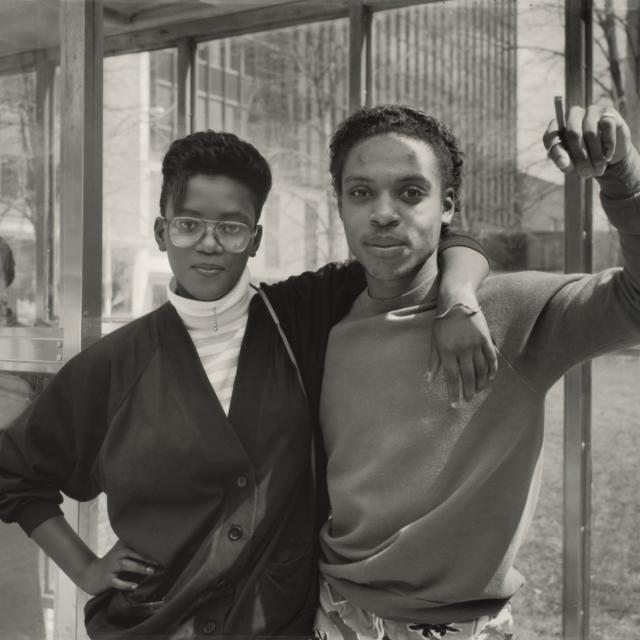
Architecture structures our daily lives. It shapes our homes, streets, neighborhoods, cities and more. But who gets to create and occupy these spaces? In the United States, a long history of anti-Black racism has created spatial inequalities that are built into the physical environment and erased the stories of Black architects and communities. Reimagining Blackness and Architecture explores the relationship between architecture and Blackness as an identity and a lived experience.

Nov 2nd 2026
5-12 Weeks
In the Studio: Postwar Abstract Painting (Coursera) Coursera
The Museum of Modern Art

In the Studio: Postwar Abstract Painting (Coursera)

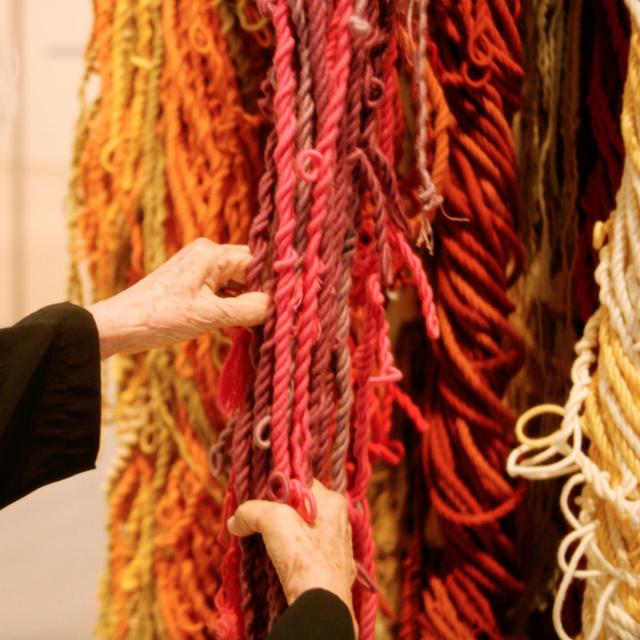
Want to know how some of the 20th century’s most celebrated artists made abstract paintings? This course offers an in-depth, hands-on look at the materials, techniques, and thinking of seven New York School artists, including Willem de Kooning, Yayoi Kusama, Agnes Martin, Barnett Newman, Jackson Pollock, Ad Reinhardt, and Mark Rothko. Through studio demonstrations and gallery walkthroughs, you’ll form a deeper understanding of what a studio practice means and how ideas develop from close looking, and you’ll gain a sensitivity to the physical qualities of paint.

Oct 26th 2026
5-12 Weeks
Music and Social Action (Coursera) Coursera
Yale University

Music and Social Action (Coursera)

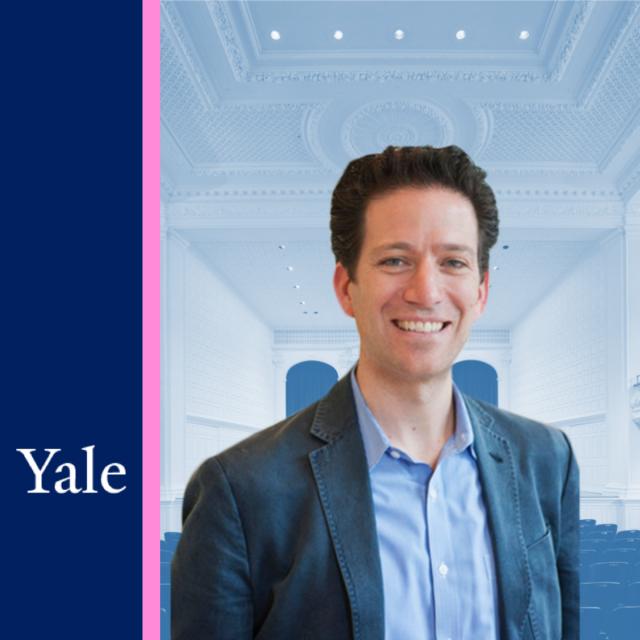
What is a musician’s response to the condition of the world? Do musicians have an obligation and an opportunity to serve the needs of the world with their musicianship? At a time of crisis for the classical music profession, with a changing commercial landscape, a shrinking audience base, and a contraction in the number of professional orchestras, how does a young musician construct a career today? Are we looking at a dying art form or a moment of reinvigoration?

Nov 2nd 2026
5-12 Weeks
Applied Public History: Places, People, Stories (Coursera) Coursera
University of London

Applied Public History: Places, People, Stories (Coursera)

This course introduces learners to applied public history: understanding and interpreting the past today, and engaging diverse communities in the practice of making and sharing histories. The course draws on project case studies, expert insights and diverse perspectives to model exciting approaches to researching and sharing the history of places and people. Learners will develop a toolkit to apply in their own practice, by participating in discussion, quizzes, creative activities and mini masterclasses. What kinds of stories can we discover through research into the history of places and people?

Nov 2nd 2026
5-12 Weeks
An Introduction to Interactive Programming in Python (Part 2) (Coursera) Coursera
Rice University

An Introduction to Interactive Programming in Python (Part 2) (Coursera)

This two-part course is designed to help students with very little or no computing background learn the basics of building simple interactive applications. Our language of choice, Python, is an easy-to learn, high-level computer language that is used in many of the computational courses offered on Coursera. To make learning Python easy, we have developed a new browser-based programming environment that makes developing interactive applications in Python simple.

Nov 2nd 2026
4 Weeks
The Blues: Understanding and Performing an American Art Form (Coursera) Coursera
University of Rochester

The Blues: Understanding and Performing an American Art Form (Coursera)

The blues is an American art form and the most important musical form in jazz. Although there are other formal paradigms of the blues, such as 8-bar or 16-bar, this course focuses on different incarnations of the 12-bar blues. There are considerable differences between Early Jazz blues, Swing blues, Bebop blues, Modal blues, and Post Bop blues.

Nov 2nd 2026
5-12 Weeks
Game Theory II: Advanced Applications (Coursera) Coursera
Stanford University,The University of British Columbia

Game Theory II: Advanced Applications (Coursera)

Popularized by movies such as "A Beautiful Mind", game theory is the mathematical modeling of strategic interaction among rational (and irrational) agents. Over four weeks of lectures, this advanced course considers how to design interactions between agents in order to achieve good social outcomes. Three main topics are covered: social choice theory (i.e., collective decision making and voting systems), mechanism design, and auctions.

Nov 9th 2026
5-12 Weeks
The Beauty of Kunqu Opera (Coursera) Coursera
The Chinese University of Hong Kong

The Beauty of Kunqu Opera (Coursera)

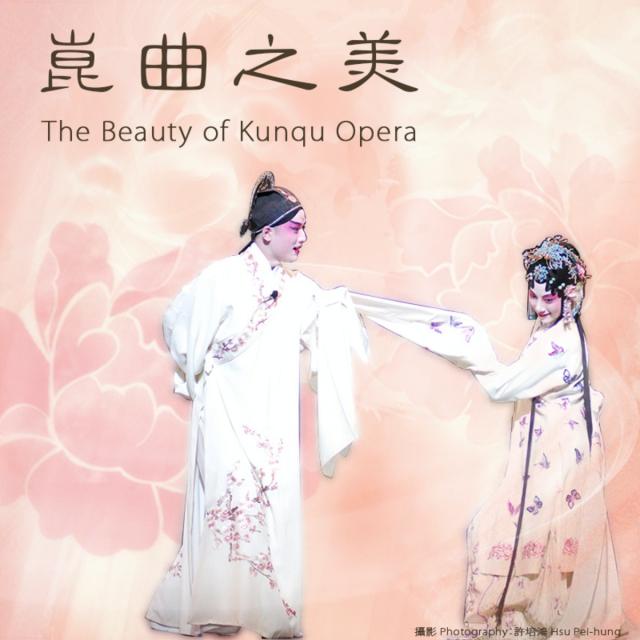
This course will focus on the historical and cultural background, literary aesthetics, music, and performance of Kunqu, China’s classical opera. After viewing the lecture videos presented by scholars and renowned maestros in the field of Kunqu, students’ understanding and appreciation of Chinese performing arts, classical literature and traditional culture will be enhanced.

Oct 26th 2026
5-12 Weeks