Introduction to Bayesian Statistics (Coursera)

Offered by Databricks,
Introduction to Bayesian Statistics (Coursera)

The objective of this course is to introduce Computational Statistics to aspiring or new data scientists. The attendees will start off by learning the basics of probability, Bayesian modeling and inference. This will be the first course in a specialization of three courses .Python and Jupyter notebooks will be used throughout this course to illustrate and perform Bayesian modeling.

Class Deals by MOOC List - Click here and see Coursera's Active Discounts, Deals, and Promo Codes.

What You Will Learn

  • The basics of Probability, Bayesian statistics, modeling and inference.
  • You will also get a hands-on introduction to using Python for computational statistics using Scikit-learn, SciPy and Numpy.

Course 1 of 3 in the Introduction to Computational Statistics for Data Scientists Specialization

Syllabus

WEEK 1
Environment Setup
Introduction to the compute environment for the Specialization. The users will be introduced to the Databricks Ecosystem for Data Science. The users can also deploy the notebooks to Binder for setup-free access.

WEEK 2
Introduction to the Fundamentals of Probability
In this module, you will learn the foundations of probability and statistics. The focus is on gaining familiarity with terms and concepts.

WEEK 3
A Hands-On Introduction to Common Distributions
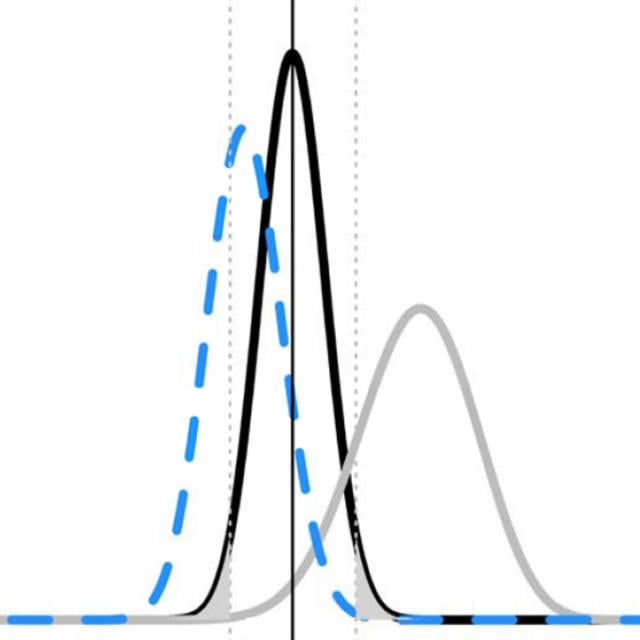
Tis module will be an introduction to common distributions along with the Python code to generate, plot and interact with these distributions. You will also learn how to perform Maximum Likelihood Estimation (MLE) for various distributions and Kernel Density Estimation (KDE) for non-parametric distributions.

WEEK 4
Sampling Algorithms
This module introduces you to various sampling algorithms for generating distributions. You will also be introduced to Python code that performs sampling.

Go to Class
MOOC List is learner-supported. When you buy through links on our site, we may earn an affiliate commission.

Related Courses

Introduction to Probability and Data with R (Coursera) Coursera
Duke University

Introduction to Probability and Data with R (Coursera)

This course introduces you to sampling and exploring data, as well as basic probability theory and Bayes' rule. You will examine various types of sampling methods, and discuss how such methods can impact the scope of inference. A variety of exploratory data analysis techniques will be covered, including numeric summary statistics and basic data visualization.

Jun 22nd 2026
5-12 Weeks
Introduction to Data Science in Python (Coursera) Coursera
University of Michigan

Introduction to Data Science in Python (Coursera)

This course will introduce the learner to the basics of the python programming environment, including fundamental python programming techniques such as lambdas, reading and manipulating csv files, and the numpy library. The course will introduce data manipulation and cleaning techniques using the popular python pandas data science library and introduce the abstraction of the Series and DataFrame as the central data structures for data analysis, along with tutorials on how to use functions such as groupby, merge, and pivot tables effectively. By the end of this course, students will be able to take tabular data, clean it, manipulate it, and run basic inferential statistical analyses.

Jun 22nd 2026
4 Weeks
Computational Thinking for Problem Solving (Coursera) Coursera
University of Pennsylvania

Computational Thinking for Problem Solving (Coursera)

Computational thinking is the process of approaching a problem in a systematic manner and creating and expressing a solution such that it can be carried out by a computer. But you don't need to be a computer scientist to think like a computer scientist! In fact, we encourage students from any field of study to take this course. Many quantitative and data-centric problems can be solved using computational thinking and an understanding of computational thinking will give you a foundation for solving problems that have real-world, social impact.

Jun 22nd 2026
4 Weeks
AI Workflow: Feature Engineering and Bias Detection (Coursera) Coursera
IBM

AI Workflow: Feature Engineering and Bias Detection (Coursera)

This is the third course in the IBM AI Enterprise Workflow Certification specialization. You are STRONGLY encouraged to complete these courses in order as they are not individual independent courses, but part of a workflow where each course builds on the previous ones. Course 3 introduces you to the next stage of the workflow for our hypothetical media company. In this stage of work you will learn best practices for feature engineering, handling class imbalances and detecting bias in the data.

Jun 22nd 2026
2 Weeks
Fitting Statistical Models to Data with Python (Coursera) Coursera
University of Michigan

Fitting Statistical Models to Data with Python (Coursera)

In this course, we will expand our exploration of statistical inference techniques by focusing on the science and art of fitting statistical models to data. We will build on the concepts presented in the Statistical Inference course (Course 2) to emphasize the importance of connecting research questions to our data analysis methods. We will also focus on various modeling objectives, including making inference about relationships between variables and generating predictions for future observations.

Jun 22nd 2026
4 Weeks
Accounting Data Analytics with Python (Coursera) Coursera
University of Illinois at Urbana-Champaign

Accounting Data Analytics with Python (Coursera)

This course focuses on developing Python skills for assembling business data. It will cover some of the same material from Introduction to Accounting Data Analytics and Visualization, but in a more general purpose programming environment (Jupyter Notebook for Python), rather than in Excel and the Visual Basic Editor. These concepts are taught within the context of one or more accounting data domains (e.g., financial statement data from EDGAR, stock data, loan data, point-of-sale data).

Jun 22nd 2026
5-12 Weeks
Crash Course on Python (Coursera) Coursera
Google

Crash Course on Python (Coursera)

This course is designed to teach you the foundations in order to write simple programs in Python using the most common structures. No previous exposure to programming is needed. By the end of this course, you'll understand the benefits of programming in IT roles; be able to write simple programs using Python; figure out how the building blocks of programming fit together; and combine all of this knowledge to solve a complex programming problem.

Jun 23rd 2026
5-12 Weeks
Applied Text Mining in Python (Coursera) Coursera
University of Michigan

Applied Text Mining in Python (Coursera)

This course will introduce the learner to text mining and text manipulation basics. The course begins with an understanding of how text is handled by python, the structure of text both to the machine and to humans, and an overview of the nltk framework for manipulating text. The second week focuses on common manipulation needs, including regular expressions (searching for text), cleaning text, and preparing text for use by machine learning processes. The third week will apply basic natural language processing methods to text, and demonstrate how text classification is accomplished. The final week will explore more advanced methods for detecting the topics in documents and grouping them by similarity (topic modelling).

Jun 22nd 2026
4 Weeks
Comparing Genes, Proteins, and Genomes (Bioinformatics III) (Coursera) Coursera
University of California, San Diego

Comparing Genes, Proteins, and Genomes (Bioinformatics III) (Coursera)

Once we have sequenced genomes in the previous course, we would like to compare them to determine how species have evolved and what makes them different. In the first half of the course, we will compare two short biological sequences, such as genes (i.e., short sequences of DNA) or proteins. We will encounter a powerful algorithmic tool called dynamic programming that will help us determine the number of mutations that have separated the two genes/proteins.

Jun 22nd 2026
5-12 Weeks
Cloud Networking (Coursera) Coursera
University of Illinois at Urbana-Champaign

Cloud Networking (Coursera)

In the cloud networking course, we will see what the network needs to do to enable cloud computing. We will explore current practice by talking to leading industry experts, as well as looking into interesting new research that might shape the cloud network’s future. This course will allow us to explore in-depth the challenges for cloud networking—how do we build a network infrastructure that provides the agility to deploy virtual networks on a shared infrastructure, that enables both efficient transfer of big data and low latency communication, and that enables applications to be federated across countries and continents? Examining how these objectives are met will set the stage for the rest of the course.

Jun 22nd 2026
5-12 Weeks