EdX

Introducción interdisciplinar a la sostenibilidad urbana (edX)

Introducción interdisciplinar a la sostenibilidad urbana (edX)

Este curso presenta los elementos básicos y las tendencias que definen las prácticas de sostenibilidad en la arquitectura actual. Sigue un enfoque interdisciplinario que incluye la evaluación del desempeño y las políticas urbanas.

Class Deals by MOOC List - Click here and see EdX's Active Discounts, Deals, and Promo Codes.

Este curso ofrece un enfoque interdisciplinario de la sostenibilidad en Arquitectura. Los alumnos conocerán los elementos básicos de las evaluaciones de sostenibilidad (primera capa del modelo), así como las tendencias actuales relacionadas.
Eel curso permite a los estudiantes desarrollar un modelo de vecindario conceptual para evaluar su comportamiento y las políticas urbanas.
En la primera semana, los participantes aprenderán a desarrollar un modelo conceptual a partir de los elementos arquitectónicos de los edificios; el componente básico del cual será el rendimiento de los materiales.
En la segunda semana se exploran métodos para optimizar el rendimiento. Se detallarán las necesidades y limitaciones inherentes a la selección de materiales y elementos urbanos del vecindario (la segunda capa del modelo para la infraestructura verde, azul y gris).
En la tercera semana, los alumnos desarrollarán las herramientas básicas para introducir la energía y medir su impacto potencial sobre el cambio climático (CO2). Esto supone una nueva capa (tercera) en nuestro modelo de sostenibilidad de vecindario, que se abordará desde una perspectiva global.
En la cuarta y última semana, el curso explorará técnicas para una evaluación conjunta directamente relacionada con cuestiones de políticas a ser aplicadas.
This course is part of the Arquitectura sostenible: Evaluación interdisciplinar Professional Certificate.

What you'll learn

  • Cómo evaluar el comportamiento con respecto a sostenibilidad de los edificios a partir de materiales.
  • Cómo evaluar el uso de energía desde distintos criterios.
  • Cómo considerar el uso de la infraestructura urbana.
  • Cómo crear un modelo de vecindario adecuado para el análisis y la evaluación de las políticas urbanas.

Syllabus

Semana 1: Relevancia de los materiales en los edificios
Semana 2: Edificios: comportamiento, funciones y materiales
Semana 3: Eficiencia, sostenibilidad y arquitectura
Semana 4: Diseño integrado y modelos de negocio
Go to Class
MOOC List is learner-supported. When you buy through links on our site, we may earn an affiliate commission.

Related Courses

Sustainable Food Systems: A Mediterranean Perspective (edX) EdX
SDGAcademyX,SDG Academy

Sustainable Food Systems: A Mediterranean Perspective (edX)

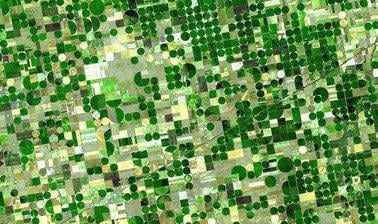
How do we produce more, better quality, and safer food while simultaneously achieving social and environmental goals? The Mediterranean region is one of the most biodiverse in the world, home to a complex and intricate patchwork of cultures, climates, and cuisines. Food systems in the region -- represented worldwide by the "Mediterranean diet" -- are equally complex, demanding analysis across the political, social, cultural, economic and nutritional spectrums from landscape to table.

Self Paced
Self-Paced
SDG: Moving Towards Sustainable Work (edX) EdX
Universidad Carlos III de Madrid - UC3M,UC3Mx

SDG: Moving Towards Sustainable Work (edX)

Decent work is thecritical engine of sustainable development. This course explores the United Nations' Sustainable Development Goals and mechanisms for developing decent and sustainable work. The United Nations' Sustainable Development 2030 Agenda gives us the opportunity to change and improve the lives of millions of people. These widespread efforts won't juststem from organizations in the formal public or private sectors (governments, corporations, trade unions, etc.) but will also require participation from ordinary people and civil society as a whole.

Self Paced
Self-Paced
Circular Economy for a Sustainable Built Environment (edX) EdX
Delft University of Technology,DelftX

Circular Economy for a Sustainable Built Environment (edX)

Learn how the principles of the Circular Economy can be applied to the built environment ranging from products and buildings to metropolitan and regional development strategies. In this course you will become familiar with circularity as a systemic, multi-disciplinary approach, concerned with the different scale, from material to product, building, city, and region.

Self Paced
Self-Paced
Sustainable Urban Development (edX) EdX
Wageningen University,Delft University of Technology,DelftX,WageningenX

Sustainable Urban Development (edX)

Learn why cities are key in resolving global urbanization and sustainability challenges and how you can engineer tomorrow’s cities today. Did you know that cities take up less than 3% of the earth’s land surface, but more than 50% of the world’s population live in them? And, cities generate more than 70% of the global emissions? Large cities and their hinterlands (jointly called metropolitan regions) greatly contribute to global urbanization and sustainability challenges, yet are also key to resolving these same challenges.

Self Paced
Self-Paced
Smart Cities, Management of Smart Urban Infrastructures (edX) EdX
École Polytechnique Fédérale de Lausanne,EPFLx

Smart Cities, Management of Smart Urban Infrastructures (edX)

In the era of Smart Cities, learn the principles of urban infrastructure management and find ways to incorporate smart technologies into legacy infrastructures. Over the past few years, advancements in the Information and Communication Technologies (ICTs) have significantly challenged the traditionally stable landscape of urban infrastructure services. The result is an increasing interest in the transitioning of cities towards so-called “smart cities” – an interest expressed both by technology vendors and public authorities.

Self Paced
Self-Paced
Climate Change Science and Negotiations (edX) EdX
SDGAcademyX,SDG Academy

Climate Change Science and Negotiations (edX)

Humanity is up against a tight timeline to address climate change. Learn how we can deeply decarbonize the global energy systems, and put the world on a 2°C pathway. In this course, learn solutions to mitigate the effects of the global greenhouse gas emissions causing temperature rise, and how to apply these solutions in different national contexts improvements.

Self Paced
Self-Paced
Sustainable Packaging in a Circular Economy (edX) EdX
Delft University of Technology,DelftX

Sustainable Packaging in a Circular Economy (edX)

Learn how to apply the principles of the circular economy to sustainable packaging systems. It has become almost impossible to imagine what our lives would be like without the many benefits of packaging - just think about the different packaging and single-use items you use on a daily basis. Yet as our global population grows in size and affluence, both our collective demand for packaging materials and the waste we generate as a result will increasedramatically.

Self Paced
Self-Paced
Transforming Our World: Achieving the Sustainable Development Goals (edX) EdX
SDGAcademyX,SDG Academy

Transforming Our World: Achieving the Sustainable Development Goals (edX)

What will it take to achieve the Sustainable Development Goals by 2030? In this course, learn all about the 17 Sustainable Development Goals (SDGs). In September 2015, the world’s leaders signed on to this new agenda, answering the call for a global vision of important social, economic and environmental needs to support the planet and its people in long-term prosperity and survival.

Self Paced
Self-Paced
Cultural Heritage in Transformation (edX) EdX
RWTH Aachen,RWTHx

Cultural Heritage in Transformation (edX)

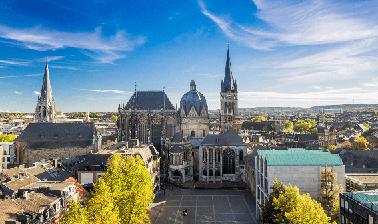
Learn how to define, explore, conserve, utilize and manage cultural heritage. In recent decades the sustainable conservation of cultural heritage has become a crucial global challenge. In this context, the trend towards largescale urbanization raises questions as to how new development can take place which respects and maintains the intrinsic values and unique qualities which have been handed down from previous generations, particularly within urban areas.

Self Paced
Self-Paced
Industrial Biotechnology (edX) EdX
Delft University of Technology,DelftX

Industrial Biotechnology (edX)

Learn the basics of sustainable processing for biobased products to further understand their impact on global sustainability. As fossil-based fuels and raw materials contribute to climate change, the use of renewable materials and energy as an alternative is increasingly important and common. This transition is not a luxury, but rather a necessity.

Self Paced
Self-Paced
Planetary Boundaries (edX) EdX
SDGAcademyX,SDG Academy

Planetary Boundaries (edX)

Can our planet continue to support the current scope of human activity? A thriving global society relies on the stability of the Earth and its resilience across oceans, forests, waterways, biodiversity, the atmosphere and more. So how do we shape sustainability at a global scale? The boundaries set by the planet’s natural resources, the resilience of those resources, and the human activities that impact sustainability all come into play.

Self Paced
Self-Paced
Sustainable Aviation: The Route to Climate-Neutral Aviation (edX) EdX
Delft University of Technology,DelftX

Sustainable Aviation: The Route to Climate-Neutral Aviation (edX)

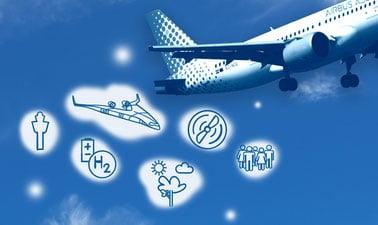
To reduce the environmental footprint of the aviation sector we need to start a clean sky revolution. Discover the latest developments in this field – from airplane design, energy carriers, operations – and learn how you can play a role. Sustainable aviation is a key area for climate action. In this course, we will introduce you to various aircraft technologies, and recent innovations and promising future developments in the field of aviation. All necessary mathematical and engineering concepts will explained.

Self Paced
Self-Paced