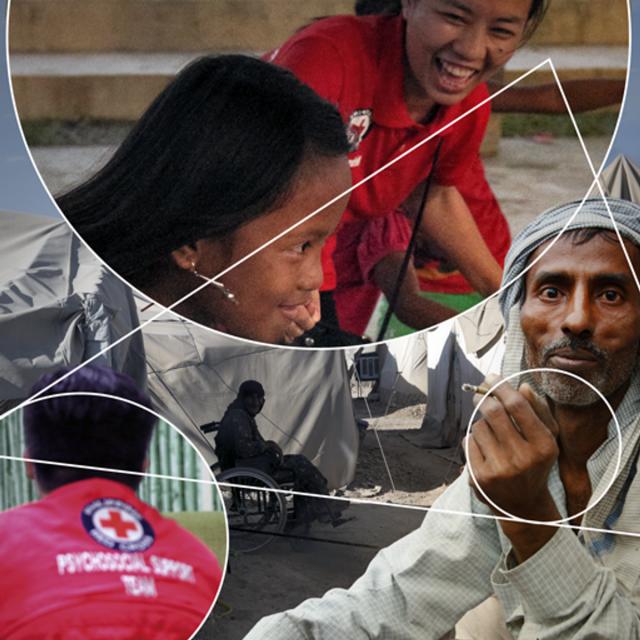
Integrating MHPSS for NCDs in Humanitarian Response (Coursera)

Integrating MHPSS for NCDs in Humanitarian Response (Coursera)

Noncommunicable diseases (NCDs) – a group of conditions that include cardiovascular diseases, cancers, diabetes, chronic respiratory diseases and mental ill-health– cause nearly 41 million deaths each year, representing almost 72 percent of all deaths globally. Today, NCDs are not only a problem of high-income countries as more than three-quarters of global NCD deaths occur in low-and middle-income countries. These countries are at the same time those hosting the majority of humanitarian settings.

Class Deals by MOOC List - Click here and see Coursera's Active Discounts, Deals, and Promo Codes.

Attention to NCDs focused initially on four major disease categories (cardiovascular disease, diabetes, chronic respiratory disease and cancer) and four groups of associated risk factors (unhealthy diets, physical inactivity, tobacco use, and harmful use of alcohol). Recently, mental ill-health has been considered as the fifth NCD and environmental determinant as the fifth risk factor for NCDs – known as ‘5-by-5’ conditions.
Mental ill-health and other NCDs are powerfully inter-connected, highly comorbid, and frequently co-occur due to potential bidirectional relationships. A response that addresses both mental ill-health and other NCDs might therefore be useful, both to be more effective, and to require fewer resources. There is, however, a lack of widely accepted guidelines that take this into account, and this course is intended to draw attention to that issue.
The course has a threefold aim: i) to explore evidence of interaction between mental ill-health and other NCDs and the role of psychosocial support in humanitarian response; ii) to explore what is being done and where; what level the determinants of health are being addressed at and the integration of mental health and psychosocial support or MHPSS and NCD prevention and care in humanitarian response; and iii) to identify and explore challenges, opportunities and lessons learned for integrating MHPSS and NCD prevention and care in humanitarian response.
The MOOC will be led by a course leader from the University of Copenhagen in close collaboration with academic teachers, the Danish Red Cross and IFRC Reference Centre for Psychosocial Support, Copenhagen, Denmark.

Syllabus

WEEK 1
Overview of MHPSS and NCD Prevention and Care in Humanitarian Response
This module will provide you with an overview of MHPSS and NCD prevention and care in humanitarian response. We will start by discussing the World Health Organization (WHO) definition of health and the burden and risk factors associated with mental ill-health and other NCDs globally and in humanitarian settings. Then we will discuss the shift from the 4x4 approach (four major NCDs plus four modifiable risk factors) to the 5x5 approach (including mental ill-health and environmental risk factors). Consequently, we will explore factors that worsen mental ill-health in humanitarian responses as well as the role of psychosocial support in improving mental health and well-being. Finally, we will discuss the nature and role of agency in recovery from mental ill-health and other NCDs.

WEEK 2
What is Being Done in Integrating MHPSS and NCD Prevention and Care
In this module, we will focus on exploring what is being done and at what level to address comorbidity of mental ill-health and other NCDs in in primary health care in humanitarian settings. We will also seek the answer to what is the role of policy measures and community-based programmes to promote mental and physical well-being as well as ensuring continued access to care. Finally, yet importantly, we will discuss various approaches for integrating MHPSS and NCD prevention and care in humanitarian response, including a case from Kenya.

WEEK 3
Lessons Learned from Integrating MHPSS and NCD Prevention and Care
Diverse challenges posed by humanitarian response include varied demographics of the populations affected, the range of mental ill-health and other NCDs, and ethical dilemmas regarding prioritization of MHPSS and NCD prevention and care. In this module, we will discuss these challenges, as well as the opportunities and lessons learned for delivering MHPSS and NCD prevention and care in humanitarian response. We will also look at the impact of COVID-19 to keep MHPSS and NCD prevention and care.

Go to Class
MOOC List is learner-supported. When you buy through links on our site, we may earn an affiliate commission.

Related Courses

Herbal Medicine (Coursera) Coursera
University of Minnesota

Herbal Medicine (Coursera)

There is strong demand for alternatives to pharmaceuticals for a variety of common illnesses due to concerns of safety, efficacy, and a desire for more “natural” products. Despite this growing interest, “conventional” healthcare providers may have little to no knowledge about herbal medicines, which is further compounded by the sometimes misleading information in the media and on the internet. This course provides the necessary background for providers to begin to incorporate herbal medicines into their practice, particularly in regards to their therapeutic properties, efficacy (or lack thereof), and safety concerns, including quality control and potential adverse effects.

Jun 17th 2026
5-12 Weeks
Positive Psychology: Martin E. P. Seligman’s Visionary Science (Coursera) Coursera
University of Pennsylvania

Positive Psychology: Martin E. P. Seligman’s Visionary Science (Coursera)

Dr. Martin E.P. Seligman—renowned worldwide as the “father of Positive Psychology”—has led visionary leaps in the scientific research, empirical data and personal understandings of human flourishing. This course explores the past, present and future of positive psychology as a journey through the key scientific leaps led by Dr. Seligman and his colleagues at the University of Pennsylvania's Positive Psychology Center and Master of Applied Positive Psychology program.

Jun 15th 2026
4 Weeks
Writing in the Sciences (Coursera) Coursera
Stanford University

Writing in the Sciences (Coursera)

This course teaches scientists to become more effective writers, using practical examples and exercises. Topics include: principles of good writing, tricks for writing faster and with less anxiety, the format of a scientific manuscript, peer review, grant writing, ethical issues in scientific publication, and writing for general audiences.

Jun 15th 2026
5-12 Weeks
Understanding Obesity (Coursera) Coursera
University of Edinburgh

Understanding Obesity (Coursera)

In this course, we’ll look at the facts and misconceptions around obesity and discuss key physiological and psychological concepts around the brain’s control of appetite and body weight. We’ll consider the biological and environmental pressures that make it easy to gain weight (and hard to lose it!). Most importantly, we'll give you the opportunity to reflect on your own knowledge and assumptions around the subject.

Jun 15th 2026
4 Weeks
Discover Best Practice Farming for a Sustainable 2050 (Coursera) Coursera
University of Western Australia

Discover Best Practice Farming for a Sustainable 2050 (Coursera)

The Discover Best Practice Farming for a Sustainable 2050 Course is based on a clear vision: imagine best practice farming for 2050, start to implement these strategies now, all the while making sure it will still be profitable. At UWA we're doing just that with the Future Farm 2050 Project, set on a mixed-enterprise farm in Western Australia and we want you to learn how it can be done in your part of the world.

Jun 15th 2026
5-12 Weeks
Planning a Patient Safety or Quality Improvement Project (Patient Safety III) (Coursera) Coursera
Johns Hopkins University

Planning a Patient Safety or Quality Improvement Project (Patient Safety III) (Coursera)

This course provides students with a set of tools and methodologies to plan and initiate a Problem Solving or Quality Improvement project. The first module presents methods for selecting, scoping and structuring a project before it is even initiated. It also introduces the project classifications of implementation and discovery. The second module describes the A3 problem solving methodology and the tool itself. Further in that same module, the student is shown tools to identify problems in flow, defects, and waste and to discover causes, brainstorm, and prioritize interventions. Module 3 shows a methodology within the implementation class. These methods are designed to overcome emotional and organizational barriers to translating evidence-based interventions into practice. The fourth and last module looks at one more way to approach improvement projects in the discovery class. These tools are specifically for new, out-of-the-box design thinking.

Jun 15th 2026
4 Weeks
Positive Psychiatry and Mental Health (Coursera) Coursera
The University of Sydney

Positive Psychiatry and Mental Health (Coursera)

In today’s world, mental illness and distress are common and these account for a significant burden of disability within our community. At the same time, there is a growing interest in understanding and enhancing positive mental health and wellbeing; particularly from developments in the fields of positive psychology and mental health promotion. Positive Psychiatry is a new term (Jeste et al 2016) that describes a dual approach to mental health, where we build strengths, supports and healthy lifestyles as well as treating illness and distress.

Jun 15th 2026
5-12 Weeks
Healthcare Marketplace (Coursera) Coursera
University of Minnesota

Healthcare Marketplace (Coursera)

In this course in the Healthcare Marketplace specialization you will identify, define, and describe potential business and public policy solutions to the challenges facing society’s growing demand for health services. Students will master a body of knowledge on the health care sectors major components through reading and reflection.

Jun 15th 2026
5-12 Weeks
Patient Safety and Quality Improvement: Developing a Systems View (Patient Safety I) (Coursera) Coursera
Johns Hopkins University

Patient Safety and Quality Improvement: Developing a Systems View (Patient Safety I) (Coursera)

In this course, you will be able develop a systems view for patient safety and quality improvement in healthcare. By then end of this course, you will be able to: 1) Describe a minimum of four key events in the history of patient safety and quality improvement, 2) define the key characteristics of high reliability organizations, and 3) explain the benefits of having strategies for both proactive and reactive systems thinking.

Jun 15th 2026
4 Weeks
Science of Exercise (Coursera) Coursera
University of Colorado Boulder

Science of Exercise (Coursera)

Learners who complete Science of Exercise will have an improved physiological understanding of how your body responds to exercise, and will be able to identify behaviors, choices, and environments that impact your health and training. You will explore a number of significant adjustments required by your body in order to properly respond to the physical stress of exercise, including changes in carbohydrate, fat and protein metabolism, nutritional considerations, causes of muscle soreness & fatigue, and the effectiveness and dangers of performance enhancing drugs.

Jun 15th 2026
4 Weeks
The Oral Cavity: Portal to Health and Disease (Coursera) Coursera
University of Pennsylvania

The Oral Cavity: Portal to Health and Disease (Coursera)

This course will focus on the interprofessional realtionship of dentistry and medicine. For each session, the medical specialist will present a broad overview of specific disease entity which will be followed by a dental educator discussing the relevant oral manifestations and implications. The final module of each session will be devoted to the interaction between the dental and other health care professionals.

Jun 15th 2026
5-12 Weeks