Álgebra Básica (Coursera)

Álgebra Básica (Coursera)

Galileo dijo: "El Universo está escrito en lenguaje matemático y los caracteres son triángulos, círculos y otras figuras geométricas, sin las que es humanamente imposible entender una sola palabra". Para entender el Universo, es necesario plantear leyes que expliquen su comportamiento, como pueden ser las leyes de la gravedad, la propagación del calor, el electromagnetismo, la reproducción celular, el crecimiento poblacional, la propagación de las enfermedades, la variación de los precios de las acciones en la bolsa de valores, el comportamiento de las masas ante un conflicto, etcétera.

Class Deals by MOOC List - Click here and see Coursera's Active Discounts, Deals, and Promo Codes.

Todas estas leyes se plantean utilizando ecuaciones, algunas muy sencillas, otras no tanto. Para poder aplicar estas ecuaciones para resolver problemas, es necesario manipularlas siguiendo ciertas reglas que nos da el álgebra.
Piensa en el álgebra como la gramática, que nos dice cómo traducir nuestras ideas al lenguaje, cómo formar frases y oraciones a partir de palabras, cómo conjugar verbos, a identificar las partes de una oración, las reglas de acentuación, etcétera.
En este curso aprenderás a construir expresiones algebraicas a partir de frases, lo que te permitirá resolver problemas en los que conoces algunos datos numéricos y necesitas encontrar otros.
Podrás plantear y resolver ecuaciones de primer grado, ecuaciones simultáneas y ecuaciones de segundo grado.
Este curso te va a ser muy útil si actualmente estas llevando un curso de álgebra en la escuela y tienes problemas con él. También si ya has estudiado álgebra y necesitas repasarla, ya que necesitas recordarla para tener éxito en otros cursos más avanzados, como Geometría Analítica, Cálculo o Estadística.

Syllabus

WEEK 1
Introducción al álgebra
Al final de este módulo:
• Reconocerás el álgebra como la gramática con la cual las ciencias plantean problemas y buscan soluciones a los mismos. • Escribirás expresiones algebraicas a partir de frases en el lenguaje común que expresen relaciones entre diferentes variables. • Valuarás expresiones algebraicas para números concretos y simplificarlas utilizando las reglas usuales de la aritmética de los números reales.

WEEK 2
Ecuaciones de primer grado y ecuaciones simultáneas
Al final de este módulo:
• Plantearás ecuaciones de primer grado a partir de problemas concretos, para resolverlas usando operaciones algebraicas elementales.

WEEK 3
Polinomios
Al final de este módulo:
• Efectuarás operaciones aritméticas con polinomios a fin de simplificarlos.

WEEK 4
Productos notables y factorización
Al final de este módulo:
• Realizarás productos y factorizaciones de expresiones algebraicas de manera eficiente utilizando las reglas conocidas como productos notables, con la finalidad de emplearlas para resolver ecuaciones de segundo grado.

WEEK 5
Ecuación de segundo grado
Al final de este módulo:
• Plantearás ecuaciones de segundo grado a partir de situaciones concretas. Así mismo, podrás encontrar las soluciones de dichas ecuaciones ya sea factorizándolas como producto de dos ecuaciones de primer grado, o bien, utilizando la ecuación general de segundo grado.
Go to Class
MOOC List is learner-supported. When you buy through links on our site, we may earn an affiliate commission.

Related Courses

Initiation à la théorie des distributions (Coursera) Coursera
École Polytechnique

Initiation à la théorie des distributions (Coursera)

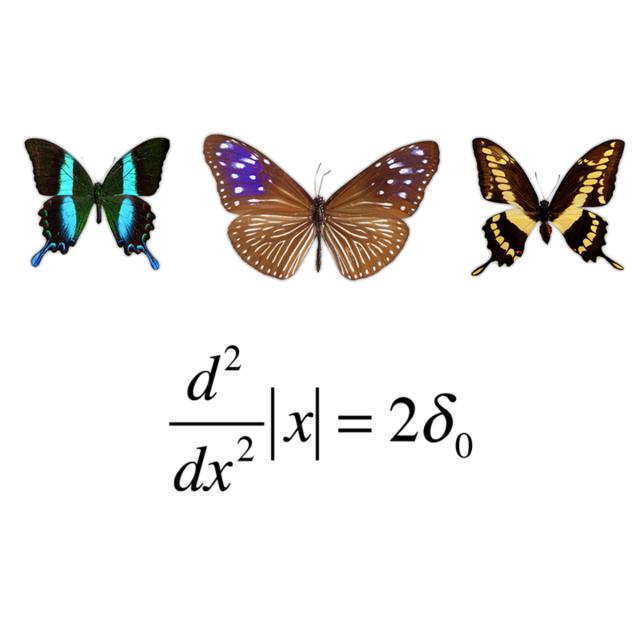
Une fonction discontinue peut-elle être solution d'une équation différentielle? Comment définir rigoureusement la masse de Dirac (une "fonction" d'intégrale un, nulle partout sauf en un point) et ses dérivées? Peut-on définir une notion de "dérivée d'ordre fractionnaire"? Cette initiation aux distributions répond à ces questions - et à bien d'autres.

Jun 15th 2026
5-12 Weeks
Differential Equations for Engineers (Coursera) Coursera
The Hong Kong University of Science and Technology - HKUST

Differential Equations for Engineers (Coursera)

This course is about differential equations and covers material that all engineers should know. Both basic theory and applications are taught. In the first five weeks we will learn about ordinary differential equations, and in the final week, partial differential equations. The course is composed of 56 short lecture videos, with a few simple problems to solve following each lecture. And after each substantial topic, there is a short practice quiz. Solutions to the problems and practice quizzes can be found in instructor-provided lecture notes. There are a total of six weeks in the course, and at the end of each week there is an assessed quiz.

Jun 22nd 2026
5-12 Weeks
Essential Linear Algebra for Data Science (Coursera) Coursera
University of Colorado Boulder

Essential Linear Algebra for Data Science (Coursera)

Are you interested in Data Science but lack the math background for it? Has math always been a tough subject that you tend to avoid? This course will teach you the most fundamental Linear Algebra that you will need for a career in Data Science without a ton of unnecessary proofs and concepts that you may never use. Consider this an expressway to Data Science with approachable methods and friendly concepts that will guide you to truly understanding the most important ideas in Linear Algebra.

Jun 22nd 2026
5-12 Weeks
Analytic Combinatorics (Coursera) Coursera
Princeton University

Analytic Combinatorics (Coursera)

Analytic Combinatorics teaches a calculus that enables precise quantitative predictions of large combinatorial structures. This course introduces the symbolic method to derive functional relations among ordinary, exponential, and multivariate generating functions, and methods in complex analysis for deriving accurate asymptotics from the GF equations. All the features of this course are available for free. It does not offer a certificate upon completion.

Jun 15th 2026
5-12 Weeks
Discrete Mathematics (Coursera) Coursera
Shanghai Jiao Tong University

Discrete Mathematics (Coursera)

Discrete mathematics forms the mathematical foundation of computer and information science. It is also a fascinating subject in itself. Learners will become familiar with a broad range of mathematical objects like sets, functions, relations, graphs, that are omnipresent in computer science. Perhaps more importantly, they will reach a certain level of mathematical maturity - being able to understand formal statements and their proofs; coming up with rigorous proofs themselves; and coming up with interesting results.

Jun 22nd 2026
5-12 Weeks
Matrix Algebra for Engineers (Coursera) Coursera
The Hong Kong University of Science and Technology - HKUST

Matrix Algebra for Engineers (Coursera)

This course is all about matrices, and concisely covers the linear algebra that an engineer should know. The mathematics in this course is presented at the level of an advanced high school student, but typically students should take this course after completing a university-level single variable calculus course. There are no derivatives or integrals in this course, but students are expected to have attained a sufficient level of mathematical maturity. Nevertheless, anyone who wants to learn the basics of matrix algebra is welcome to join.

Jun 22nd 2026
4 Weeks
Introduction to Mathematical Thinking (Coursera) Coursera
Stanford University

Introduction to Mathematical Thinking (Coursera)

Learn how to think the way mathematicians do - a powerful cognitive process developed over thousands of years. Mathematical thinking is not the same as doing mathematics – at least not as mathematics is typically presented in our school system. School math typically focuses on learning procedures to solve highly stereotyped problems. Professional mathematicians think a certain way to solve real problems, problems that can arise from the everyday world, or from science, or from within mathematics itself.

Jun 15th 2026
5-12 Weeks
English for Science, Technology, Engineering, and Mathematics (Coursera) Coursera
University of Pennsylvania

English for Science, Technology, Engineering, and Mathematics (Coursera)

Welcome to English for Science, Technology, Engineering, and Mathematics, a course created by the University of Pennsylvania, and funded by the U.S. Department of State Bureau of Educational and Cultural Affairs, Office of English Language Programs. This course is designed for non-native English speakers who are interested in improving their English skills in the sciences. In this course, you will explore some of the most innovative areas of scientific study, while expanding your vocabulary and the language skills needed to share scientific information within your community.

Jun 15th 2026
5-12 Weeks
Introduction to Linear Algebra and Python (Coursera) Coursera
Howard University

Introduction to Linear Algebra and Python (Coursera)

This course is the first of a series that is designed for beginners who want to learn how to apply basic data science concepts to real-world problems. You might be a student who is considering pursuing a career in data science and wanting to learn more, or you might be a business professional who wants to apply some data science principles to your work. Or, you might simply be a curious, lifelong learner intrigued by the powerful tools that data science and math provides. Regardless of your motivation, we’ll provide you with the support and information you need to get started.

Jun 22nd 2026
4 Weeks
Data Manipulation at Scale: Systems and Algorithms (Coursera) Coursera
University of Washington

Data Manipulation at Scale: Systems and Algorithms (Coursera)

Data analysis has replaced data acquisition as the bottleneck to evidence-based decision making --- we are drowning in it. Extracting knowledge from large, heterogeneous, and noisy datasets requires not only powerful computing resources, but the programming abstractions to use them effectively. The abstractions that emerged in the last decade blend ideas from parallel databases, distributed systems, and programming languages to create a new class of scalable data analytics platforms that form the foundation for data science at realistic scales.

Jun 22nd 2026
4 Weeks
Mathematical Biostatistics Boot Camp 1 (Coursera) Coursera
Johns Hopkins University

Mathematical Biostatistics Boot Camp 1 (Coursera)

This class presents the fundamental probability and statistical concepts used in elementary data analysis. It will be taught at an introductory level for students with junior or senior college-level mathematical training including a working knowledge of calculus. A small amount of linear algebra and programming are useful for the class, but not required.

Jun 22nd 2026
4 Weeks