Implementing Supply Chain Analytics (Coursera)

Offered by Unilever,
Implementing Supply Chain Analytics (Coursera)

In the Implementing Supply Chain Analytics: Descriptive, Diagnostic, Predictive and Prescriptive course, you’ll discover how implementing analytical methods, models, and tools helps decision-making become more efficient. You’ll use different types of methods, models, and tools, depending on specific business scenarios or needs, to help you analyze the current state of the supply chain and to lead you to insightful solutions.

Class Deals by MOOC List - Click here and see Coursera's Active Discounts, Deals, and Promo Codes.

You’ll also explore the utilization of supply chain models to evaluate and question the data to optimize the flow of goods, information, and cost in a supply chain to help identify potential improvements, determine the most efficient or practical course of action, and to communicate the impact to the customer.
By the end of this course, you’ll be able to:
Interpret historical data effectively using descriptive analytics.
Forecast the most probable outcomes, projects, or future. scenarios, along with their business implications, using predictive analytics.
Collaborate and make recommendations that maximize business value, addressing problems through prescriptive analytics.
Describe the appropriate communication channels to display and summarize the data results and Supply Chain recommendations.
Use supply chain models to evaluate and optimize the flow of goods, information, and sots with a supply chain.
This course is part of the Unilever Supply Chain Data Analyst Professional Certificate.

Syllabus

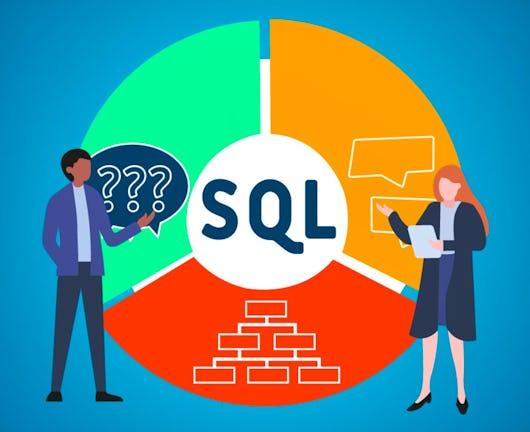
Progamming languages: Python and SQL
In this module, you will learn how programming languages such as Python and SQL assist in managing, cleaning, summarizing and manipulating data.Communicating Diagnostic Analytics You will also learn how to use programming languages to create meaningful data visualizations.

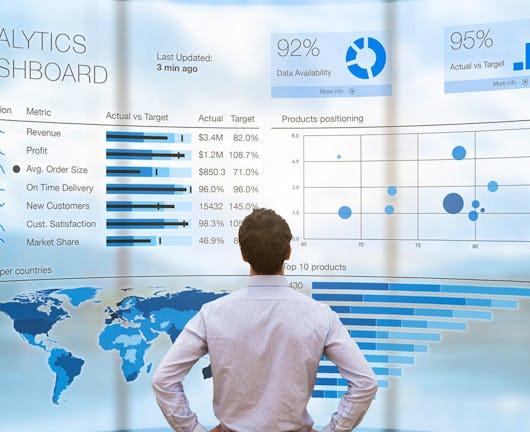
Data analytics that drive impactful decision making
Data analytics is the practice of examining data to answer questions, identify trends, and extract insights. In this module, you will focus on the four levels of data anlytics that help answer questions about what happened and why, what might happen in the future, and what are the possible outcomes.

Supply chain models: Inventory, Continuous Flow, Fast Chain
There are several different types of Supply Chain models. Once you know the probem your trying to solve, you can select the type of model that will best help you find a solution. In this module you will learn how use the inventory model to describe inventory policies, inputs and outputs, operations related to inventory management, how to use the continuous flow model to describe the current state and current practices in the business operations to identify opportunities for improvement, and how to use the fast chain model to describe the current state and current practices in the business operations to identify opportunities for improvement.

Supply Chain Models: Efficient Chain, Agile, Custom-Configured, Flexible
There are several different types of Supply Chain models. Once you know the probem your trying to solve, you can select the type of model that will best help you find a solution. In this module you will learn how use the efficient chain model to identify optimal scenarios and best practices that could be translated into other environments, use the agile model to prepare for participating in cross-functional developments driven by the supply chain, use the custom-configured model to prepare cross-functional developments driven by the supply chain with a more flexible infrastructure to new projects or developments, and use the flexible model to build flexible structures and scenario planning.

Go to Class
MOOC List is learner-supported. When you buy through links on our site, we may earn an affiliate commission.

Related Courses

Applying Data Analytics in Finance (Coursera) Coursera
University of Illinois at Urbana-Champaign

Applying Data Analytics in Finance (Coursera)

This course introduces an overview of financial analytics. You will learn why, when, and how to apply financial analytics in real-world situations. You will explore techniques to analyze time series data and how to evaluate the risk-reward trade off expounded in modern portfolio theory. While most of the focus will be on the prices, returns, and risk of corporate stocks, the analytical techniques can be leverages in other domains. Finally, a short introduction to algorithmic trading concludes the course.

Jun 28th 2026
4 Weeks
The Raspberry Pi Platform and Python Programming for the Raspberry Pi (Coursera) Coursera
University of California, Irvine

The Raspberry Pi Platform and Python Programming for the Raspberry Pi (Coursera)

The Raspberry Pi is a small, affordable single-board computer that you will use to design and develop fun and practical IoT devices while learning programming and computer hardware. In addition, you will learn how to set up up the Raspberry Pi environment, get a Linux operating system running, and write and execute some basic Python code on the Raspberry Pi. You will also learn how to use Python-based IDE (integrated development environments) for the Raspberry Pi and how to trace and debug Python code on the device.

Jun 22nd 2026
4 Weeks
Practical Predictive Analytics: Models and Methods (Coursera) Coursera
University of Washington

Practical Predictive Analytics: Models and Methods (Coursera)

Statistical experiment design and analytics are at the heart of data science. In this course you will design statistical experiments and analyze the results using modern methods. You will also explore the common pitfalls in interpreting statistical arguments, especially those associated with big data. Collectively, this course will help you internalize a core set of practical and effective machine learning methods and concepts, and apply them to solve some real world problems.

Jun 22nd 2026
4 Weeks
Managing Big Data with MySQL (Coursera) Coursera
Duke University

Managing Big Data with MySQL (Coursera)

This course is an introduction to how to use relational databases in business analysis. You will learn how relational databases work, and how to use entity-relationship diagrams to display the structure of the data held within them. This knowledge will help you understand how data needs to be collected in business contexts, and help you identify features you want to consider if you are involved in implementing new data collection efforts.

Jun 22nd 2026
5-12 Weeks
Applied Text Mining in Python (Coursera) Coursera
University of Michigan

Applied Text Mining in Python (Coursera)

This course will introduce the learner to text mining and text manipulation basics. The course begins with an understanding of how text is handled by python, the structure of text both to the machine and to humans, and an overview of the nltk framework for manipulating text. The second week focuses on common manipulation needs, including regular expressions (searching for text), cleaning text, and preparing text for use by machine learning processes. The third week will apply basic natural language processing methods to text, and demonstrate how text classification is accomplished. The final week will explore more advanced methods for detecting the topics in documents and grouping them by similarity (topic modelling).

Jun 22nd 2026
4 Weeks
Machine Learning Foundations: A Case Study Approach (Coursera) Coursera
University of Washington

Machine Learning Foundations: A Case Study Approach (Coursera)

Do you have data and wonder what it can tell you? Do you need a deeper understanding of the core ways in which machine learning can improve your business? Do you want to be able to converse with specialists about anything from regression and classification to deep learning and recommender systems? In this course, you will get hands-on experience with machine learning from a series of practical case-studies.

Jun 22nd 2026
5-12 Weeks
Introduction to Structured Query Language (SQL) (Coursera) Coursera
University of Michigan

Introduction to Structured Query Language (SQL) (Coursera)

In this course, you'll walk through installation steps for installing a text editor, installing MAMP or XAMPP (or equivalent) and creating a MySql Database. You'll learn about single table queries and the basic syntax of the SQL language, as well as database design with multiple tables, foreign keys, and the JOIN operation. Lastly, you'll learn to model many-to-many relationships like those needed to represent users, roles, and courses.

Jun 22nd 2026
4 Weeks
Accounting Data Analytics with Python (Coursera) Coursera
University of Illinois at Urbana-Champaign

Accounting Data Analytics with Python (Coursera)

This course focuses on developing Python skills for assembling business data. It will cover some of the same material from Introduction to Accounting Data Analytics and Visualization, but in a more general purpose programming environment (Jupyter Notebook for Python), rather than in Excel and the Visual Basic Editor. These concepts are taught within the context of one or more accounting data domains (e.g., financial statement data from EDGAR, stock data, loan data, point-of-sale data).

Jun 22nd 2026
5-12 Weeks
Predictive Modeling and Analytics (Coursera) Coursera
University of Colorado Boulder

Predictive Modeling and Analytics (Coursera)

Welcome to the second course in the Data Analytics for Business specialization! This course will introduce you to some of the most widely used predictive modeling techniques and their core principles. By taking this course, you will form a solid foundation of predictive analytics, which refers to tools and techniques for building statistical or machine learning models to make predictions based on data. You will learn how to carry out exploratory data analysis to gain insights and prepare data for predictive modeling, an essential skill valued in the business.

Jun 22nd 2026
4 Weeks