NAU

A Higiene da Pessoa Idosa (NAU)

Offered by Prime Senior,
A Higiene da Pessoa Idosa (NAU)

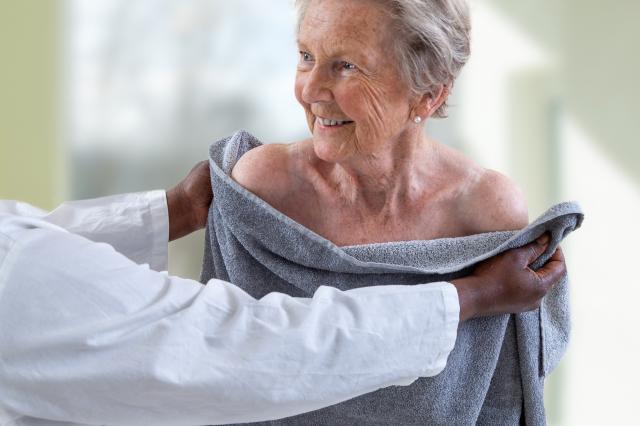
O curso A Higiene da Pessoa Idosa vai abordar boas práticas sobre a forma mais eficaz de realizar a higiene de uma pessoa, independentemente do seu grau de dependência. A Higiene da Pessoa Idosa é importante na saúde, conforto e qualidade de vida. Pretendemos dar-lhe boas práticas, conselhos e novas ferramentas a colocar em prática durante os cuidados. Prevê-se que num futuro muito próximo Portugal seja um país envelhecido. O envelhecimento não seria preocupação, se na maioria dos casos, o mesmo não fosse acompanhado por algum grau de dependência.

As pessoas envelhecem e ficam mais frágeis, necessitando de ajuda para conseguirem satisfazer as suas necessidades básicas, logo é necessário que os cuidadores se preparem da melhor forma possível.

A Prime Senior irá acompanhar e responder às suas dúvidas durante e após o curso, porque sabemos que é durante a colocação dos conteúdos em prática que as dúvidas surgem.
Rentabilize o seu tempo e os recursos disponíveis em prol do bem-estar da pessoa que necessita dos seus cuidados.

Público-alvo
Cuidadores ou todos os interessados em aprender a cuidar de uma pessoa idosa.

Carga Horária
O Curso tem uma carga horária total de (cerca de) 10 horas, mas consoante o seu conhecimento poderá fazê-lo em menos tempo.

Objetivos de Aprendizagem
No final deste curso será capaz de:

  • Reconhecer que o meio envolvente pode interferir na realização de algumas atividades relacionadas com a higiene pessoal;
  • Adequar os cuidados de higiene pessoal às necessidades da pessoa que necessita deles;
  • Compreender que os idosos podem ter diversos graus de dependência;
  • Determinar o grau de dependência da pessoa idosa e prever possíveis riscos associados às tarefas a realizar;
  • Garantir que as necessidades de higiene são asseguradas;
  • Executar cuidados de higiene totais e parciais à pessoa idosa, conforme o seu grau de dependência.

Programa do curso

Após a realização deste curso vai ser capaz de:
Módulo 0: O curso e os participantes
Módulo 1: A pessoa idosa e os graus de dependência
Módulo 2: Cuidados de higiene parciais
Módulo 3: Cuidados de higiene totais
Módulo 4: Considerações finais
Módulo 5: Conclusão
Go to Class
MOOC List is learner-supported. When you buy through links on our site, we may earn an affiliate commission.

Related Courses

Sustainable Food Production Through Livestock Health Management (Coursera) Coursera
University of Illinois at Urbana-Champaign

Sustainable Food Production Through Livestock Health Management (Coursera)

Learn about the impact of infectious disease on sustainable animal-based food production by understanding the science of growth, immunity, and infection and by learning the problem-solving skills needed to advance animal health and food production through optimal management practices. In this course we will explore the effect of infectious disease on sustainable animal-based food production. The content and learning outcomes of this new course will be designed to be relevant across different food production sectors (i.e., beef, dairy, poultry, and pigs).

Jun 15th 2026
5-12 Weeks
Prevenção de Infeções e Resistência aos Antibióticos (NAU) NAU
Direcção-Geral da Saúde - DGS

Prevenção de Infeções e Resistência aos Antibióticos (NAU)

O curso “Prevenção de Infeções e Resistência aos Antibióticos” tem como finalidade promover a capacitação e literacia para a prevenção de infeções e da resistência aos antibióticos. Sabe que cuidados ter para prevenir infeções? Ou o porquê de o antibiótico já não atuar em prol da sua saúde? Cuide de si!

No sessions Available
Self-Paced
Patient Safety and Quality Improvement: Developing a Systems View (Patient Safety I) (Coursera) Coursera
Johns Hopkins University

Patient Safety and Quality Improvement: Developing a Systems View (Patient Safety I) (Coursera)

In this course, you will be able develop a systems view for patient safety and quality improvement in healthcare. By then end of this course, you will be able to: 1) Describe a minimum of four key events in the history of patient safety and quality improvement, 2) define the key characteristics of high reliability organizations, and 3) explain the benefits of having strategies for both proactive and reactive systems thinking.

Jun 15th 2026
4 Weeks
Dentistry 101 (Coursera) Coursera
University of Michigan

Dentistry 101 (Coursera)

Dentistry 101 is an introduction to the exciting and diverse field of dentistry through the lens of its many practitioners. If you’re interested in exploring dentistry as a profession, or if you’re ready to pursue a career in it and want to prepare yourself for dental school and the profession that lies ahead, Dentistry 101 will help you better envision the paths you can take.

Jun 17th 2026
4 Weeks
Setting the Stage for Success: An Eye on Safety Culture and Teamwork (Patient Safety II) (Coursera) Coursera
Johns Hopkins University

Setting the Stage for Success: An Eye on Safety Culture and Teamwork (Patient Safety II) (Coursera)

Safety culture is a facet of organizational culture that captures attitudes, beliefs, perceptions, and values about safety. A culture of safety is essential in high reliability organizations and is a critical mechanism for the delivery of safe and high-quality care. It requires a strong commitment from leadership and staff. In this course, a safe culture is promoted through the use of identifying and reporting patient safety hazards, accountability and transparency, involvement with patients and families, and effective teamwork.

Jun 15th 2026
4 Weeks
Primeros Auxilios Psicológicos (PAP) (Coursera) Coursera
Universitat Autònoma de Barcelona

Primeros Auxilios Psicológicos (PAP) (Coursera)

Este curso on-demand (ABIERTO, se puede cursar en cualquier momento), impartido en castellano por la Universidad Autónoma de Barcelona y el Centro de Crisis de Barcelona, está destinado a entrenar en la aplicación de primeros auxilios psicológicos (PAP) a personas afectadas por situaciones altamente estresantes, abarcando tanto emergencias cotidianas (incidentes críticos estadísticamente frecuentes que afectan de manera muy intensa: un accidente de tráfico, una hospitalización, una agresión o la muerte traumática o repentina de una persona, etc.) como emergencias comunitarias y/o masivas (sucesos infrecuentes, que afectan a muchas personas o a una comunidad entera y que sobrepasan con mucho lo que sucede habitualmente en ella: una catástrofe natural, un accidente ferroviario o aéreo o un atentado).

Jun 15th 2026
5-12 Weeks
Tropical Parasitology: Protozoans, Worms, Vectors and Human Diseases (Coursera) Coursera
Duke University,Kilimanjaro Christian Medical University College

Tropical Parasitology: Protozoans, Worms, Vectors and Human Diseases (Coursera)

This course provides students an understanding of important human parasitic diseases, including their life cycles, vectors of transmission, distribution and epidemiology, pathophysiology and clinical manifestations, treatment, and prevention and control. Tropical Parasitology is taught by faculty from an area highly impacted by tropical parasites- the Kilimanjaro Christian Medical University College in Moshi, Tanzania. The faculty include Drs. Frank Mosha and Mramba Nyindo (and two lecturers, Drs. Johnson Matowo and Jovin Kitau). Dr. John Bartlett, Professor of Medicine, Global Health and Nursing at Duke University, joins his faculty colleagues in this effort.

Jun 15th 2026
5-12 Weeks
Psychological First Aid (Coursera) Coursera
Johns Hopkins University

Psychological First Aid (Coursera)

Learn to provide psychological first aid to people in an emergency by employing the RAPID model: Reflective listening, Assessment of needs, Prioritization, Intervention, and Disposition. Utilizing the RAPID model (Reflective listening, Assessment of needs, Prioritization, Intervention, and Disposition), this specialized course provides perspectives on injuries and trauma that are beyond those physical in nature. The RAPID model is readily applicable to public health settings, the workplace, the military, faith-based organizations, mass disaster venues, and even the demands of more commonplace critical events, e.g., dealing with the psychological aftermath of accidents, robberies, suicide, homicide, or community violence.

Jun 15th 2026
5-12 Weeks
COVID-19 e Medidas de Isolamento no Domicílio (NAU) NAU
Direcção-Geral da Saúde - DGS

COVID-19 e Medidas de Isolamento no Domicílio (NAU)

O curso COVID-19 e Medidas de Isolamento no Domicílio vai ajudar a protegê-lo a si e à sua família. COVID-19 e Medidas de Isolamento no Domicílio é um curso onde será abordado as medidas de prevenção gerais para a população e dicas práticas para quem tem de estar em isolamento ou isolamento profilático no domicílio, assim como agir se for cuidador de alguém em isolamento.

Self Paced
Self-Paced
COVID-19 - A clinical update (Coursera) Coursera
University of Florida

COVID-19 - A clinical update (Coursera)

As an expert in infectious diseases, editor of the Journal of Infectious Diseases and author of the textbook Infectious Diseases: A clinical short course, McGraw-Hill April 2020, I have been concerned about the misinformation being shared about the COVID-19 epidemic. How did this disease develop? Where did it come from? How does it cause diseases? The answers to these questions will be answered in the first video of module 1.

Jun 19th 2026
4 Weeks