NAU

Ser Cuidador na Pandemia por COVID-19: Cuidados em Contexto Domiciliário (NAU)

Ser Cuidador na Pandemia por COVID-19: Cuidados em Contexto Domiciliário (NAU)

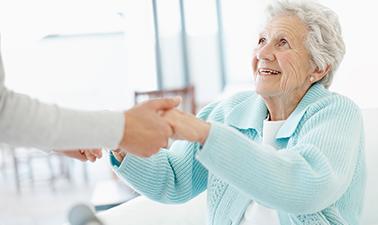
"Ser cuidador na pandemia por COVID-19: cuidados em contexto domiciliário" é um curso que tem por objetivo orientar as pessoas que se tornaram cuidadores dos seus familiares. Venha adquirir conhecimentos e competências para cuidar de uma pessoa dependente e vulnerável.

Ser cuidador não é tarefa fácil, ainda mais no enquadramento da atual pandemia por COVID-19.
Os cuidadores, no atual contexto, necessitam de maior informação sobre como cuidar, com segurança, das pessoas mais vulneráveis em contexto domiciliário, pelo que este curso pretende capacitar os cuidadores a prestar melhores cuidados informais e a prevenir a infeção pelo SARS-CoV-2.

O curso destina-se ao cidadão prestador de cuidados informais e está organizado em módulos, nos quais o cuidador poderá adquirir competências de higienização pessoal e habitacional, de vigilância e de acompanhamento de pessoas dependentes e vulneráveis.
Descubra, neste curso, as medidas de prevenção e acompanhamento de pessoas dependentes, participando no curso “Ser cuidador na pandemia por COVID-19: cuidados em contexto domiciliário".

Objetivos de Aprendizagem
Com vista à prevenção da transmissão da COVID-19, em pessoas dependentes a viver em contexto domiciliário, pretende-se:

  • Contribuir para a prevenção da transmissão da COVID-19;
  • Compreender as medidas básicas de prevenção: higiene das mãos, etiqueta respiratória e distanciamento social;
  • Conhecer as medidas a adotar com a higiene habitacional;
  • Reconhecer as medidas de vigilância das pessoas dependentes mais vulneráveis;
  • Reconhecer a importância das atividades de autocuidado a realizar à pessoa dependente e vulnerável.

Programa do Curso

  • Medidas de prevenção da COVID-19;
  • Alimentação à pessoa dependente/vulnerável;
  • Posicionar a pessoa dependente/vulnerável;
  • Cuidados de higiene à pessoa dependente/vulnerável;
  • Transferir a pessoa dependente/vulnerável;
  • Prevenção de úlceras por pressão dependente/vulnerável;
  • Prevenção de quedas no domicílio;
  • Gerir o regime medicamentoso da pessoa dependente/vulnerável.

O curso tem uma carga total de 1,5 horas.
Go to Class
MOOC List is learner-supported. When you buy through links on our site, we may earn an affiliate commission.

Related Courses

An Introduction to Global Health (Coursera) Coursera
University of Copenhagen

An Introduction to Global Health (Coursera)

This course will provide you with an overview of the most important health challenges facing the world today. You will gain insight into how challenges have changed over time, we will discuss the likely determinants of such changes and examine future projections. Successful international strategies and programs promoting human health will be highlighted and global health governance structures will be mapped and the role of the key actors explored.

Sep 28th 2026
5-12 Weeks
HI-FIVE: Health Informatics For Innovation, Value & Enrichment (Administrative/IT Perspective) (Coursera) Coursera
Columbia University

HI-FIVE: Health Informatics For Innovation, Value & Enrichment (Administrative/IT Perspective) (Coursera)

HI-FIVE (Health Informatics For Innovation, Value & Enrichment) Training is an approximately 10-hour online course designed by Columbia University in 2016, with sponsorship from the Office of the National Coordinator for Health Information Technology (ONC). The training is role-based and uses case scenarios. No additional hardware or software are required for this course. Our nation’s healthcare system is changing at a rapid pace.

Sep 28th 2026
4 Weeks
Critérios de Elegibilidade para Pessoas Candidatas à Dádiva de Sangue (NAU) NAU
IPST-Instituto Português do Sangue e da Transplantação

Critérios de Elegibilidade para Pessoas Candidatas à Dádiva de Sangue (NAU)

Encontre neste curso o Como e o Porquê de ser dador de sangue. Não fique com dúvidas! Ser dador de sangue é muito mais do que dar sangue. É uma dádiva de vida! São muitas as questões que se colocam à população. Todas as pessoas podem dar sangue? Quais as condições para o fazer? Quais os seus direitos e deveres enquanto dador de sangue? Porque não podem dar sangue quando tomam antibióticos?

Self Paced
Self-Paced
ECare - COVID-19 - Programa de Atualização Profissional (NAU) NAU
ESEP-Escola Superior de Enfermagem do Porto

ECare - COVID-19 - Programa de Atualização Profissional (NAU)

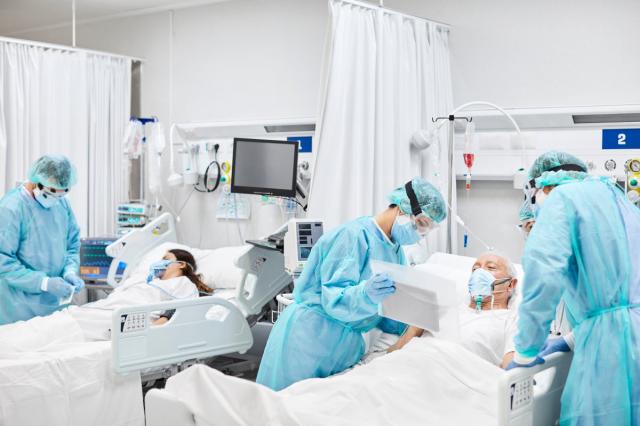
ECare-COVID19 – Programa de atualização profissional é dirigido a profissionais de saúde que pretendam aprofundar competências dirigidas à otimização da prestação e gestão de cuidados a doentes COVID-19. A pandemia por COVID-19 coloca desafios aos profissionais de saúde na gestão e operacionalização dos cuidados de saúde, nos diferentes contextos de cuidados. Este curso visa aprofundar e atualizar as suas competências para a gestão e prestação de cuidados de saúde num contexto da crise pandémica.

Self Paced
Self-Paced
Voice Disorders: What Patients and Professionals Need to Know (Coursera) Coursera
Icahn School of Medicine at Mount Sinai

Voice Disorders: What Patients and Professionals Need to Know (Coursera)

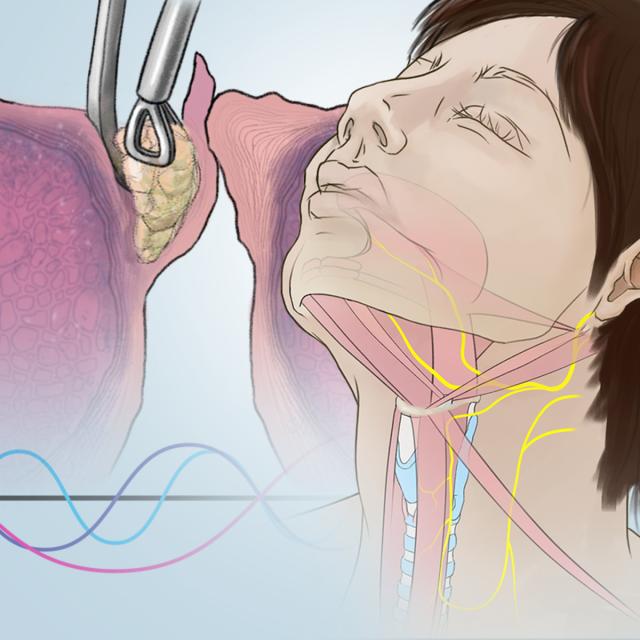
Knowledge regarding vocal production physiology and management options for voice disorders have experienced rapid growth over the past 40 years. This growth has resulted in a knowledge gap amongst patients and practitioners. Entirely new subspecialties of laryngology under otolaryngology and vocology under speech-language pathology have developed in response to this gap. This MOOC (Massive Open Online Course) is designed to educated patients, allied healthcare providers, vocal trainers/coaches, general medical practitioners and otolaryngologists.

Sep 28th 2026
5-12 Weeks
Design and Interpretation of Clinical Trials (Coursera) Coursera
Johns Hopkins University

Design and Interpretation of Clinical Trials (Coursera)

Clinical trials are experiments designed to evaluate new interventions to prevent or treat disease in humans. The interventions evaluated can be drugs, devices (e.g., hearing aid), surgeries, behavioral interventions (e.g., smoking cessation program), community health programs (e.g. cancer screening programs) or health delivery systems (e.g., special care units for hospital admissions). We consider clinical trials experiments because the investigators rather the patients or their doctors select the treatment the patients receive.

Sep 28th 2026
5-12 Weeks
Doping : Sports, Organizations and Sciences (Coursera) Coursera
University of Lausanne

Doping : Sports, Organizations and Sciences (Coursera)

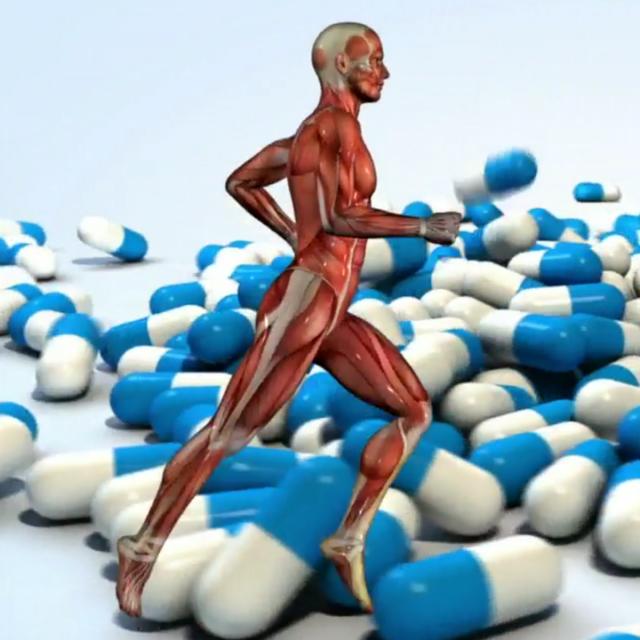
The objective of this course is to encourage a critical understanding of doping. To achieve this goal, this course will rely on a multidisciplinary approach that allow you to see how different disciplines get into a single object, in different perspectives and in often complementary ways. This approach will also allow us to appreciate the complexity of a subject like doping. Doping in sports is a complex practice whose definition and identification is the result of socially and historically constructed norms. This course offers to shed light on the processes that led to the use and prohibition of doping substances.

Sep 28th 2026
4 Weeks
The New Nordic Diet - from Gastronomy to Health (Coursera) Coursera
University of Copenhagen

The New Nordic Diet - from Gastronomy to Health (Coursera)

The New Nordic Diet is a new food culture developed in 2009-13 with key emphasis on gastronomy, health, and environment. Major research in its effect on acceptability, behaviour and learning skills, and disease prevention have been conducted by the OPUS centre at the University of Copenhagen and the people behind the award-winning restaurant Noma in Copenhagen. This course will give the participants the opportunity to experience a healthy and palatable new food and eating concept diet “The New Nordic Diet” and an understanding of how food and diets can affect mental and physical health and ensure the foundation for a healthier life style for future generations with a regional based diet and food culture.

Sep 28th 2026
5-12 Weeks
Introduction to Reproduction (Coursera) Coursera
Northwestern University

Introduction to Reproduction (Coursera)

Do you have questions about sex hormones or menstrual cycles? This is a crash-course in human reproductive health through fact and biology-based information on a variety of topics. "Sex 101" will cover reproductive anatomy, key biological changes during puberty, sexual biology and contraceptive methods, reproductive disorders, and a special introduction to the exciting field of Oncofertility. Specific lecture titles are as follows: 1) Reproductive Anatomy & Hormones, 2) Menstrual Cycle, Oocyte Maturation, & Sperm Activation, 3) Sexual Biology, Fertilization, & Contraception, and 4) Reproductive Health & Disorders.

Sep 28th 2026
4 Weeks
Leading Healthcare Quality and Safety (Coursera) Coursera
George Washington University

Leading Healthcare Quality and Safety (Coursera)

Ensuring patient safety and healthcare quality is critical and should be a key focus of everyone in healthcare practice. This course provides healthcare practitioners and others with an introduction to the knowledge and skills needed to lead patient safety and quality improvement initiatives at the micro and macro levels. Participants will explore the foundations of health care quality and the science underlying patient safety and quality improvement, design and select effective health care measures, analyze patient safety problems and processes using tools such as human factors analysis, apply systematic approaches including the Plan-Do-Study-Act (PDSA) model to address quality improvement challenges, and learn strategies to lead a culture of change

Sep 28th 2026
5-12 Weeks
Genomics: Decoding the Universal Language of Life (Coursera) Coursera
University of Illinois at Urbana-Champaign

Genomics: Decoding the Universal Language of Life (Coursera)

What is a genome? A genome contains all of the information that a cell needs to develop, function, and reproduce itself, and all the information needed for those cells to come together to form a person, plant, or animal. Genomes contain an organism’s complete set of genes, and also the even tinier genetic structures that help regulate when and how those genes are used. The ability to regrow a torn ligament, the clues that might predict the onset of mental illness, the nutritional potential of crops, and even the history of life itself, are all encoded in genomes. By taking this course, you will discover how scientists are deciphering the language of genomes to learn how to develop sustainable food and fuel supplies, improve disease treatment and prevention, and protect our environment.

Sep 28th 2026
5-12 Weeks